- WIADOMOŚCI
New German book exposes how EU outsources censorship to NGOs

As Brussels builds its anti-disinformation machinery, a new book warns that Europe may be crossing the line from protecting democracy to outsourcing state censorship.
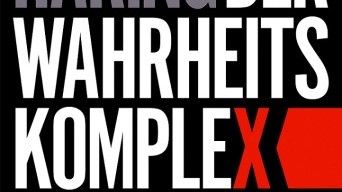
A new German book poses an uncomfortable question: as Europe builds the machinery to fight disinformation, who decides where public protection ends and opinion management begins? In Der Wahrheitskomplex („The Truth Complex”), Norbert Häring frames the EU’s expanding ecosystem of fact-checking and platform governance as a troubling case study in delegated power.
Häring’s critique lands at a highly sensitive moment. Published by Westend in May 2026, the 304-page book, subtitled Wie NGOs im Staatsauftrag unerwünschte Meinungen bekämpfen („How NGOs combat unwanted opinions on state orders”), was recently introduced in a Berliner Zeitung interview. Häring presents it as an investigation into an intertwined network of state authorities, NGOs, fact-checkers, and transatlantic think tanks, an architecture he claims has been quietly expanding since 2014.

Rather than merely litigating the occasional blunders of individual fact-checkers, he bypasses the trivial to mount a systemic critique: he argues that governments can indirectly shape public debate through ostensibly independent bodies, thereby bypassing the political and constitutional hurdles of overt state censorship. Häring traces the decisive shift toward this model to the 2014 Ukraine crisis and the annexation of Crimea, noting a secondary acceleration following the 2016 US election and the ensuing debate over Russian disinformation.
This institutional backdrop is undeniably real, even if Häring’s interpretation remains disputed. Take the European Digital Media Observatory (EDMO). Active since 2020, the EU-funded project is hosted by the European University Institute. The European Commission insists that EDMO (which coordinates researchers, fact-checkers, and media-literacy experts across regional hubs in all member states) operates with strict safeguards for editorial independence. Yet its scope is growing: in March 2026, Brussels awarded EDMO an additional €2.5 million, expanding its mandate to monitor the online information ecosystem specifically during elections and crises.
The trend, moreover, extends well beyond EDMO. Under the aegis of the European Democracy Shield, the Commission has rolled out a crisis protocol under the Digital Services Act (DSA), launched a European Network of Fact-Checkers, and doubled down on its support for EDMO. More recently, on 31 March 2026, Brussels signed off on a €5 million grant designed to bolster fact-checking capacity across all EU languages and establish a centralised European repository of fact-checks.

For Häring, the DSA serves as the hard legal spine of this entire architecture. Officially, the legislation is designed to empower users with greater transparency and appeal rights, while compelling very large online platforms to assess systemic risks related to illegal content, fundamental rights, media freedom, electoral integrity, and public security. Crucially, it establishes a system of „trusted flaggers” whose notices regarding allegedly illegal content are fast-tracked, even if the platforms formally retain the final say on content removal.
It is here that the political dispute crystallises. While Brussels defends this framework as a necessary shield against manipulation, foreign interference, and online harm, critics tell a different story. Echoing recent coverage by the French publication La Flamme de la Liberté, detractors frame the DSA’s architecture as a dangerous drift toward outsourced censorship.
Perhaps Häring’s most newsworthy contribution is the detailed map he draws connecting public funding and civil-society labels to platform enforcement and security policy. One heavily contested example is the EU’s May 2025 sanctions under its Russian hybrid-threat regime, which targeted AFA Medya and its founder, Hüseyin Doğru, for allegedly destabilising activities. While Brussels characterises the move as a direct response to Russian influence operations, Häring points to it as evidence that mere „narratives” can now become sanctionable offenses.

The book’s most compelling argument, however, centres on transparency. In 2025, the European Court of Auditors concluded that the EU’s oversight of NGO funding remained fundamentally unreliable. While this finding does not categorically prove Häring’s thesis, it undeniably bolsters his demand for clearer, more accountable financial trails.
Read soberly, Der Wahrheitskomplex serves less as a definitive verdict than as a glaring warning label. There is no denying that Europe faces genuine threats from foreign manipulation, deepfakes, and platform-scale abuse. Yet Häring raises a profound and intensely practical question: can systems engineered to protect democratic debate avoid eventually becoming the very instruments that define its permissible boundaries?