



- KOMENTARZ
- WIADOMOŚCI
- WAŻNE
U.S. reduces troops in Germany, Europe faces test

The withdrawal of approximately 5,000 U.S. troops from Germany, combined with delays in missile deliveries to European allies, should be seen as part of a broader shift in American strategic thinking. It is not a sudden decision, but a continuation of a long-term trend in transatlantic relations.
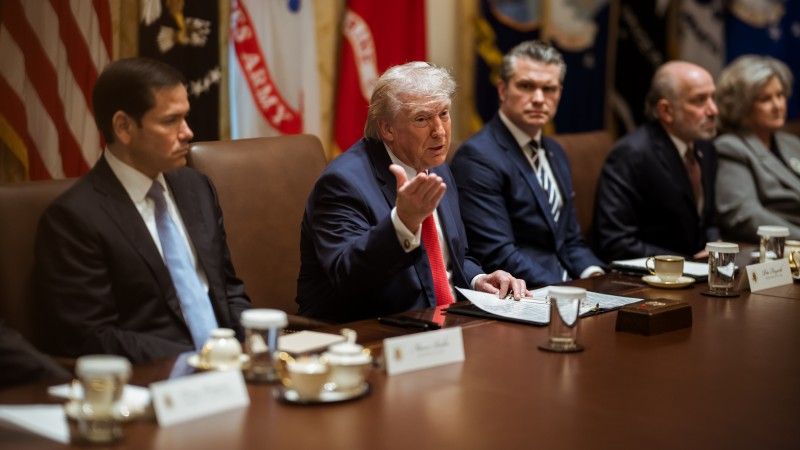
Photo. Daniel Torok / The White House / flickr
The United States is once again adjusting its military presence in Europe, and this move should be understood in a wider political and strategic context. Compared to the 12,000 troops reduction announced in 2020, the current decision is more limited, but still sends a clear signal. Washington is gradually reducing its footprint while testing the reactions and readiness of its European allies.
It is important to underline that key frontline states such as Poland and Romania are not directly affected by this reduction. At the same time, there is no indication that these troops will be relocated to the eastern flank. While such a move could be justified from a military perspective, it remains unlikely at this stage, which shows that the United States is acting with caution rather than seeking escalation.
The decision also reflects growing tensions between the United States and European partners, particularly in the context of the Iran conflict and differing levels of engagement. The delay in missile deliveries to countries such as Poland, Estonia or Lithuania further illustrates that American commitments are becoming more conditional and increasingly influenced by global priorities, including the Indo-Pacific.
From a broader perspective, this is a continuation of a trend that has been visible for years. The United States has been signalling that Europe should take greater responsibility for its own security. This does not mean a full withdrawal, but rather a gradual rebalancing, where the American presence remains important but is no longer as dominant as it was in the past.
This situation raises important questions for European countries. It is not only about political declarations, but about real capabilities and willingness to act. It remains unclear whether countries such as France, Germany or Italy are ready to increase their military engagement, particularly on NATO’s eastern flank, where the security environment remains the most challenging.
For Poland, this development confirms the need to continue a balanced approach. Strong relations with the United States remain essential, but at the same time it is necessary to deepen cooperation with European partners and regional allies. The security environment is becoming more complex, and relying on a single pillar is no longer sufficient.
In this sense, the current situation should be seen as another stage in the evolution of transatlantic relations. The United States is not leaving Europe, but it is clearly redefining its role, while expecting Europe to adapt to a new strategic reality.


