



- KOMENTARZ
- ANALIZA
- WIADOMOŚCI
Poland will fight for NATO AI


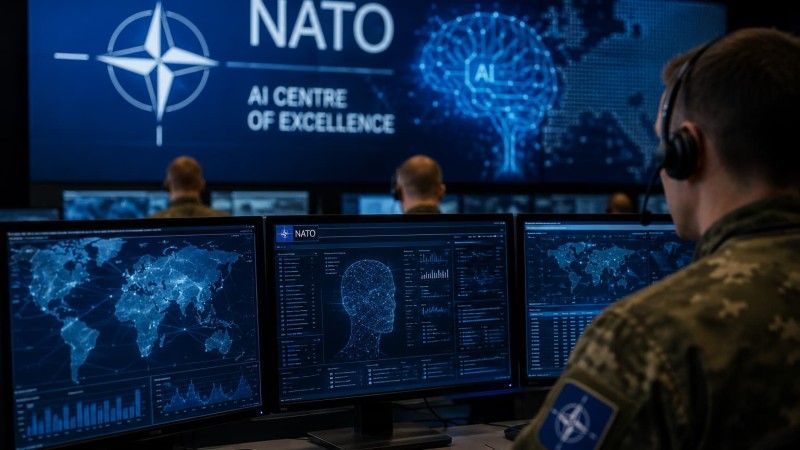
Artificial intelligence is one of the key elements of military operations — from decision-support systems and data analysis to autonomous combat platforms. Experts from the Defence Institute, together with other specialists, argue that Poland should present an initiative at the NATO summit in Ankara to establish a NATO Centre of Excellence for Artificial Intelligence.
Poland is spending record amounts on defence — 4.3% of GDP in 2025 — but our security does not depend only on military equipment. In the face of constant attacks in cyberspace, data, algorithms, AI models, command-support systems and the ability to operate in information warfare are becoming increasingly important.
This is where a concrete proposal appears: Poland as host of the NATO Centre of Excellence for Artificial Intelligence. The initiative was launched by the SET Foundation, and the Defence Institute later joined the proposal. Poland would therefore combine technological, defence and expert competences in its efforts to establish a NATO Centre of Excellence for Artificial Intelligence. In this area, however, Poland will have to compete with France.
NATO has cyber centres, but...
NATO Centres of Excellence are not a new idea. The Alliance currently has thirty such specialised centres, dealing with areas including cyber defence, counter-intelligence, energy security, space and military police.
Poland hosts two of them: the NATO Counter Intelligence Centre of Excellence in Kraków and the NATO Military Police Centre of Excellence in Bydgoszcz.
Despite the rapid development of artificial intelligence, NATO currently has no centre dedicated exclusively to this technology. Individual centres, as experts explain, deal with selected aspects of AI, but there is no place responsible for building doctrines, standards, certification processes or exchanging experience related to the use of artificial intelligence in defence.
That is precisely the gap Poland can fill.

Photo. Defence Insitute Brief / SET Foundation
AI as one of the shields against cyber threats
Just a few years ago, artificial intelligence could still be associated mainly with business applications. Today, it is also used in the planning of military operations, command-support systems, intelligence data analysis and the protection of critical infrastructure.
NATO also recognises the importance of AI. In successive strategic documents, the Alliance identifies artificial intelligence as one of the key technologies shaping the future battlefield. This applies both to systems supporting decision-making and to autonomous and semi-autonomous military platforms.
At the same time, AI is becoming a tool used by adversaries. Deepfakes, influence operations, automated disinformation and the use of algorithms to identify vulnerabilities in security systems are only some of the threats NATO states face today.
See also

Poland's arguments for the Centre
The authors of the document point to several reasons why Poland could become the host of the new centre. The first is geography.
Poland is located on NATO’s eastern flank and has for years functioned in the immediate vicinity of a war taking place beyond its border. This means access to experience linked to the practical use of new technologies on the modern battlefield.
The second argument is competence. Polish teams have for years achieved very strong results in international cyber-security exercises, Capture The Flag competitions and projects carried out jointly with NATO and allied states.
The third is the scale of defence investment. For several years, Poland has been among NATO leaders in security spending, which is meant to demonstrate readiness to take responsibility for the development of new allied capabilities.
Col. (ret.) Mariusz Nogaj, former Director of the NATO Counter Intelligence Centre of Excellence, points out: The establishment of a NATO AI COE in Poland would undoubtedly be a highly prestigious event and a confirmation of our country’s strong position within Alliance structures. It is also a major opportunity to have, on Polish territory, an institution that will be one of the main actors shaping NATO doctrine on the use of AI. Every NATO Centre of Excellence — and we have two such institutions in Poland — is a powerful lever in Polish hands, giving real influence over Alliance policy. Using this lever, however, requires full engagement from decision-makers and a clear definition of Polish interests in NATO. Without this, we will have another prestigious institution that we pay for, while others draw the benefits.
Col. (ret.) Przemyslaw Przybylak, former cybersecurity advisor in the Polish Armed Forces at NATO, claims that: Setting up the center in Poland would not only be a prestigious diplomatic success, but also a magnet for talent and another boost for the development of the country’s high-tech sector. If the decision is finally made to design the future of NATO’s digital defence from the Vistula, it will be a real enhancement of the country’s position as a key player in the Alliance’s security architecture.
Time for competition
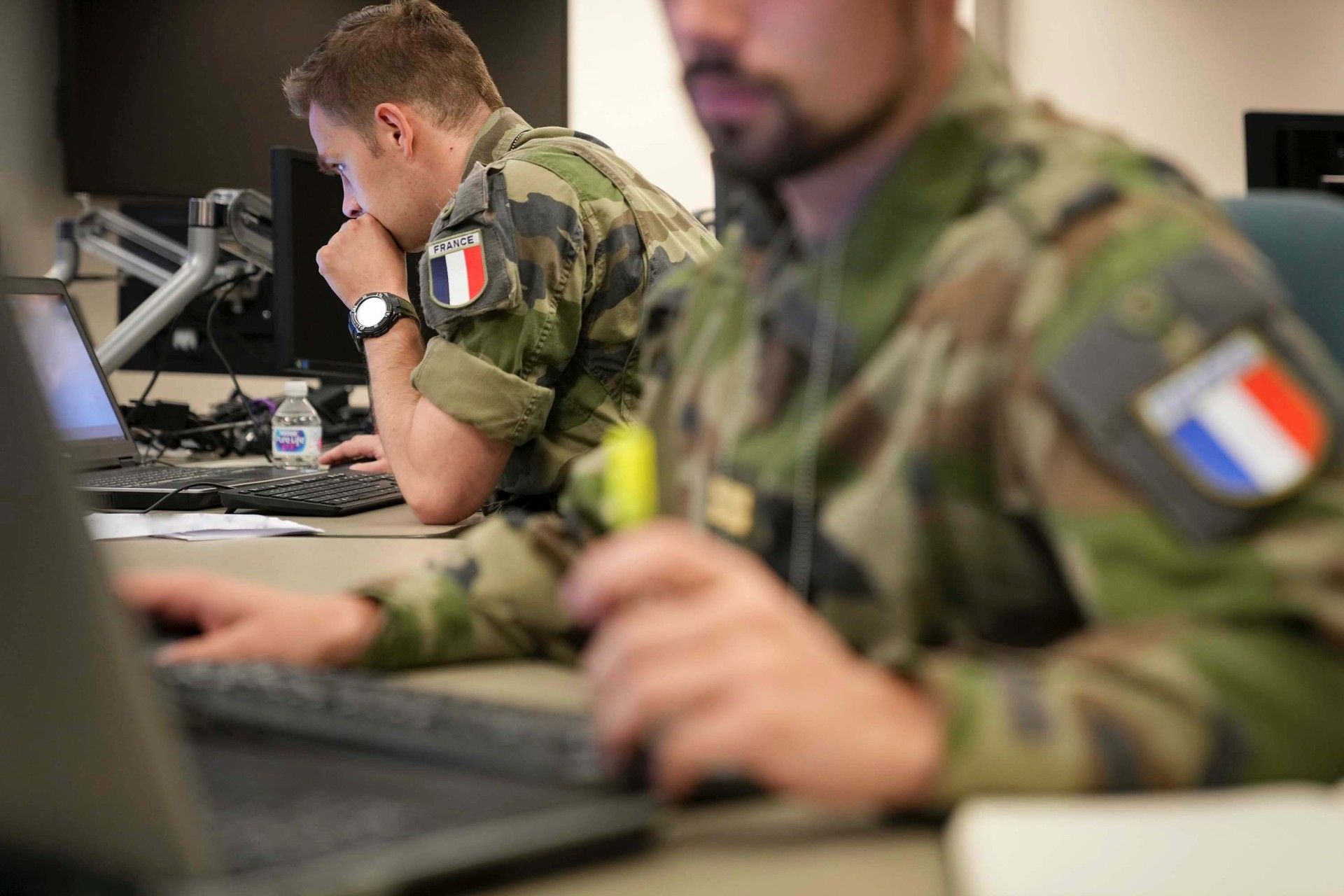
Poland must act quickly, because France has not waited and has already begun efforts in 2025 to take the initiative on a NATO centre for artificial intelligence. Rennes has been indicated as a natural candidate thanks to its developed cyber-defence ecosystem, military base and numerous events devoted to AI in defence. For France, this would be another element in building influence within NATO. France dominates in nuclear deterrence, the defence industry, operational military capabilities and ambitions for strategic autonomy in Europe.
That is why Poland cannot treat this as an ordinary proposal from experts and people from the AI sector. If Warsaw really wants the NATO Centre of Excellence for Artificial Intelligence, it must build a coalition of states, present financing, identify a location and show that the eastern flank has unique experience in countering Russia, cyberattacks, disinformation, drones and technologies used in the war against Ukraine.
The French have an extremely strong position and will fight for this project. They will use all available methods, even if Polish-French relations are today described as good. In NATO, what matters is not sympathy, but political influence, military capabilities and the speed of action behind the scenes.
This will also be a test for President Nawrocki and for Poland as a whole — the government and the head of state acting as one organism. If Poland wants to be treated as a leader in new military technologies within NATO, it cannot only buy weapons and increase defence spending. It must take the initiative where doctrines, standards, procedures and future visions of warfare are shaped — in other words, at the junction of Centres of Excellence and AI.
Is there another option? Of course. Poland could co-create such a Centre with France. This would require Prime Minister Tusk, who signed the Treaty of Nancy, to reach an understanding with President Macron and convince him to include Poland in the project. In that scenario, in the name of the overriding interest of the state as a whole, there would be cooperation between the Presidential Chancellery and the Prime Minister’s Office.
At the same time, an alternative scenario is also being considered. If the AI Centre were located in France, Poland could propose the creation of a NATO Quantum Technologies Centre of Excellence. The Alliance does not yet have an accredited centre of this kind, while Poland has arguments in the form of a strong scientific base and developing infrastructure in the field of quantum technologies.
See also

Poland wants to follow Estonia's path
Such a new Centre would be for Poland what the cyber-defence centre in Tallinn became for Estonia: a tool for building position inside the Alliance. If Warsaw wants to use its relations with leading allies and NATO politicians to its advantage, this is the moment.
This is another argument raised by experts. After the cyberattacks of 2007, Estonia used its own experience and built its position as one of the world’s most important cyber-defence hubs. Today, the NATO Cooperative Cyber Defence Centre of Excellence in Estonia is one of the Alliance’s most recognisable competence centres.
According to the authors of the document, Poland could make a similar move in the field of artificial intelligence. It could use the experience resulting from its location on NATO’s eastern flank, the proximity of the war in Ukraine and its developing technological ecosystem to create a centre responsible for the development of military applications of AI.
Creating a NATO AI COE requires, above all, a political decision and the ability to convince allies to support the project. Poland would have to not only identify a location and provide financing, but also build a coalition of states interested in participating in the initiative.
The right moment to launch such an initiative would be the NATO summit in Ankara, scheduled for 7–8 July. The foundations for this success must start being laid as soon as possible.


