



- WIADOMOŚCI
- KOMENTARZ
France tests missiles and AI

France is trying to prove that its military modernisation is not only about budgets and political declarations. Two recent developments show the direction clearly: the first MICA NG missile launch from a Rafale flying at supersonic speed, and the upcoming NATO test of Arcadia, France’s own AI-powered battlefield command system. One concerns air combat. The other concerns command, data and digital sovereignty. Together, they show how Paris wants to build operational advantage without becoming fully dependent on American systems.
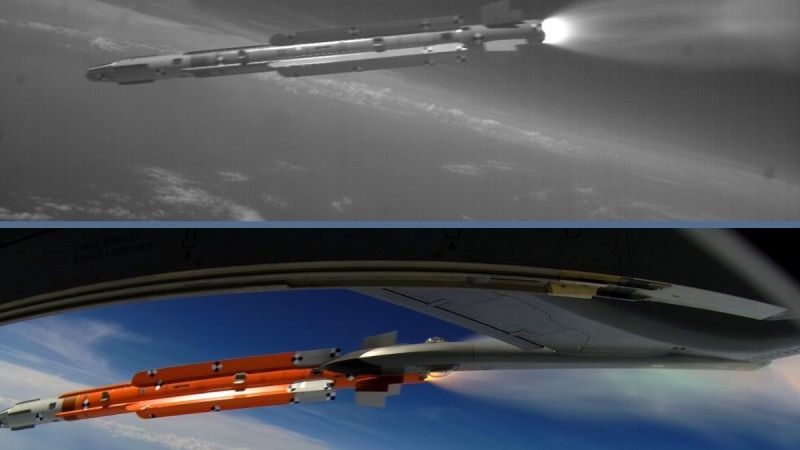
Photo. @DGA / X.com
The successful MICA NG launch on 1 June 2026 is important for the French Air and Space Force and for the Rafale ecosystem. Conducted by the DGA with MBDA, Dassault Aviation and the French Air and Space Force, the test evaluated the infrared seeker in demanding conditions and marked the first launch of this missile from a supersonic Rafale. This is not only another weapons trial. It is part of the qualification of a new-generation missile that should strengthen French air-to-air capabilities in a more contested environment.
MICA NG matters because France needs missiles that are more flexible, faster to react and adapted to different firing conditions. The missile will be available with infrared or electromagnetic guidance and uses a bi-pulse motor, which should improve responsiveness and energy management during engagement. In practice, this means greater adaptability for Rafale crews, especially when air combat is becoming more complex because of electronic warfare, long-range sensors and the need to engage threats quickly.
At the same time, France is preparing to test Arcadia during NATO’s Coalition Warrior Interoperability Exercise in Poland on 8–26 June. This is France’s answer to Palantir’s Maven Smart System, already used by NATO for AI-enabled command and control. The French system has been developed with national companies, including Mistral AI, Safran.AI, Thales and Airbus, and was already tested during exercises such as Dacian Fall in Romania and Orion 26 in France.

This is where the political dimension becomes clear. For Paris, AI command systems are not only about speed. They are about sovereignty. If NATO uses Maven and European armies simply adapt to an American platform, France sees a risk of long-term dependence in the most sensitive area of future warfare: data, targeting, operational planning and decision support. That is why Arcadia is presented not only as a technical tool, but as a European and French alternative.
The French concept is also different in architecture. Arcadia is designed to be decentralised, with command posts connected to field-deployed servers in a mesh-network model rather than relying on a distant central cloud. This is important because war in Ukraine has shown that connectivity is fragile, command posts are targeted and data systems must survive disruption. A system that can continue working after losing part of its network has clear operational value.
France also wants Arcadia to be open. The French Army does not want a closed model in which one company controls the system, the updates and the data. This is a direct criticism of the logic that many European militaries fear: technological dependence on a single American supplier. Paris wants an architecture where different companies can plug in, where data can be shared, and where the armed forces keep control over the system.
See also


The MICA NG test and Arcadia exercise should therefore be seen together. One strengthens the kinetic side of French military power. The other strengthens the digital and command side. France is trying to modernise both the weapon and the decision cycle. That is the real lesson. Future wars will not be won only by better missiles or only by better software. They will be won by the state that connects sensors, command systems, AI, aircraft, missiles and industrial capacity faster than the opponent.
This is also part of France’s wider defence-industrial logic. Paris wants strategic autonomy, but autonomy must be produced, tested and integrated. MICA NG supports the Rafale and the national missile industry. Arcadia supports digital sovereignty and the ability to command forces without full dependence on foreign platforms. Both projects fit into the same French ambition – simply put – to remain a military power able to act with allies, but not be reduced to using systems designed, owned and controlled elsewhere.


