



- ANALIZA
- WIADOMOŚCI
Boring logistics still win wars

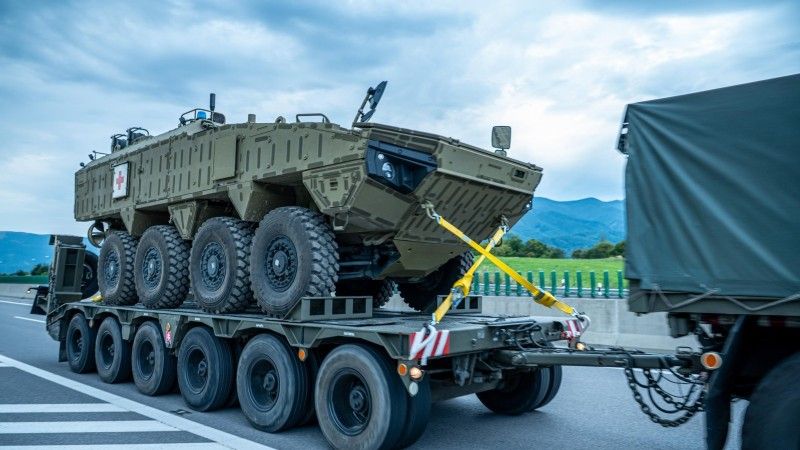
For years, generals, politicians, and commentators debated strategy, doctrines, and modern weapons systems. Meanwhile, wars were won by trucks, fuel tankers, warehouses, railway workers, and accountants. In the 21st century, this uncomfortable truth has become even more evident.
One can possess the most advanced aircraft, tanks, missiles, and drones, but without fuel, ammunition, spare parts, and efficient transport routes, they remain nothing more than expensive pieces of military technology on display. The war in Ukraine, the COVID-19 pandemic, and successive economic crises have reminded the world of a lesson that is regularly forgotten. Logistics is not a boring backstage element of high politics or war. Logistics is high politics and high war itself.
The underestimated factor of victory
The history of warfare consistently undermines romantic notions of strategic genius and decisive battles that determine the fate of states through a single brilliant maneuver. In reality, from antiquity to modern times, the outcome of campaigns has depended far more on the ability to deliver food, ammunition, and troops where they are needed than on the elegance of operational plans themselves. Even ancient armies, regardless of discipline and training, quickly discovered that the most ambitious military expedition ends when food runs out, not when battle plans are exhausted.
In later eras, technology changed uniforms, weapons, and the tempo of combat, but the fundamental truth remained unchanged: an army marches on its stomach, and war on supplies. A few classic examples are sufficient. Napoleon, often regarded as a symbol of strategic genius, could equally be seen as a symbol of logistical illusion. His army was not defeated solely by the Russians, but also by distance and collapsing supply lines. The German Blitzkrieg in the East lost momentum partly due to logistical problems and fuel shortages. Russian columns advancing toward Kyiv in 2022 repeatedly lost momentum due to supply issues, and subsequent operations by both sides focused not only on destroying enemy forces but also on striking warehouses, bridges, fuel depots, and transport routes. In practice, it was a struggle not only for territory but also for logistics.
In the 20th and 21st centuries, logistics finally ceased to be a modest support function and became a full participant in conflict. Wars have shown that victory belongs to those who can produce, transport, and replenish losses faster than the opponent can inflict them. Advanced weapons systems, if not supported by efficient supply chains, quickly become expensive objects of limited usefulness.
In this context, the well-known saying that „amateurs talk about strategy, professionals talk about logistics” sounds less like a witty remark and more like a concise description of reality. Strategy may define objectives, tactics may define methods of achieving them, but logistics determines whether any of these concepts are feasible at all.
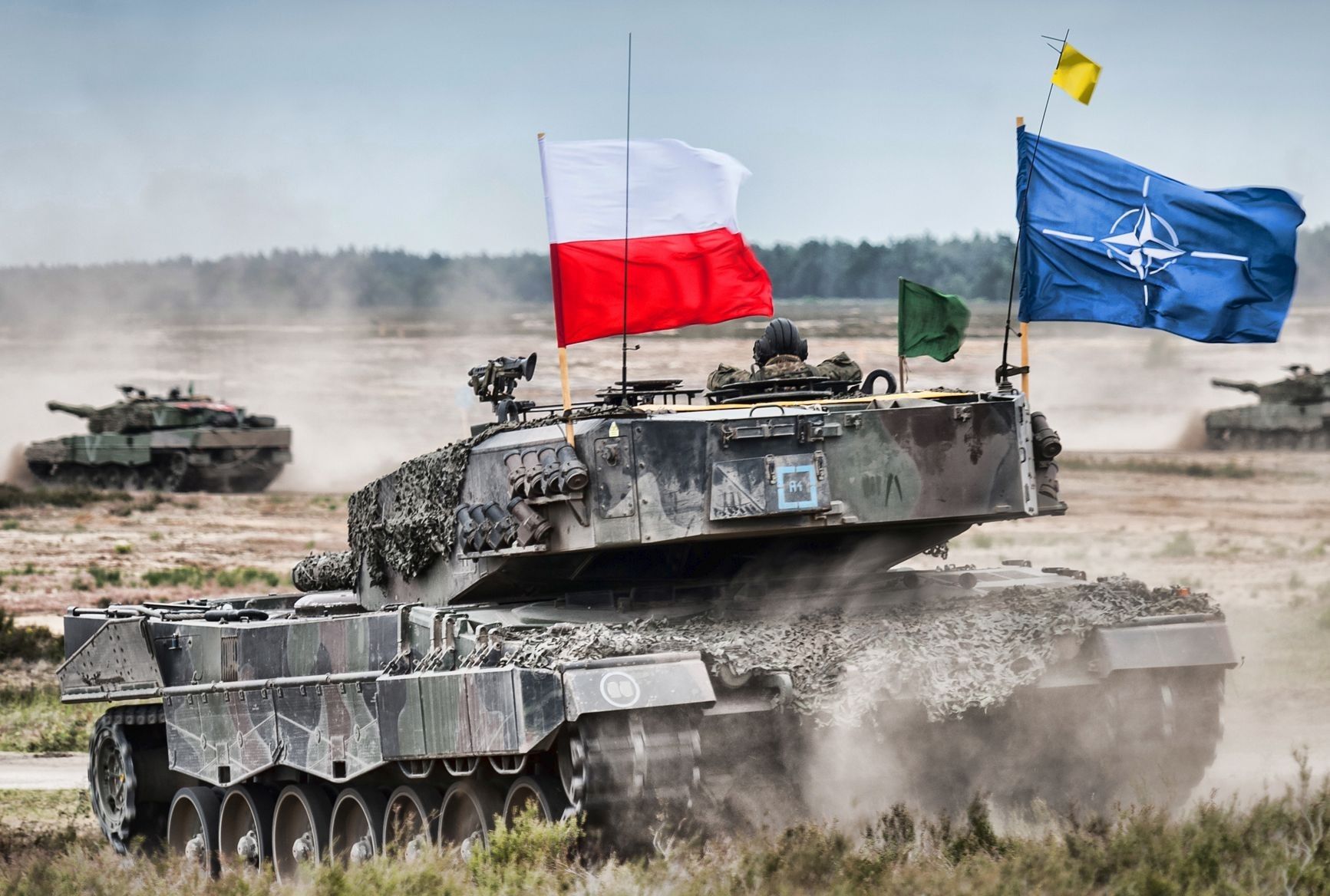
The unintentional shift in the hierarchy of war
For centuries, logistics was treated as a modest, unglamorous „things-delivery” function that did not appear in speeches but regularly saved situations when supplies, fuel, and soldiers’ patience ran out. In the classical sense, it was reduced to a few basic, unheroic tasks such as providing supplies, organising transport, maintaining warehouses, and ensuring that the military forces did not collapse from lack of everything that does not shoot, but without which nothing can shoot.
Over time, it became clear that these „technical details” had an unsettling tendency to determine the outcome of entire campaigns. With the rise of global military operations, logistics stopped being a background function and began to resemble the nervous system of entire armed forces. The integration of civilian and military sectors reinforced this further, as the boundary between war and economy began to blur, and resource management became an art of balancing the front line with global supply chains.
As a result, logistics rose to a role that was never officially granted to it, but which everyone eventually recognised. It became a component of states’ strategic advantage. Suddenly, it was not enough to have ports, airports, and railways. They also had to function and be coordinated even under pressure. Similarly, industrial capacity ceased to be a dull economic indicator and became one of the key factors determining whether a state can sustain a campaign without logistical exhaustion. An ammunition factory, a warehouse, and a railway line became assets of strategic importance comparable to combat units. The war in Ukraine reminded the world of this in a particularly brutal way. The tempo of operations was increasingly determined not by the number of tanks or missile launchers, but by the ability to produce and deliver millions of rounds of ammunition and maintain continuous supply to the front.
Whoever controls the pipes and ports rules
In the current security environment, everything appears global, fast, and integrated – until it stops working. Global supply chains are designed to ensure stability and predictability. In practice, however, they have proven extremely vulnerable to reality, pandemics, and other unforeseen events that stubbornly refuse to respect economic models. The COVID-19 crisis painfully demonstrated this. Transport disruptions and shortages of strategic raw materials completed the picture of a system that is simultaneously highly advanced and surprisingly fragile.
At the same time, logistics began to resemble geopolitics. Trade routes, logistics hubs, and transport corridors ceased to be neutral elements on the map and became its most sensitive points, increasingly contested with little subtlety. It turns out that the location of a railway line or which port serves a region can matter more than many political declarations.
Behind this lies a great-power rivalry over control of flows, which formally concerns trade but in practice resembles a struggle over who holds the valve of the global system. Seas and strategic straits, port infrastructure, and energy networks have become modern pressure points. They are less spectacular than battles but far more consequential. As a result, logistics is no longer a technical backstage of the world.
The Strait of Hormuz is a clear example. The world does not think about potential military operations there, but about whether oil and gas will continue to flow to consumers. It is one of the clearest proofs that in contemporary geopolitics, pipelines, ports, and transport routes often matter as much as military force.

Ammunition does not teleport to the front
The Russia-Ukraine war is a practical reminder that even advanced weapons systems share one common feature: they do not work if they do not arrive. Ukraine’s defence capabilities rely not only on determination and technology, but also on something far less visible – an international supply system that must operate with military-level precision. Weapons delivery corridors and the integration of various transport systems have become an unofficial front where a crucial part of the conflict is played out, albeit less spectacularly.
At the same time, logistical infrastructure has become one of the primary targets of military operations, which is not particularly surprising. Bridges, rail hubs, fuel depots, and transshipment centres have proven to be as „strategic” as combat units, while being far more vulnerable. As a result, war resembles not only a clash of armies but also a systematic stress test of the entire resource flow system.
The implications for NATO and European states are also not particularly surprising, although they are uncomfortable. Military mobility, strategic reserves, and infrastructure resilience have become real prerequisites for operating in a crisis. In other words, the war confirmed what was already known, but this time in a way that cannot be ignored. Without logistics, even the best-equipped armed forces remain largely an expensive declaration of combat capability.
The most striking symbol of this logistics reality has been the consumption of 155 mm artillery ammunition. During periods of intense fighting, Ukraine’s daily demand reached thousands of shells, which on a monthly scale amounted to volumes comparable to the peacetime production of entire states. This means that firing capability was determined not by the availability of howitzers, but by the speed at which the defence industry and supply systems could „feed” the front with ammunition.
From deterrence to waiting for deliveries
Logistics as a tool of state power projection sounds abstract until troops actually need to be moved.
A state’s production capacity becomes a very concrete constraint. The defence industry, ammunition production, and repair capabilities are no longer background elements of security policy but its physical condition. Without them, even the best strategy quickly turns into shortage management.
In this context, deterrence also takes on a more grounded meaning. Allied credibility and the ability to sustain a prolonged conflict do not depend on declarations, but on whether the system can continuously deliver everything required.
The aforementioned shortage of 155 mm shells forced NATO countries not only to open new production lines but also to rethink their stockpiles and industrial resilience.
This is one of many examples showing that the shift from political decisions to production-logistics capacity is not merely episodic. If logistics was previously a condition for waging war, it is increasingly becoming a condition for deterrence itself. This leads directly to the question of the future.

The future of logistics
If logistics is gaining importance and – at least declaratively – is increasingly recognised as a key element of state security and functioning, it is worth considering what its future may look like. Digitisation and the development of artificial intelligence may allow demand to be forecast before it even arises, and inventory management systems could become increasingly autonomous, reducing human involvement to supervisory roles. Logistics processes could become more fluid and optimised, provided that infrastructure – still largely analog in many places – can keep up.
At the same time, the development of autonomous transport systems could partially replace traditional logistics means, reducing issues related to human factors, delays, and operational errors. Logistics drones, unmanned vehicles, and autonomous transport units are expected to increase the efficiency of resource flows, although it must be acknowledged that all these solutions will still operate in a physical environment that may not always match design assumptions.
Against this backdrop, cybersecurity in logistics is already becoming particularly important, adding an additional dimension of risk. Beyond traditional challenges related to transport and storage, systems must be protected against potential attacks on digital infrastructure that could, in extreme cases, disrupt entire supply chains. Consequently, future logistics must be not only more automated and efficient, but also resilient to disruptions resulting from its own digitisation and growing dependence on IT systems.
At the same time, logistics must increasingly resemble less „just-in-case” warehouse management and more a continuous supply system operating in near-industrial constant readiness.
Poland at a strategic crossroads
Poland is increasingly presented as a natural NATO logistics hub. Its geostrategic location, transport infrastructure, and role on the eastern flank form a set of advantages that should function automatically.
The development of dual-use infrastructure is also expected to meet ambitious goals. Railways, seaports, airports, and storage centres should form a coherent system that, in theory, serves both the economy and defence needs. However, all its components must function simultaneously.
As a result, modernisation efforts in logistics should focus on the most important areas: military mobility, strategic reserves, and integration of administration, the armed forces, and the private sector. In practice, this means attempting to coordinate three worlds that historically have rarely been connected by the word „urgent”.
If such a process succeeds, Poland could indeed become a significant logistics center. In the logistics of the Polish Armed Forces, there has already been a shift from a „force sustainment” model to a model of real wartime infrastructure deployed in peacetime. The expansion of ports for heavy equipment, adaptation of the PKP railway network for military transport, and the presence of U.S. prepositioned stocks (APS), including in the Powidz area, mean that key elements of NATO’s combat capability are already physically located on Polish territory. Logistics is therefore no longer a plan for deploying forces in a crisis but a permanent system of their deployment.

Logistics as the foundation of power
In a world dominated by discussions about artificial intelligence, precision strike systems, and future forms of conflict, it is easy to overlook that real outcomes of war are still determined by basic factors such as ammunition, fuel, transport, infrastructure throughput, and the ability to maintain supply continuity. Historical and contemporary experience consistently shows that even the most advanced weapons systems lose value if they cannot be properly delivered, serviced, and replenished. In this sense, logistics – long treated as a supporting function – has become one of the key instruments of strategic competition and a determinant of states’ ability to conduct military operations and maintain economic resilience.
Consequently, modern weapons systems can no longer be seen as autonomous „instruments of power”. Their effectiveness depends on an entire support ecosystem, including fuel, ammunition, spare parts, maintenance infrastructure, and a functioning transport system and personnel. History has repeatedly shown that failure is not always caused by lack of courage or technology, but by supply system inefficiency. The contemporary security environment reinforces this dependency, making logistics a tool of strategic influence comparable in importance to military, technological, and economic potential.
Ultimately, logistics has become one of the foundations of national security, and modern conflicts are decided not only on the battlefield but also in supply networks and transport infrastructure that determine the tempo and scale of operations. States’ ability to rapidly mobilise resources and maintain continuous logistical flows directly translates into their strategic advantage. The war in Ukraine has clearly confirmed that logistical resilience is a prerequisite for effective defence and sustained military operations, which for Poland means the necessity of consistently developing logistics capabilities as an integral element of deterrence and national security.
In this context, a critical self-assessment of our logistical capabilities is urgently needed. Are fuel and ammunition storage capacities sufficient to sustain high-intensity operations for more than a few days? Does the throughput of ports, rail lines, and transshipment hubs truly match the pace at which modern militaries consume resources on the battlefield? Can the system for distributing spare parts and technical maintenance operate under time pressure and disruption, or does it still assume a stability that simply does not exist in real crises? Do we have the ability to scale production of ammunition, equipment, and components in real time to match battlefield demand, or does it remain a chronic bottleneck? And finally, is the logistics we are building designed as a system of continuous resilience, or merely a set of procedures activated only when it is already too late?


