



- WIADOMOŚCI
- KOMENTARZ
Russian drone control relays in Belarus offline. Why were they disabled?

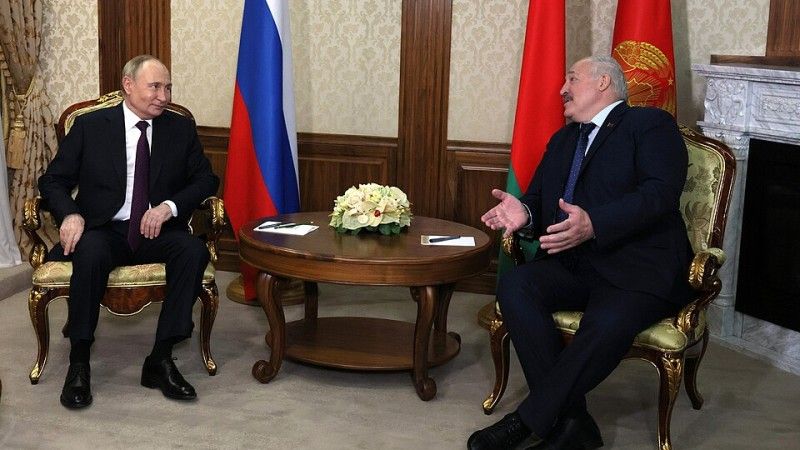
Photo. Официальный веб-сайт Президента Российской Федерации / Wikimedia Commons
Systems essential for controlling Russian drones and conducting effective strikes on Ukraine’s northern territories are located on the territory of Belarus. Following a Ukrainian ultimatum, these devices have ceased operation. Who decided to disable the systems, and why?
President of Ukraine Volodymyr Zelenskyy shared information, based on data provided by the Commander-in-Chief of the Armed Forces of Ukraine and intelligence services, indicating that as of June 22, relevant relays necessary for controlling Russian drones have stopped functioning on Belarusian territory. This equipment would have allowed for drone attacks to be launched from the territory of Belarus, striking Kyiv directly.
The relays stopped working after Kyiv issued an ultimatum to Minsk. On June 19, Zelenskyy gave the Belarusian side one week to dismantle the systems, warning that otherwise, Ukraine would do so. “Whether they have been dismantled or not, to be honest, I do not know yet. But we are working on it, and I am following this very closely—and I receive relevant daily reports. The fact is that these relays are not functioning today,” the President announced.
According to Zelenskyy, a relay system for controlling strike drones was deployed on Belarusian territory in the second half of 2025, thereby increasing the capacity to attack Ukraine’s northern territories. Furthermore, Belarusian enterprises were reportedly supplying Russia with key components for the Oreshnik missile system.

Why did this happen?
Relations between Ukraine and Belarus remain tense. Minsk is one of Moscow’s closest allies, and Alyaksandr Lukashenko’s policy appears to be entirely dependent on Vladimir Putin’s decisions. Nevertheless, the systems located in Belarus were deactivated. These devices were a significant asset for the Russian side. The decision to disable the relays should not be understood as a desire by Minsk to improve relations with Kyiv. This decision was, most likely, previously approved by the Kremlin. Belarus requested the possibility of disabling or dismantling the systems, aware of the potential danger from Ukraine.
Moscow’s consent to disable the systems highlights a certain issue: as a result of the prolonged war in Ukraine and successful Ukrainian attacks on targets inside Russia, Moscow’s position in relations with Minsk is weakening. It is probable that Russia currently lacks the capability to effectively defend Belarus in the event of Ukrainian strikes (for instance, on drone control relay stations). In a situation where Russia’s position relative to Minsk is deteriorating, Lukashenko may be more inclined to make autonomous decisions.


