- WIADOMOŚCI
East Front News #94: Russia pushed out of Armenia and the true cost of war for Poland

East Front News is a weekly newsletter summarizing the past week’s most important events concerning security and the situation in the Central and Eastern Europe region. It includes original opinions and comments, along with key news items significant from a Polish perspective. If you would like to receive this newsletter, please sign up by clicking
U.S. troops from Germany to Poland: now or never
The article argues that a potential reduction of U.S. forces in Germany could create an opportunity to strengthen the American military presence in Poland. Talks on this issue have reportedly been under way for months, with Polish officials seeking a larger and more permanent U.S. contingent.
The most likely option would be the permanent stationing of an armoured brigade in Poland, supported by existing infrastructure and equipment already stored in the country. The author stresses that a lasting U.S. presence would strengthen deterrence on NATO’s eastern flank and reduce the strain caused by continuous rotational deployments.
Author: Jakub Palowski

Romania eyes Polish UAVs and loitering munitions
WB Group has signed an agreement with Romania’s ROMAERO to cooperate on the production of unmanned aerial systems for the Romanian Ministry of National Defence. The deal, concluded during the BSDA defence exhibition in Bucharest, focuses on assembling and producing WARMATE loitering munitions in Romania.
The cooperation will support the GLADIUS reconnaissance-strike system, which combines WARMATE-family loitering munitions with WB Group’s reconnaissance drones and the TOPAZ battle management system. The partnership is also intended to strengthen Romania’s defence industry and create additional production capacity for European markets.
Author: Michał Górski

Resignations in Latvia. Ukrainian drones in the background
Latvia’s Prime Minister Evika Siliņa has resigned following an incident on 7 May, when two Ukrainian drones crashed in Latvia, one of them damaging oil tanks in Rēzekne. Latvian air defences failed to detect the drones and respond in time, leading earlier to the resignation of Defence Minister Andris Sprūds.
The incident has also triggered a political crisis, as The Progressives withdrew from the governing coalition, leaving it without a majority in parliament. The article warns that the government’s collapse may lead to early elections and could weaken regional support for Ukraine if similar incidents continue.
Author: Patryk Jagnieża

Recon, strike, support. General Joks on the 2nd Polish Corps
Lieutenant General Dr Adam Joks says the 2nd Polish Corps–Land Component Command has reached full readiness and is prepared to command land tactical formations in wartime. The Corps has been modelled on the U.S. Army V Corps and is designed to operate in a multi-domain NATO environment.
The interview highlights the Corps« focus on reconnaissance, deep strikes, fire support, manoeuvre and force protection. General Joks also stresses close cooperation with the U.S. Army, the growing role of unmanned systems, and the importance of lessons from the war in Ukraine.
Author: Antoni Walkowski

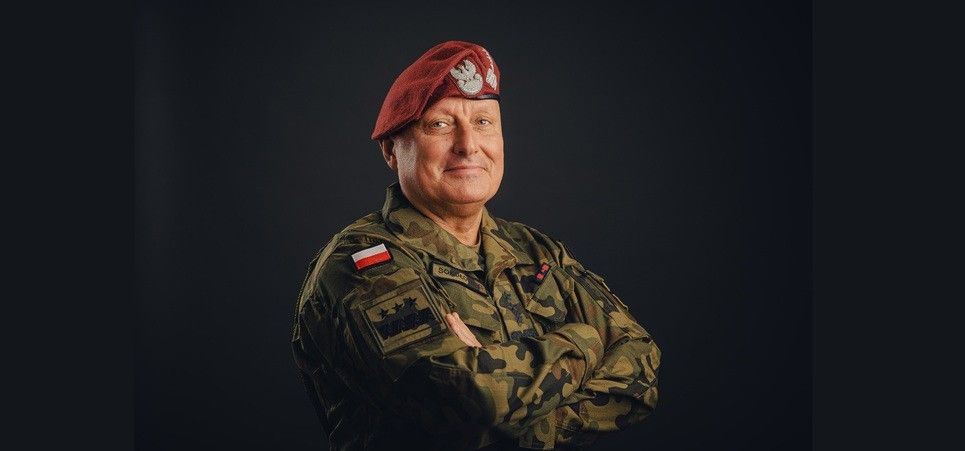
F-35s almost here. General Commander on the plan to strengthen the air assets inventory by 2032
Lieutenant General Marek Sokołowski says preparations for introducing the F-35 into the Polish Air Force are well advanced, with infrastructure work, pilot training and technical personnel training under way. The first three aircraft are expected in Poland in May 2026, while full operational capability at the Łask base is planned for 2030 and at Świdwin for 2032.
The interview also covers the implementation of FA-50 aircraft, the future modernisation of Polish F-16s, and the introduction of AH-64E Apache Guardian helicopters. General Sokołowski stresses that these programmes, together with new training priorities and counter-drone capabilities, are intended to significantly strengthen the operational potential of the Polish Armed Forces.
Author: Jędrzej Graf
Five and a half trillion złoty later. When a nation breaks: the true cost of war for Poland
The article presents the report Economic Costs of War for Poland, unveiled during Defence24 Days in Warsaw. It describes several war scenarios, from limited missile and air strikes to full-scale war, showing how each could damage Poland’s economy, infrastructure and society.
In the most extreme scenario, the report estimates reconstruction costs at 5.5 trillion złoty, with severe GDP collapse, hyperinflation, mass unemployment and long-term social trauma. The article argues that understanding these potential costs should support better decisions on defence funding, resilience and national preparedness.
Author: Michał Zgórzak
See also


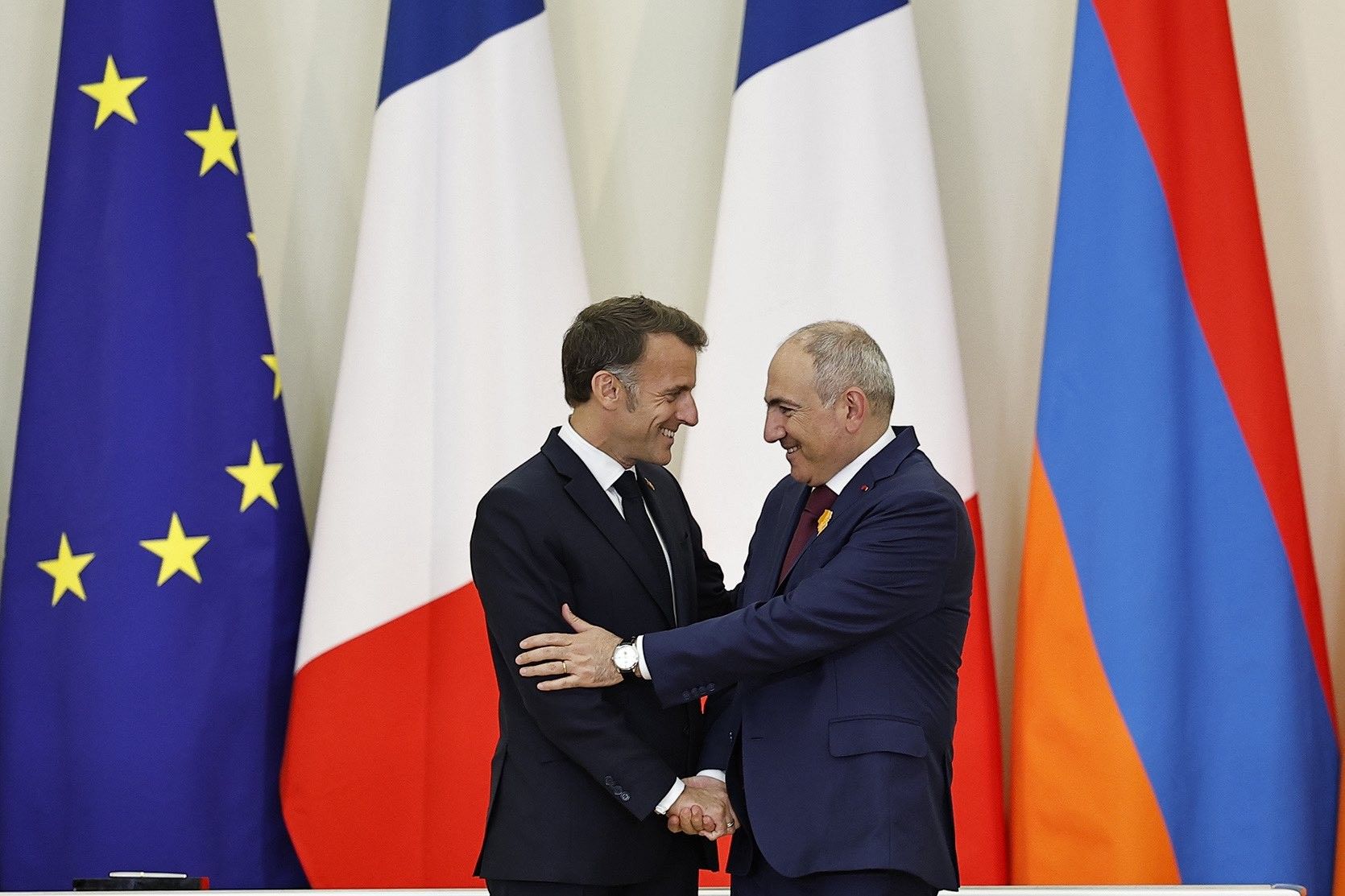
France pushes Russia out of Armenia
The article argues that France is using military cooperation with Armenia to weaken Russian influence in the South Caucasus. The delivery of French CAESAR artillery systems, alongside earlier support including Mistral missiles, GM200 radars and Bastion armoured vehicles, marks a shift in Armenia’s defence policy after the failure of Russian security guarantees.
France’s wider strategy also includes expanding its influence in Central Asia and strengthening ties with partners such as Greece and India. The article concludes that Armenia may become one of France’s most important strategic openings outside Europe, although Russia is likely to remain present in the country for some time.
Author: Aleksander Olech
See also
Polish-Ukrainian defence-industrial cooperation accelerates amid systemic bottlenecks
Polish-Ukrainian defence-industrial cooperation is gaining momentum, supported by stronger political will, greater Ukrainian openness to technology sharing, and Polish efforts to simplify testing and procurement procedures for autonomous systems. The article highlights growing cooperation between engineers and industry representatives from both countries.
However, experts warn that regulatory differences, lack of coordination and limited cross-border mobility still slow down practical cooperation. Recent projects, including the planned production of Bohdana howitzers in Poland and a joint drone fleet initiative, show that the partnership is already moving forward despite these obstacles.
Author: Kacper Kremiec

The 89 percent myth: what the politicians don’t get re: SAFE
The article argues that government claims that nearly 90 percent of Poland’s SAFE funds will go to the domestic defence industry are misleading, while opposition warnings about money simply flowing abroad are also overstated. Even equipment labelled as Polish, such as Jelcz trucks, Krab howitzers and Borsuk infantry fighting vehicles, relies heavily on imported components.
The authors stress that Poland should focus on reducing critical dependencies through licensing, technology transfer and inclusion in international supply chains. They conclude that strengthening domestic production of key components is essential for economic resilience, military readiness and security in a crisis or wartime scenario.
Author: Antoni Walkowski, Jakub Palowski, Jędrzej Graf

Natural partnership: Poland and the Nordic countries
The article argues that Poland and the Nordic countries are natural partners due to their shared Baltic geography, similar security concerns and complementary economies. Nordic innovation, institutional experience and technological leadership can combine with Poland’s large market, industrial capacity and logistics infrastructure.
The author highlights potential areas of cooperation including defence, cybersecurity, healthcare, education, migration policy, finance, innovation, culture and tourism. He concludes that deeper cooperation would strengthen regional resilience and create a more competitive partnership within Europe and beyond.
Author: Aleksander Olech