- WYWIADY
- WIADOMOŚCI
F-35s almost here. General Commander on the plan to strengthen the air assets inventory by 2032 [INTERVIEW]

„I emphasize that the introduction into service of 96 AH-64E Apache Guardian helicopters will allow for a step-change enhancement of the capabilities not only of Army Aviation, but of the entire Polish Armed Forces. The Apache Guardian helicopters are equipped with modern sensors and weapons that make it possible to engage the enemy effectively, and they are also adapted for operations in a network-centric environment, including cooperation with Abrams tanks,” says Lieutenant General Marek Sokołowski, General Commander of the Branches of the Armed Forces, in an interview with Defence24.pl.

We invite you to read the first part of the interview with the General Commander of the Armed Forces, Lieutenant General Marek Sokołowski.
Jędrzej Graf: General, let us talk for a moment about the combat aviation of the Air Force from the perspective of building new capabilities. The first F-35s will arrive in Poland soon. What is the status of infrastructure and crew preparations?
General Commander of the Armed Forces, Lieutenant General Marek Sokołowski: The F-35 implementation process is advanced and covers both infrastructure and personnel training. At the 32nd Tactical Air Base in Łask, key investments have been completed, while at the 21st Air Base in Świdwin, ten investment projects are under way, with completion planned for early 2027.
Pilot training is being conducted in the United States and covers 24 pilots, with training scheduled to be completed in September 2027. Training in Poland will begin in September 2026. In parallel, 93 technicians and support personnel have been trained, including ALIS/ODIN system specialists.

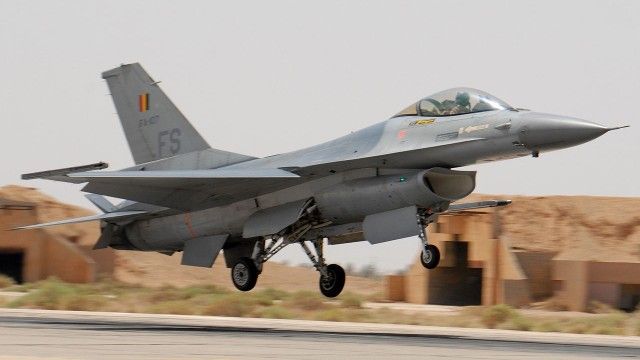
Photo. ZOOM - Z Obiektywem Obok Munduru
The first three aircraft are scheduled to arrive in Poland in May 2026, and by the end of the year a total of 14 aircraft are planned to be delivered. Another 12 aircraft, including eight currently used for training, will arrive in Poland in 2027. The remaining aircraft will be delivered in 2028–2030. Initial operational capability for the 32nd Base is planned for 2027, and full operational capability for 2030. In the same year, the F-35s at the 21st Base in Świdwin will achieve initial readiness. Full operational capability of the 21st Tactical Air Base squadron is planned for 2032.
The F-35 is a system of systems. It includes not only aircraft, but also logistics, IT systems, mission planning, and global spare-parts management under the Global Asset Management concept. This provides access to spare parts on favorable terms.
The F-35 is a key capability for the Air Force, but FA-50 aircraft have been in use since 2023. How is their implementation progressing?
In 2023, 12 FA-50GF aircraft — Gap Filler aircraft — arrived at the 23rd Tactical Air Base in Mińsk Mazowiecki. Today we have a fully completed equipment set, both in terms of FA-50GF aircraft and additional ground support equipment, including IT systems, technical documentation, simulators, and test and measurement equipment. In July 2025, the simulator center was put into service and the use of the simulators was authorized.
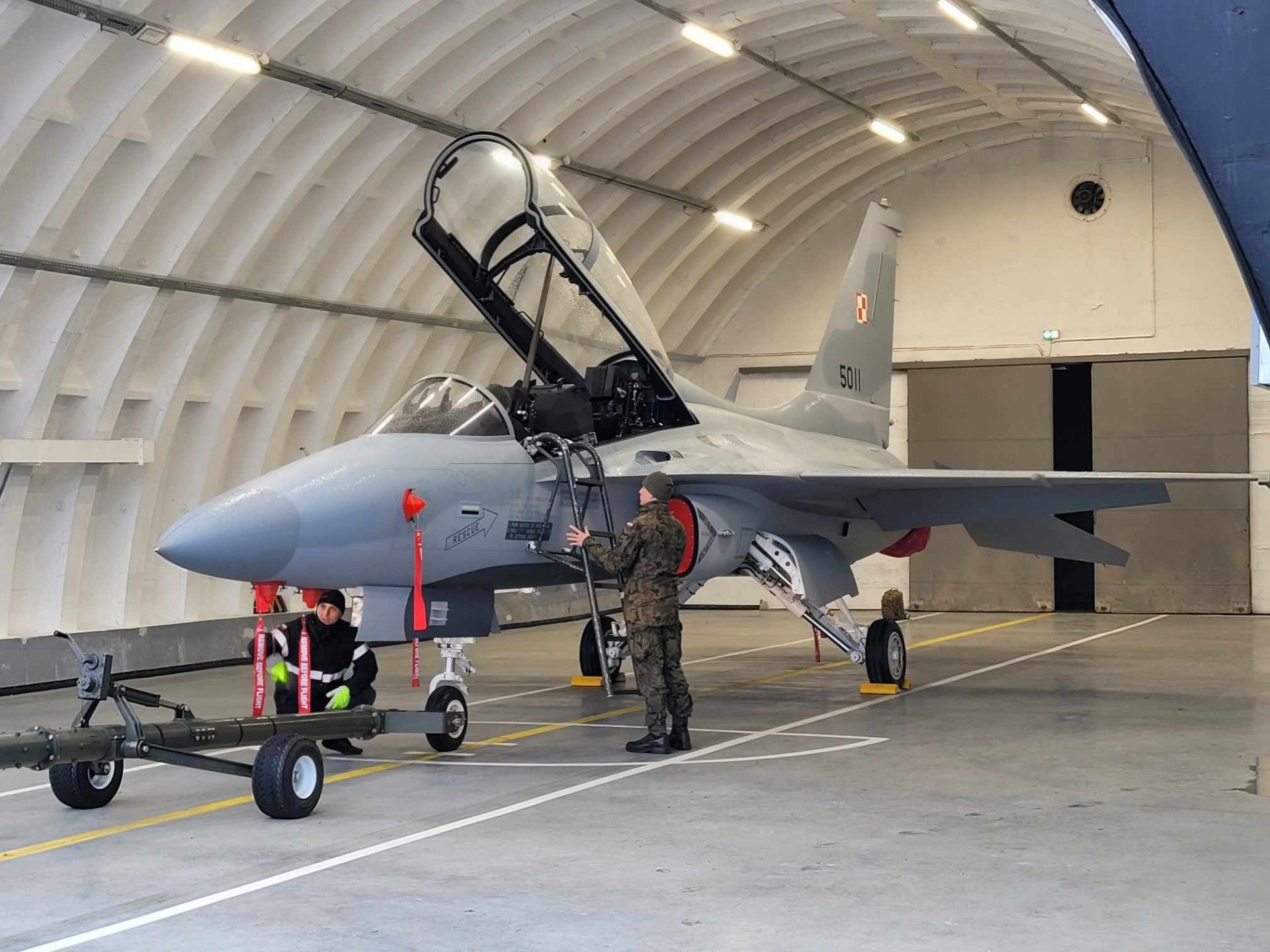
Photo. Maciej Szopa/Defence24
At present, the FA-50 aircraft are undergoing procedures to implement armaments from manufacturers in the Republic of Korea and the United States. We are also awaiting the start of deliveries of aircraft in the more advanced FA-50PL version. Work is under way to adapt infrastructure for the operation of two squadrons — 32 aircraft — in Mińsk Mazowiecki and one squadron — 16 aircraft — in Świdwin.
The FA-50GF implementation process has features typical of introducing new military equipment. Based on Polish-Korean cooperation, all problems are being resolved on an ongoing basis. In 2025, the aircraft demonstrated the highest serviceability rate among all platforms used by the Polish Air Force. We are also conducting training in coordination with F-16 fighter users in order to develop common operational procedures. The first Polish pilots have already been trained to instructor level. Pilot training is under way to achieve Combat Mission Ready status and initial operational capability. I emphasize that despite the very large number of undertakings and challenges connected with implementing the entire FA-50 program, the system is very highly rated.
General, you have mentioned cooperation with F-16 pilots. What about preparations for the modernization of those aircraft? This is a major undertaking.
Let me begin by saying that, in accordance with the agreement signed by the Minister of National Defence, the scope of the modernization is very broad. We are acquiring, among other things, new radars, electronic warfare systems, area reconnaissance systems, and communications systems. Other elements will undergo deep modernization, including mission computers, as well as Sniper targeting pods, which in the new variant will enable two-way data exchange. New and modernized types of air-to-air and air-to-ground weapons will be integrated with the fighters, including advanced variants with increased resistance to jamming.
I can confidently say that the modernization of Polish F-16 fighters will represent a qualitative leap. The aircraft will gain entirely new capabilities. But this also involves major challenges. The F-16s are currently the backbone of the Air Force’s combat potential, so the number of aircraft that can be sent for modernization work at the same time will depend on the operational tasks being performed by the Air Force. We will hand over the first four aircraft to WZL No. 2 in Bydgoszcz in 2029. The American side is currently carrying out contracting work. We anticipate that the main agreement with the aircraft manufacturer, Lockheed Martin, will be concluded in the second half of this year, followed by a contract with the main subcontractor, WZL-2 S.A.

Photo. mł. chor. Rafał Samluk / Combat Camera DORSZ / zoom.mon.gov.pl
The Armament Agency plays a key role here, but officers of the General Command are also involved in the work on F-16 modernization. I can say that since November, an ad hoc Steering Team has been working on the contract. It was established by order of the Head of the Armament Agency and consists of representatives of organizational units of the Ministry of National Defence.
Even today, however, F-16 modernization is a very major organizational effort for the Polish side. In order to improve coordination, a draft decision on appointing a Ministry of National Defence Plenipotentiary for the modernization of F-16 aircraft to the VIPER standard — F-16V — is being processed for signature at the Ministry. In addition, an urgent organizational and staffing request is being processed at the Ministry of National Defence concerning the creation, within the General Command of the Branches of the Armed Forces, of an Aviation Modernization and Technology Directorate responsible for coordinating and supervising the proper and uninterrupted course of the MLU process. We must remember that modernization is a highly complex undertaking, requiring cooperation among various units of the Ministry of National Defence and the Armed Forces, as well as truly enormous effort from the people involved in the process. The result will be new capabilities needed by the Air Force.
Another important aviation project for the Polish Armed Forces, although not connected with the Air Force, is the introduction of AH-64 Apache helicopters, ultimately in the latest AH-64E Apache Guardian version. How is this process progressing, and what capabilities will the Armed Forces as a whole gain from introducing these new platforms?
Let me recall that the acquisition of AH-64E helicopters for service in the Polish Armed Forces was initiated by the signing, in August 2024, of an executive agreement for the delivery of 96 AH-64E helicopters together with a logistics package. In February 2025, an agreement was signed under which the 56th Air Base operates eight AH-64D helicopters as an interim solution, delivered from June 2025 to March 2026. Deliveries of helicopters in the target Apache Guardian version will take place from 2028 to 2032.

Photo. Adam Świerkowski / Defence24
I emphasize that the introduction into service of 96 AH-64E Apache Guardian helicopters will allow for a step-change enhancement of the capabilities not only of Army Aviation, but of the entire Polish Armed Forces. The Apache Guardian helicopters are equipped with modern sensors and weapons that make it possible to engage the enemy effectively, and they are also adapted for operations in a network-centric environment, including cooperation with Abrams tanks. Their introduction will therefore increase firepower, but also the situational awareness of those fighting, while the helicopters themselves will enable rapid response to threats in the land domain, as well as threats from slow-flying aircraft such as drones and from small watercraft. In Poland’s situation, these are key capabilities.
At the same time, we realize that introducing such a number of helicopters is a major organizational challenge. Training is already being conducted in cooperation with the United States, at several locations. Basic pilot training takes place at Fort Rucker in the U.S., including simulator, theoretical, and practical training, while technical personnel train at Fort Eustis in the United States. In the next stage, Polish pilots and technicians train at the 56th Air Base, with support from the American side, using leased helicopters. The training covers more than 40 pilots and members of technical personnel.

Photo. 1st "Warszawska" Armoured Brigade.
Further basic pilot training courses are planned for this year, and the first of the previously trained groups is preparing for field training that will enable qualification in the use of weapons. We are also conducting training using the LCT — Longbow Crew Trainer — flight simulator at one of the U.S. Army bases in Germany. In the near future, Polish instructors are expected to begin flight training, which will be significant. All these efforts make it possible to prepare crews and technical personnel sufficiently early, so that readiness can be achieved shortly after the delivery of the final helicopters destined for the Armed Forces to use.
Two new helicopter types are also being introduced: the AW149, where deliveries are ongoing, and the AW101 for the Navy, where deliveries have already been completed.
These two contracts differ significantly from each other. The 2022 agreement for the delivery of 32 multirole helicopters for the Land Forces is currently being implemented, with deliveries ongoing since November 2023. So far, they have covered helicopters in four configurations, but ultimately all of them will be unified. Together with the helicopters, a comprehensive training system was also purchased, consisting of two multimedia classrooms, a Maintenance Training Simulator — MTS — for the helicopter, an FNPT — Flight and Navigation Procedures Trainer — for pilots to practice flight and navigation procedures, and an FTD — Flight Training Device — flight-training simulator. From 2027, after the FTD simulator is delivered, we will be able to train AW149 pilots domestically. Technician training is already being carried out based on the Aviation Training and Engineering Center in Dęblin. Specialist pilot training is currently under way, including night flying and weapons employment; once completed, the next group of pilots will be trained.

Photo. Leonardo
As for the four AW101 helicopters ordered in 2019, they have already been delivered together with a training and logistics package. The signed agreement includes the delivery of a training system in the form of a multimedia classroom with a training system, as well as a contract for simulator training for pilots in Norway. Pilot and technician training is therefore based on the domestic base, while also including simulator training for crews in Norway. The 44th Naval Aviation Base conducts various types of specialist training, including weapons employment.

Photo. Polish MoD
Both the AW149 and AW101 are modern, forward-looking helicopters, with a future in the Polish Armed Forces. The process of implementing these modern weapons platforms in the Polish Armed Forces is proceeding systematically, with a strong emphasis on technological integration and training. In the case of both the AW149 and the AW101, however, measures are necessary to improve their operational availability and enhance the logistics system. Soldiers welcome the new systems with enthusiasm, but point to the need for more field practice and faster logistics response. Proper implementation of the recommendations will accelerate the adaptation process and increase operational effectiveness.
General, what are the General Command’s priorities for 2026 in the area of training?
Training priorities follow directly from the experience of contemporary conflicts, above all the war in Ukraine and operations in the Middle East. We can see how dynamically the battlefield is changing and how important the ability to adapt and use new technologies has become.

Photo. Irena/12. "Szczecińska" Mechanized Division.
In 2026, we plan to carry out 134 training events, including 38 tactical exercises with troops. The most important include the Bursztynowy Obrońca-26 and Czarny Obrońca-26 exercise federations.
In the international dimension, the Polish Armed Forces will take part in more than 100 exercises, including Arcane Thunder 26, JMRC 26-07, and Baltic Shield 26. We place particular emphasis on multidomain operations, the use of unmanned systems, combat in urban terrain, and countering hybrid threats.

Photo. Defence24
At the same time, training infrastructure, simulation systems, and capabilities for training UAV operators and conducting counter-drone operations are being developed. All of this is intended to ensure that dynamic technical modernization translates directly into real operational capabilities for the Polish Armed Forces.
Thank you for this conversation.