



- KOMENTARZ
- WAŻNE
- WIADOMOŚCI
Costs push France toward caution on Iran

France is maintaining a strictly defensive posture in the growing confrontation with Iran, despite increased military activity in the Gulf. French Rafale jets have intercepted dozens of Iranian drones over the United Arab Emirates, but Paris is carefully avoiding any offensive role in the conflict. Rising operational costs, limited missile stockpiles and domestic political concerns are pushing the French government to focus on defence and diplomacy rather than escalation.
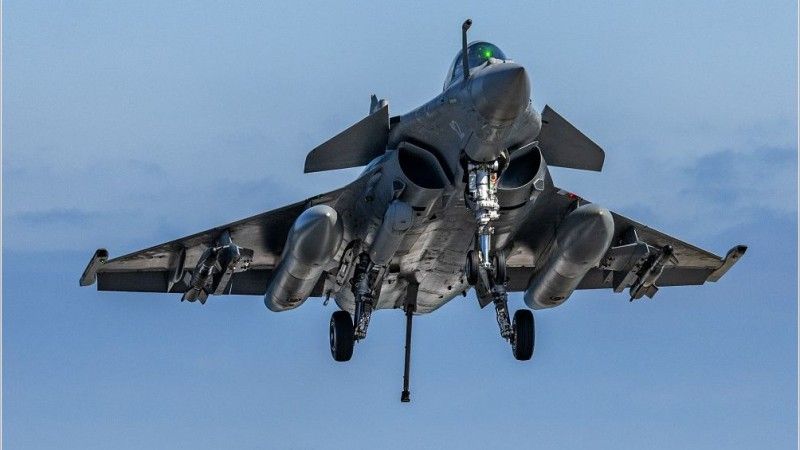
French Rafale aircraft have been actively intercepting Iranian Shahed drones over the United Arab Emirates under defence agreements between Paris and Abu Dhabi. The operations have proven effective, with a high success rate in neutralising incoming threats. However, as pointed in La Ttribune by M. Cabirol, the intensive use of MICA air-to-air missiles has rapidly reduced French stockpiles, exposing one of the key vulnerabilities of the French armed forces – limited reserves of complex munitions despite several years of „war economy” policies introduced by President Emmanuel Macron.
The issue has caused serious concern within the French defence establishment, prompting the government to convene a crisis meeting in order to find solutions that would allow France to maintain operational capability over the longer term. This is particularly sensitive given that around 90 per cent of the equipment used by the French armed forces is produced by the domestic defence industry. Even with such a strong national industrial base, the conflict has demonstrated how quickly advanced munitions can be consumed during sustained operations.
Despite the tensions in the region, Paris has made it clear that it does not intend to participate in offensive military operations against Iran. France’s posture remains defensive and focused on protecting its partners and its own military presence. President Emmanuel Macron has also not responded to Washington’s request to deploy naval forces to help secure shipping routes through the Strait of Hormuz. Most French naval assets capable of offensive action remain positioned in the eastern Mediterranean, but they have not been used to escalate the situation.
Instead, France is focusing on its own regional priorities, particularly Lebanon. Paris is preparing diplomatic initiatives aimed at opening negotiations that could lead to ending the war there. Macron has criticised Israeli strikes on Lebanese territory but at the same time has avoided committing France to any direct military escalation. Stabilising Lebanon remains a strategic priority for Paris, far more important than joining a broader military campaign against Iran.
The rising financial burden of military operations is also shaping French decision-making. The conflict is already becoming extremely costly for the United States, and the French government is keen to avoid a similar scenario. French forces remain deployed across the region, including in Iraq, Jordan and Djibouti, and several French soldiers have recently been wounded while one has been killed. For now, Paris intends to maintain its defensive posture and limit its involvement, carefully balancing its regional commitments with the growing economic and political costs of the conflict.


