



- WIADOMOŚCI
South Korea reduces military buffer zone

South Korea’s Ministry of National Defence has announced a plan to reduce the width of the military buffer zone along the border with North Korea. The change aims to stimulate regional development and improve the quality of life for residents by facilitating their access to these areas.
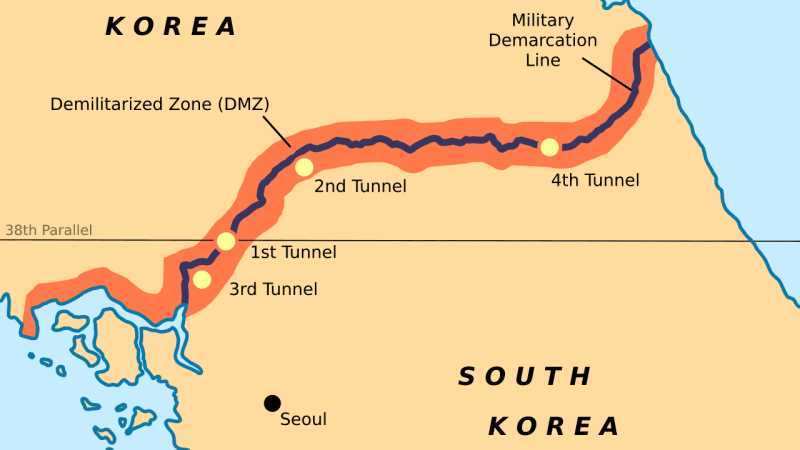
Photo. Rishabh Tatiraju - Own work / CC BY-SA 3.0
The buffer zone is set to be reduced from 10 to approximately 6 kilometres. Around 270 square kilometres will be transformed into a zone with relaxed restrictions, allowing for private investment. An additional 450 square kilometres will be completely freed from restrictions. Anti-tank barriers will be removed in 23 locations, and regulations for agricultural drone flights will be simplified.
“We have developed a plan to adjust the Civilian Control Line to future security conditions in the face of the military’s shrinking personnel resources, while simultaneously ensuring operational capability,” stated South Korean Defence Minister An Gyu-back. In this way, the region will have a chance to develop “as long as it does not interfere with military operations”.
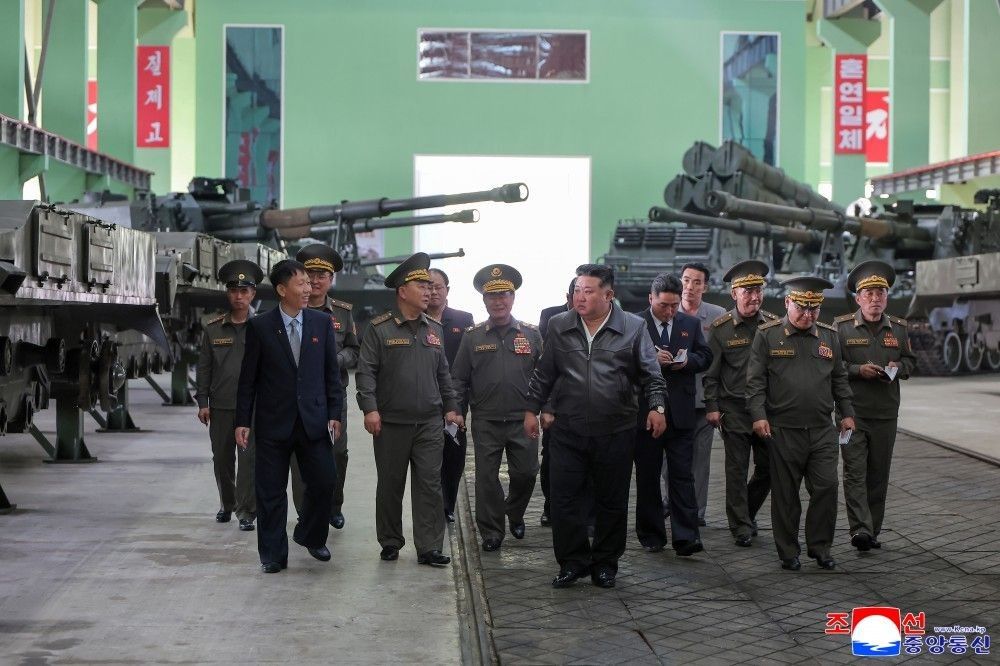
The Civilian Control Line runs parallel to the inter-Korean Military Demarcation Line. It was established after the Korean War of 1950-1953 to protect military installations. The two Koreas never signed a peace treaty and formally remain at war, despite the absence of regular combat. An armistice is currently in effect between the parties.
The current administration in Seoul seeks to ease tensions with Pyongyang. The presidency is held by the relatively liberal Lee Jae-myung, who replaced the conservative (and controversial) Yoon Suk-yeol in 2025. However, North Korean authorities do not share the enthusiasm of the sitting administration and firmly reject all reconciliation efforts. In May, in a new version of the constitution, Kim Jong-un’s regime redefined the status of South Korea. It is now treated as a separate state, ruling out the possibility of a peaceful reunification of the two Koreas. After the Korean War, Korea ultimately split into two different political entities, each recognising its own state as the “true Korea”.


