



- WIADOMOŚCI
Is air defence Europe’s Achilles’ heel?

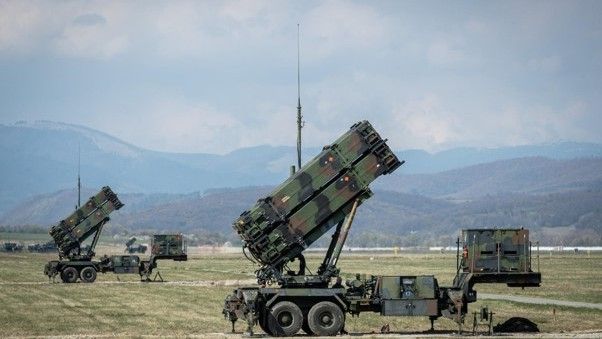
Photo. Defensie.nl
Lacking layered, integrated, and resilient air defences, the continent could fail to withstand future Russian drone and missile onslaughts. A new GLOBSEC report reveals both the scale of Europe’s air exposure and what it would take to close it.
The report’s author, Tomáš Nagy, begins with a blunt assessment: “Europe’s air and missile defence posture is not designed for the threat it faces today.” After the Cold War, NATO countries gradually hollowed out their air defence systems, while Russia systematically strengthened its capabilities in both offensive and defensive domains.
This should be all the more concerning for Europeans given that ballistic and cruise missiles, one-way attack drones, and FPV systems have become primary instruments of modern coercive warfare, as demonstrated by Russia’s full-scale invasion of Ukraine. According to Nagy, it is coercion, not conquest, that “remains at the core of Russia’s strategy toward the greater Europe.” This is particularly alarming at a time when the “threshold for sustained grey-zone provocations and air domain harassment has been demonstrably lowered,” as shown by repeated Russian drone incursions and airspace violations along NATO’s eastern flank.
Acceleration that becomes costlier every day
What Nagy proposes is therefore not a sweeping reinvention of the Alliance’s approach to integrated air and missile defence (IAMD), but an acceleration of its ongoing modernisation, which remains too slow. This should mean greater capability, more efficient integration, stronger sustainment, and systems designed for the threats of 2030. As he warns, “the window for doing so at manageable cost is narrowing.”
NATO has already acknowledged this reality. In June last year, NATO Secretary General Mark Rutte called for a fivefold increase in the Alliance’s IAMD capacity. According to NATO’s own assessments, member states currently field only five percent of the air defence capabilities required for regional plans. Meanwhile, Russia can produce more than a thousand ballistic missiles and tens of thousands of long-range UAVs annually, figures that already clearly outpace Western interceptor manufacturing.
See also


Layered air defence built around clear protection priorities
What, then, are Nagy’s concrete prescriptions? First, Europe must conduct a collective vulnerability and risk assessment to establish a shared hierarchy of protection, which it currently lacks. This means deciding which areas and assets, from critical infrastructure and military facilities to population centres, should be prioritised, in what order, and with which defensive systems.
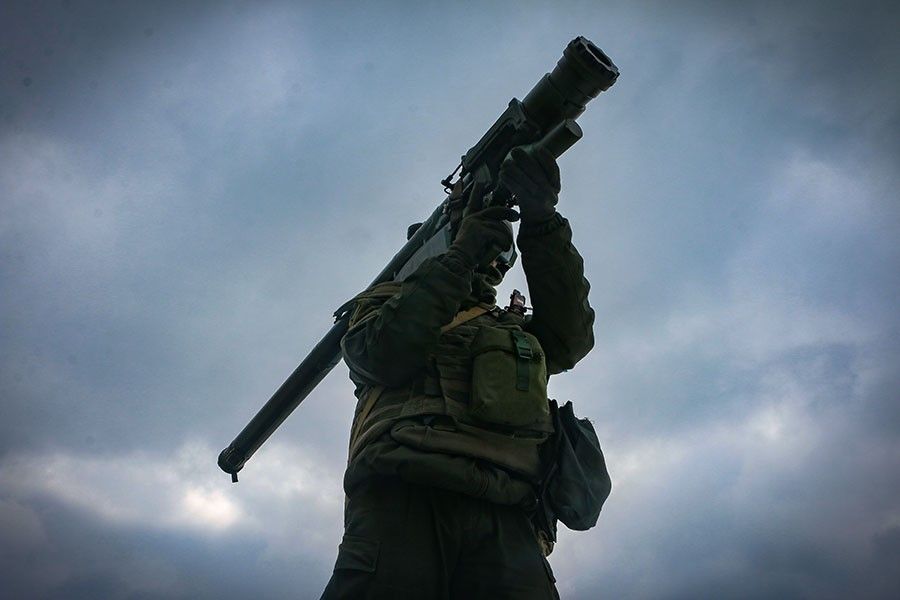
Europe must also recalibrate its high-low capability mix, which is currently poorly suited to mass, low-cost attacks. This means building IAMD capacity across all layers, from high-end interceptors to lower-cost systems. The most urgent investment, however, should go into cheap-kill solutions, including gun-based systems, programmable ammunition, loitering interceptors, counter-UAS systems, electronic warfare, and directed-energy weapons.
For Nagy, credible offence is inseparable from credible defence. Europe must be able “to threaten the archer rather than merely intercept the arrow”: to hold Russian territory at risk and disrupt its war machine before it reaches Allied territory, as Ukraine is increasingly doing. European countries are already moving in this direction through long-range strike initiatives such as ELSA, but these programmes must be matched with faster near-term procurements and action to fix the cruise missile engine bottleneck.
The report assigns equal importance to sovereign early warning from space, a capability Europe still lacks and for which it remains heavily dependent on the United States. As Nagy reminds, “an interceptor that cannot be cued in time is not a deterrent.” Europe must therefore further accelerate and expand existing programmes in this area, such as JEWEL and ODIN’S EYE, while also ensuring that these systems receive an adequate level of protection in space, another area long neglected by Europeans.
The deeper problem: integration, learning, and culture
The final two major sets of recommendations concern issues frequently raised in the wider debate on European defence: integration and lessons from Ukraine’s battlefield. In Nagy’s view, both remain insufficiently developed in the IAMD domain as well.
“The gap between Europe’s declared IAMD ambition and its operational reality is not primarily a gap in interceptors. It is a gap in integration,” Nagy argues. Many European systems are technically interoperable, but they are still not genuinely integrated into a shared kill chain with common command and control, sensor fusion, engagement rules, and real-time cross-border coordination.
On lessons from Ukraine, Nagy observes that “the problem was not a lack of available lessons. It has been a systemic institutional inability in Europe to absorb them.” In his view, Europe must abandon its attachment to slow procurement procedures, perfectionism, and prestige platforms, and instead adopt an “80 percent solution” culture. Priority should go to systems that are good enough, cheap enough, and fast enough to be fielded at scale.
Europe’s air defence predicament therefore mirrors the wider problem of its rearmament. The continent is not only short of systems; it is constrained by habits, institutions, and rules built for another era. That is what makes acceleration so difficult.


