



- ANALIZA
- WIADOMOŚCI
- WYWIADY
How does modern air defence work? Ukrainian officer explains

The war in Ukraine has already taken four years. Means of air defence have changed over time. In an interview with Defence24, Senior Lieutenant Oleksandr Vorobiov, Air Defence Deputy Chief and Training Officer, discusses what does and does not work on a modern battlefield.
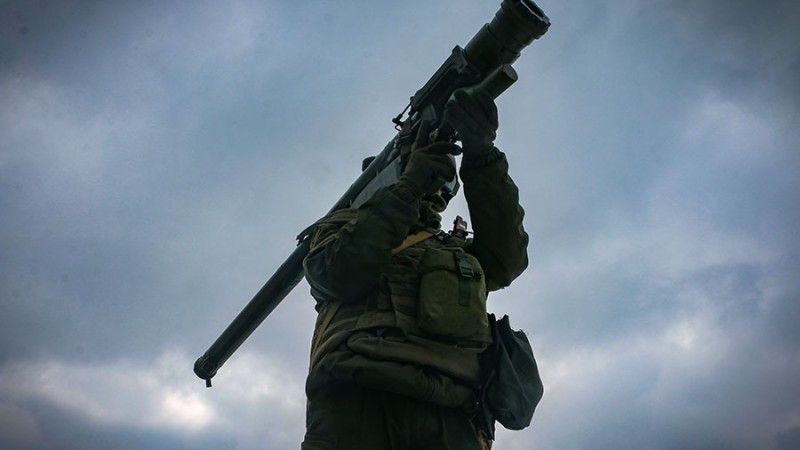
Photo. Ukrainian Armed Forces via Twitter.
Jędrzej Graf (Defence24): What are the specifics of the modern Army air defence at the frontline in Ukraine? I understand war has changed very much since 2022, and the drone threat has increased.
Oleksandr Vorobiov, Senior Lieutenant, Air Defence Deputy Chief and Training Officer, Third Army Corps: The defence is organised into echelons. We operate at the line of contact and are the first to encounter the enemy’s aerial threats. The main aerial threat we see is cheap, unmanned aerial systems that are being used in masses. Destroying those with conventional missile-based air defence systems is ineffective because of the cost of those missiles, but also because air defence systems are priority targets for the enemy. What we want is to ensure the enemy targets, primarily UAVs (Unmanned Aerial Vehicles), are destroyed as close to the line of contact as possible. So, in the first echelon, there is minimal presence, only covered infantry. The second echelon is up to 15 km, and from 20 km it is perhaps the 3rd echelon.

Jędrzej Graf: This first echelon, how deep is it?
Oleksandr Vorobiov: It goes up to 5 kilometers. The main problem here is small reconnaissance drones like the Mavic, DJI, and Autel, as well as small bombing drones—the same Mavics carrying small grenades or ammonium explosives.
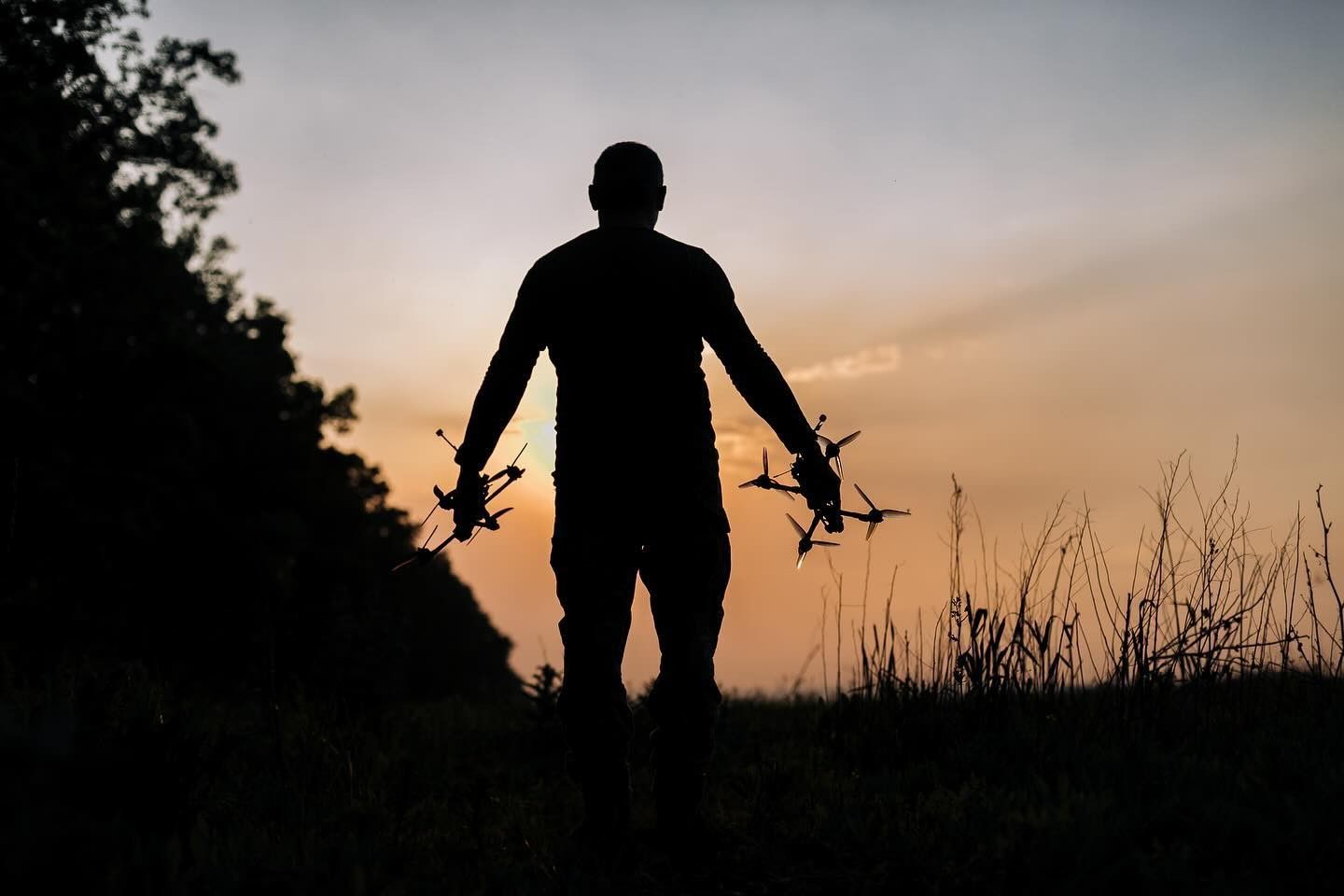
In these first 5 kilometers, we almost never have any sensors. Nothing. We cannot put a radar there because it would surely be destroyed. Even slightly behind that line, it’s difficult. Our infantry is in the bunkers or “blindages”; they can hear something, and then they are bombed. I am 100% sure the enemy will try to destroy our first echelon positions, so sometimes I don’t even need sensors to know they are coming. I send our own FPV interceptors—small 8-inch or 10-inch drones—just to intercept those small enemy drones.
A bit deeper, at the 5-kilometer mark, we have roads used for logistics. I can put small radars on the main spots of these roads—for example, where two roads connect, which is a point of interest for the enemy. We use small radars like the Robin Radars (from the Netherlands). These radars give my guys with shotguns and machine guns a heads-up. They hide in the bushes or underground, and when the radar shows something is coming, they step out and strike. We are talking about hundreds of drones per month. This first echelon is our biggest problem because there are no sensors and supply is difficult; the guys there are just surviving. My drone teams stay 8 to 10 kilometers back and try to cover the infantry from that distance.
Jędrzej Graf: In this first echelon, what about MANPADS (Man-Portable Air-Defence Systems)?
Oleksandr Vorobiov: Yes, we have them, but the enemy doesn’t send many jets or helicopters that close anymore—maybe only about eight helicopters a month in this sector. But we keep MANPADS there because if they decide to launch an air assault and I don’t have them, it’s a big problem.
Jędrzej Graf: Which region are you operating in now?
Oleksandr Vorobiov: Our responsibility stretches from Balakliya in the Kharkiv region to Sloviansk in the Donetsk region. It’s a very big area. Regarding MANPADS, to hit the enemy’s helicopter now, I would literally need to be on the enemy’s side. They don’t come within 4–5 kilometers anymore; they stay 7–10 kilometers back and launch unguided rockets (NURs) at an upward angle. It’s almost useless for hitting targets precisely, but it keeps them safe.
Sometimes at night, we might crawl into the “grey zone” with a MANPADS launcher to try to catch them, but it’s not a common practice. There was also an occasion when we managed to take a helicopter down with a 10-inch interceptor FPV drone, which originally was going after another target, but such things are very rare now. However, we are going to make it more systematic.
Jędrzej Graf: What happens in the zone further back, beyond 15 kilometers?
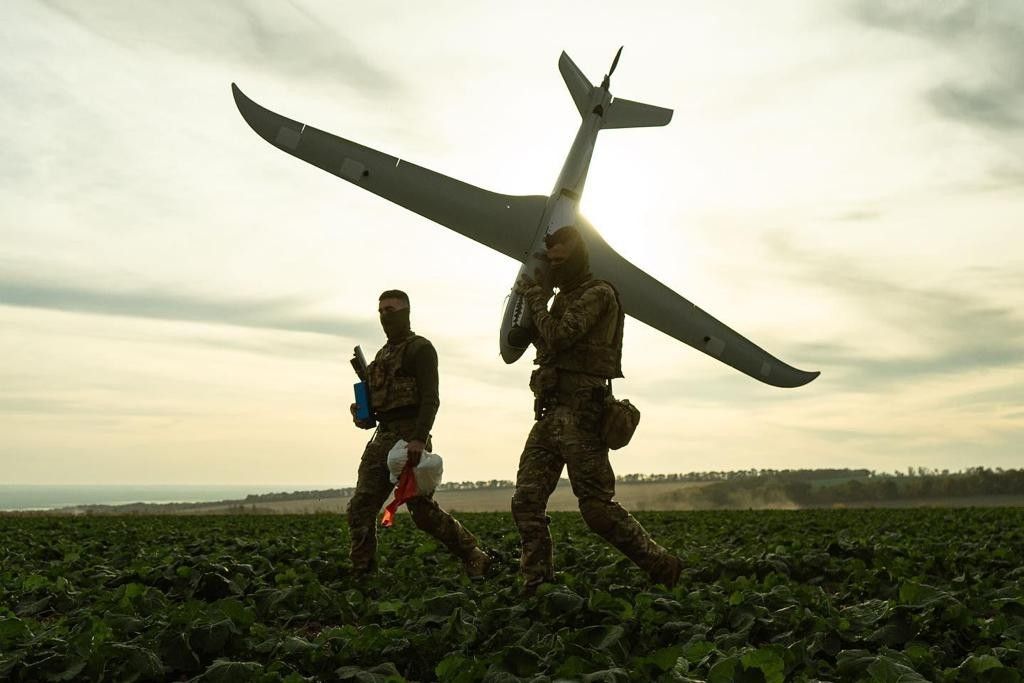
Oleksandr Vorobiov: Between 15 and 20 kilometers from the front, we can place our first big radars. Here we can track ISR (Intelligence, Surveillance, and Reconnaissance) drones and intercept them. We use the Ukrainian ELR (Extended Long-Range) radar. It’s a directional radar that can move 360 degrees. These are perfect for identifying drones – ISR, not the smallest ones like Mavic, but the ones like Orlan, Zala, Supercam, and Lancet.
On the other hand RADA radars, which are 3D, are very effective in identifying Shaheds. We place them 20 km from the line of contact and beyond. We also use Polish APS radars, but the current version (older generation) has some limitations. We are working with the manufacturer to improve the radars. And we are also waiting for larger radars such as Saab Giraffe. Larger medium range radars can be placed only in the deep echelon, from 20 to 50 km, where also larger interceptor drones, and some missile systems, are being placed. We have launchers for MANPADS, but we don’t have rockets, missiles.
I would like to say that currently, sensors, radars—particularly 3D, EO sensors—and to a lesser extent acoustics, are the things we need most. We really need a big number of radars; without them, interceptors will not be effective, and acoustics are less effective as well.
Jędrzej Graf: What kind of effectors do you use at that range, around 20 km?
Oleksandr Vorobiov: Mostly interceptor drone operators. We also use Ukrainian systems like the P1SUN and Steam. The effectiveness depends on the team, but generally, a 40–50% success rate is normal. A “best score” is around 70%. It’s hard to count—if we launch 100 drones and destroy 55 targets, is that 55% effectiveness? Sometimes I can fix 10 or 15 of those drones. How should I count it? From launches or from lost drones?
Jędrzej Graf: Do you use any anti-aircraft artillery in that 0–20 km zone, like the ZU-23 (a Soviet towed 23×152mm anti-aircraft twin-barreled autocannon)?
Oleksandr Vorobiov: Not really, because they are too big and vulnerable. We have artillery only in the deep echelon, beyond 20 km. However, what we are doing now is taking UGVs (Unmanned Ground Vehicles), putting an unmanned turret on them, and sending them there. We hide them and use them without people. It’s not fully implemented yet; it’s in the R&D stage. We are looking for the best UGVs and turrets. The main problem is detection—how will the UGV find the target?
Jędrzej Graf: Polish companies have some of the best UGVs in NATO, like Gnom and Goblin from Macro-System.
Oleksandr Vorobiov: I have heard of Gnom. In our Corps, the 3rd Assault Brigade is the best at UGV logistics. We recently ran a competition for Ukrainian UGVs; they had to navigate a route and complete missions. Out of 15, only two or three passed through. We should keep in touch regarding the Polish-made options because stabilisation is the key to an effective effector, and I heard Gnom is very good at that.
See also


Jędrzej Graf: Have you looked at European startups for interceptors?
Oleksandr Vorobiov: I spoke with Frankenburg Technologies and Nordic Air Defence. We discussed for over an hour what they have and what they can do. I am waiting for European solutions because we need them.
One thing I would like to mention is the reason why we are using drones that are being piloted from start to finish for air defence. They are available. I would like to use a semi-automatic system, but it is either too expensive or most often does not exist yet in a form that could be used on the battlefield. If I have 30 targets, I’d definitely prefer 100 drones I have in stock rather than 100 non-existing missiles. Of course, like I said, we need European solutions, but we are not there yet.
Jędrzej Graf: What MANPADS do you use?
We have Polish Piorun and also other MANPADS, including RBS-70, Stinger, Igla, and French Mistral. We have many launchers, but we don’t have ammunition missiles. This is difficult; you need time to produce those.
Jędrzej Graf: What about laser guided rockets, such as American APKWS (Advanced Precision Kill Weapon System)?
Oleksandr Vorobiov: This is an effective system, against Shaheds. Currently it is mostly used in the Air Force, just like the bigger systems such as NASAMS, IRIS-T and even Patriot. We asked the government to provide those systems to us as Land Forces also, we think it can be effective against Shaheds.

Jędrzej Graf: What about long-range systems against cruise missiles or ballistics?
Oleksandr Vorobiov: That is not my zone of responsibility. As Land Forces, we focus on short-range threats. I know systems like Patriot and NASAMS are effective, but our main task is covering the frontline troops.
Jędrzej Graf: How have Russian drones evolved compared to a year or two ago?
Oleksandr Vorobiov: Russians are evolving very seriously and we are trying to catch up. It’s a cat and mouse game. Shaheds have become faster, their payload has grown up to 100 kg, and they have advanced ways of communication. They use CRPA (Controlled Reception Pattern Antenna) e.g. Kometa. F-16 pilots we speak with in Ukraine agree that the Russian 16-dot or 32-dot CRPA antennas are actually better than what they use in the F-16 and they have proven it.
For reconnaissance drones like Orlan and Zala, they now use manoeuvres. They put a camera in the back so they can see you coming. Most often it works manually, but enemy operators may be notified by AI. If you try to hit them from above, they manoeuvre away. They also improved the optics. They used to fly lower, where our radars could see them. Now they fly much higher and use 45x or 55x zoom. They don’t need to get close to see us. Our radars have a “ceiling”, and when they fly above this “ceiling”, our interceptor drones don’t know exactly where to go. They are watching us from the territory they occupied or even from the actual territory of the Russian Federation, thanks to those cameras.

Jędrzej Graf: Where does their technology come from?
Oleksandr Vorobiov: When we open those drones we shoot down, we find parts from everywhere: Europe, the US, Korea, Taiwan. It’s not just China. They are smuggling the technology from the Western countries also. This is a big problem for us, but I would like to highlight that they’re not only from China.
Jędrzej Graf: What about the recent cutoff of Starlink for the Russians?
Oleksandr Vorobiov: It affected them immensely. In our zone, on the day the Starlink cutoff started, we had only one casualty in 24 hours across the whole sector. That means they stopped almost all offensive operations. Before that daily casualties were numbered at least in the tens. Starlinks allowed them to stream drone feeds to headquarters and artillery 24/7.
Now, a UAV operator without the internet can see the target on his screen, but he has to use an old radio or a phone to describe it by voice. The headquarters cannot see the video in real-time; they don’t see as fast as before, and that changed everything. Sometimes we can listen to their communication; sometimes it is coded. They are back to the “old way.”
Jędrzej Graf: Does artillery still play a crucial role?
Oleksandr Vorobiov: Yes. Sometimes we need to deliver more explosives than a drone can carry, though the use of artillery is much more difficult than in the first phase of the full-scale war. It sometimes can be hit even 60 km from the front, so we try to hide artillery as much as possible.
Also, in areas with very powerful EW (Electronic Warfare) where drones cannot pass, artillery is the only option. We hide the cannons as much as we can, but when a drone can’t reach a target due to EW, the artillery will, particularly if you don’t really need precision.

Jędrzej Graf: I would also like to clarify your position in the Third Corps, as this could attract the interest of our readers.
Oleksandr Vorobiov: I am the Air Defence Deputy Chief and Training Officer of the Third Army Corps. My responsibility is to make sure that every air defence guy—from the brigade level down to the separate regiments and platoons—is trained to destroy the enemy’s targets. Secondly, I handle international communication regarding air defence technologies.
Jędrzej Graf: So, another question: what about the people? We hear the average age of soldiers is increasing.
Oleksandr Vorobiov: People are the main resource, particularly in the infantry. The infantry does not work for us—we work for the infantry. The average age has increased; I started at 24 and I was one of the youngest, and now at 27, I see the average age in many brigades is around 40 to 45. While at the beginning, most soldiers were young volunteers, now the Army as a whole is based mostly on mobilisation. However, in the Third Assault Brigade, we have a very strong recruitment and many young volunteers still come to us.
Our commander, Andriy Biletsky, created it from nothing. He cares about the people. For example, in our Corps, we replaced several brigade commanders. We have commanders from Third Assault in all our five brigades, this has increased effectiveness. In one case when we replaced the commander of an air defence unit and his deputy keeping the same people and the same drones the effectiveness grew by 200% because of the new commander’s vision.
Being a 27-year-old Junior Lieutenant, I once visited the head of air defence of one of our brigades—a guy 50+ years old who had been in the army for 25 years. Then he asked me, “What can you teach me?” I also asked him what he had done for the army in 25 years, and he had nothing to say.
At first, he was angry at us; he tried to block our initiatives, but six months later, he came to me and apologised. He said, “I was wrong, you guys are good, let’s work as a team.” That is how our Corps works. We have leaders who say, “follow me” instead of “go there.” One commander even sent his logistics officers, including an Army Major, to an infantry position for a month so they could understand that the amounts of food and supplies they were sending were inadequate. When they came back, they understood their responsibility. It is important also to debrief—commanders should listen to those who are on the frontline; during personal meetings they learn about the problems and tell subordinates how they can be fixed. Our brigade commanders act in this way; soldiers are sometimes surprised when they are asked after a mission about details—how the communication was, how the food was—but this is the way. That leadership is the key.
Jędrzej Graf: Thank you for this conversation. Your feedback is fascinating. We keep our fingers crossed for Ukraine—it is the key for Poland and the whole West.
Oleksandr Vorobiov: Thank you and everyone who helps us. Please, just continue. We are struggling for your help, we need it, and we will do our best to protect the world.


