- WIADOMOŚCI
Can AGILE make Europe’s defence ecosystem agile at last?

The EU wants to deliver disruptive military innovation to armed forces faster than ever before. But AGILE’s real significance may lie less in money than in the systemic and cultural shift it represents.
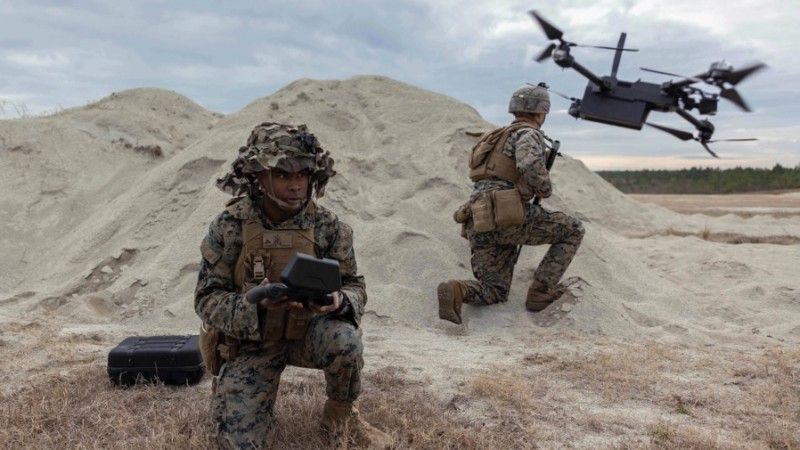
With each passing day of Russia’s war against Ukraine, disruptive defence innovation and its rapid mass deployment on the battlefield continue to prove decisive. Yet while both belligerents continue to adapt at speed, the EU defence ecosystem is falling increasingly, and dangerously, behind, widely viewed as too slow, too bureaucratic, and too rigid to keep pace with the realities of modern warfare.
This challenge is hardly a novelty. The EU has already attempted to tackle it through a series of regulatory and financial measures intended to unlock the potential of so-called New Defence players. On 25 March, the European Commission unveiled its latest effort in that direction: the Programme for Agile and Rapid Defence Innovation (AGILE), designed to provide promising European defence start-ups with rapid funding to develop, field, and scale innovative solutions at far greater speed.
See also


Bridging the early-stage funding gap
AGILE was crafted to tackle one of the central structural weaknesses of Europe’s emerging New Defence ecosystem: the lack of capital that is both easily available and rapidly deployable. To match the ever-shorter innovation cycles of the Russia–Ukraine war, start-ups and SMEs need immediate funding not only to advance R&D, but also to test and demonstrate their solutions to end users. They then require further financial support to cross the so-called „valley of death” – the gap between successful innovation and actual operational deployment – after which they can sustain their activities and develop more independently.
AGILE seeks to fill those gaps by providing targeted, comprehensive, and rapid support for European defence start-ups, scale-ups, and SMEs developing the most promising and disruptive solutions for the urgent operational needs of Member States. In 2027, the programme is expected to fund roughly 20 to 30 projects, with individual support between EUR 1–5 million and covering up to 100% of eligible costs.
Speed as the decisive factor
Yet time is where AGILE could make the greatest difference. The EU wants the programme to operate with an unprecedented time-to-grant of just four months, while the supported technologies are expected to reach defence forces within one to three years. If achieved, this would roughly halve grant timelines compared to traditional EU funding schemes and compress by several times the defence cycle associated with far longer and costlier legacy models.
The programme will back two main categories of activity at different stages of early development. The first will fund the mission-oriented development of disruptive defence products and technologies up to the prototype stage. The second will support their subsequent scaling, testing, uptake, and commercialisation. Together, they will encompass emerging and disruptive defence capabilities across such areas as AI, UAVs, quantum, robotics, cyber and space.
Embracing risk in pursuit of speed
The AGILE proposal marks an EU shift towards a more risk-taking culture, one that treats risk as something that must be accepted and managed rather than avoided, as was often the case until recently. By prioritising speed and flexibility, the programme is inherently burdened with risk and uncertainty regarding outcomes, as some grants may be misallocated, while other firms may underdeliver.
This is precisely why the firm selection process will be so vital to the programme’s success. Much will depend on the ability to identify, under significant time pressure, solutions that are not only high-potential, but also realistic and feasible within a short timeframe. Just as important will be a balanced geographical distribution of funding, so that AGILE strengthens the European New Defence ecosystem as a whole rather than reinforcing its existing regional imbalances.
A shift beyond funding
Given its limited financial scale, amounting to EUR 115 million, AGILE will not be a game changer in itself. Yet if its deadlines are met and the selection process proves effective, it may enrich the European defence landscape with several valuable new players and solutions. If that happens, the programme will likely be continued, organisationally refined, and financially scaled up in the years ahead. Combined with other similar and complementary initiatives, such as NATO DIANA or EDF, it could meaningfully contribute to strengthening the EU’s defence industrial and technological base.
However, the more important and lasting impact may be systemic. AGILE reflects a broader shift in the EU’s approach to defence and innovation, one that is likely to continue. By fostering a more durable culture of risk tolerance, regulatory flexibility, and rapid financing, it may gradually transform the European defence innovation environment, while also attracting more private investors and entrepreneurs to the sector.