- WIADOMOŚCI
- ANALIZA
- KOMENTARZ
A brief guide to the european illusion of energy security

European energy security sounds reassuring, doesn’t it? In practice, the continent resembles a geopolitical chessboard, where everyone is juggling barrels of oil while someone „accidentally” trips over renewables or the LNG lifelines. Even when events occur far from our borders, we feel the consequences immediately, as they directly affect our well-being.
Is Europe Really in Control?
We are witnessing a grand diversification effort, we have reduced our dependence on Russia, we have signed numerous documents on market resilience - from the implementation of regulations resulting fromGas Supply Security in the EU and new requirements for gas storage in the EU, to the reform of the electricity market - and we „proudly” watch as each new crisis pushes us back to square one.
It is hard to shake the impression that Europe still believes in the resilience of its system, while in reality markets and geopolitics follow their own rules. Ambitious strategies remain largely on paper rather than in practice. Are we, perhaps, creating a mere illusion of resilience? Or is energy resilience, in fact, a mixture of chaos, illusion, and a bit of luck?

How to pretend markets don't control us?
Energy security has long exceeded the realm of military policy. Today, it is the bloodstream of the entire economy. It determines industrial competitiveness, inflation levels, public finances, and growth rates. It is no longer a subject for infrastructure experts, but for finance ministers and central banks.
Europe likes to showcase its „resilience,” but it only works when the world behaves calmly. Europe also likes to overregulate every aspect of life. Yet one geopolitical shock in the Middle East is enough to reveal that the supposedly well-regulated system is reactive rather than strategic - and that energy security is shaped somewhere between Washington, the Persian Gulf, and the price of a barrel of oil.
Reducing dependence on Russia has not solved the problem. Instead, we now face a long list of factors over which we have only illusory control. Diversification, in practice, has become more nervous than secure - like replacing one loan with another, each with its own interest rate and unpredictable market temperament.
The Shadow Fleet and European pretences
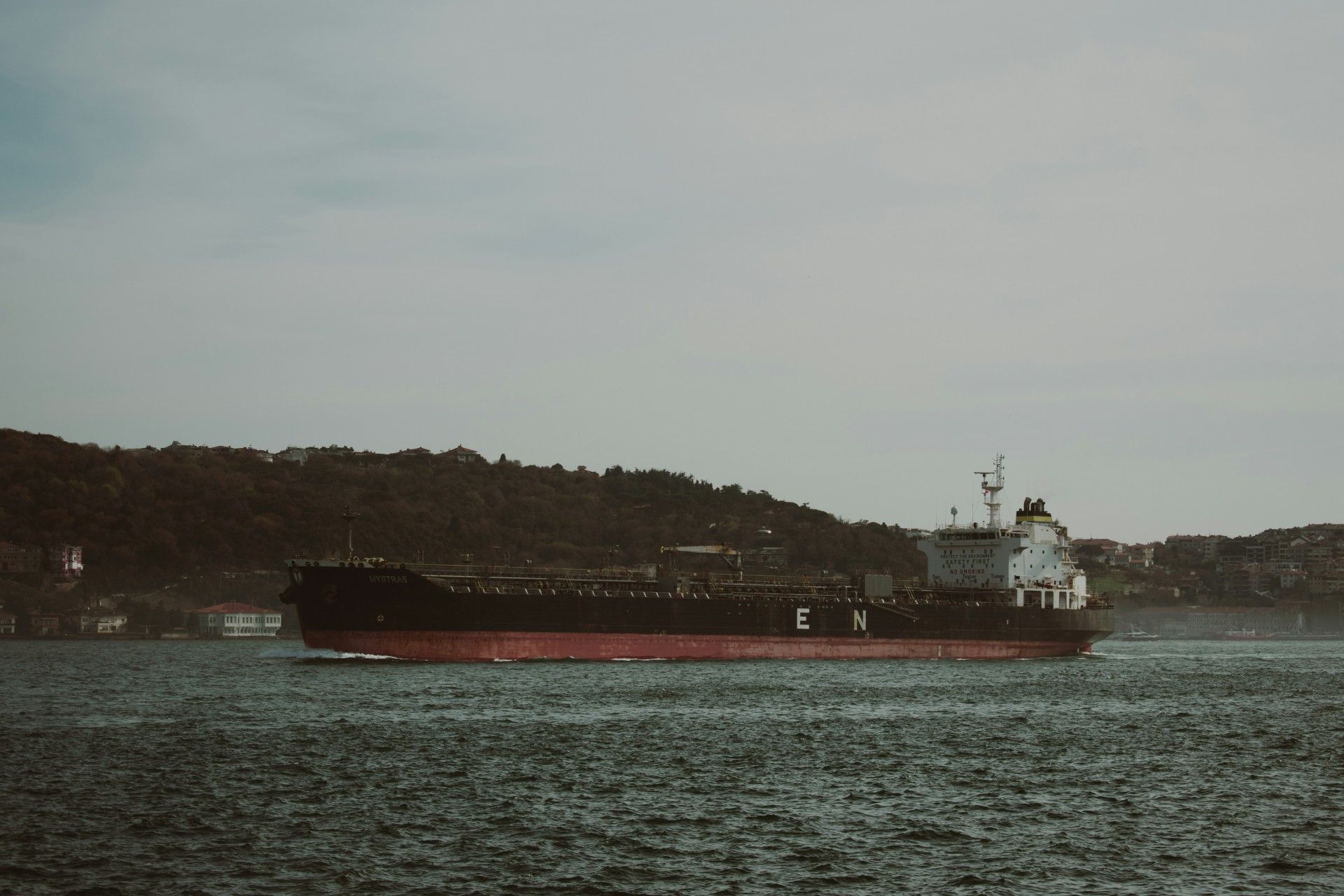
Sanctions policy appears strict on paper, but in practice it is quite flexible. The so-called „shadow fleet” exists not because it is particularly sophisticated, but because it is tolerated as long as its effects do not create politically visible costs or directly impact consumers« wallets. This allows for the maintenance of a moral narrative about the effectiveness of sanctions while avoiding real economic consequences.
Every new crisis in the Persian Gulf or tensions with Iran quickly reminds us that principles matter - but economic stability matters more. This is not a great surprise, but a harsh lesson. In politics, when things become expensive, decency often loses to economics.
A crisis as a Dubious Gift
On top of that, there is a growing temptation to tie energy and security issues together politically. In a logic well illustrated by the approach of Donald Trump, NATO ceases to be a club of allies and becomes a settlement system: who spends and how much, who buys from whom, and who owes their security to whom.
NATO does not function this way. It is not driven by whims, and alliance solidarity is built on trust, not momentary emotions. Energy decisions stop being economically optimal and instead become politically driven expectations. Unfortunately, this benefits no one - except Vladimir Putin, the main beneficiary of this „epic” situation.

How to bring order to what cannot be controlled?
So how do we solve this Gordian knot? First, we must stop pretending it can be untied.
In an era of great power competition, energy ceases to be just a commodity and becomes a strategic resource - comparable to ammunition, logistics, and mobilization capacity. Europe must produce more of it domestically, even at the cost of short-term efficiency.
This is no longer a matter of climate policy or market optimization. It is a matter of survival in prolonged crisis conditions. Investments should focus not only on efficiency but on resilience: in grids, storage, continuity, and system operability under degradation.
In conflict, the winner is not the one with the cheapest system, but the one that continues to function despite disruptions.
In this context, building an energy mobilization backbone becomes critical. Surplus energy - especially from unstable sources like wind - should not be treated as a technical issue, but as a strategic asset. Its conversion into energy carriers such as hydrogen or synthetic fuels effectively creates a new generation of strategic fuel reserves.
Hydrogen liquefaction facilities powered by renewable energy cease to be merely part of the energy transition. They become part of the state’s logistical infrastructure, capable of supplying transport, defence industries, and operational support systems in times of crisis.
The same logic applies to dual-use technologies. Distributed energy storage and local power systems will increase efficiency in peacetime, but in crisis they will form the backbone of critical infrastructure continuity and military support. Such systems could become „energy fortifications” resistant to disruption, sabotage and attacks, and could also free heavy industry and arms production from dependence on global supply chains.
It is essential to improve the ability to store energy in the form of transportable fuels usable in military logistics, even in conditions of disrupted supply. Additionally, digital and partially autonomous grid management systems could improve efficiency and enable rapid switching between operational modes during disruptions or hostile actions.
In this framework, energy will cease to be just one sector of the economy and will become an integral part of the state’s security architecture. This implies accepting costs that would otherwise be deemed unjustified. Redundancy, surplus capacity, and localized production are no longer inefficiencies - they are rational responses to a world of permanent instability.
Poland as a frontline energy state
Against this backdrop, Poland is no longer just a participant in the European energy market - it is becoming a frontline state of the energy system.
Its geographic position, economic structure, and scale of defence investments mean that energy supply stability is directly linked to its ability to maintain military and industrial capacity. This requires a more radical approach: building surplus generation capacity, developing domestic storage and processing capabilities, and integrating energy systems with defence planning.
Poland cannot optimize its system for average market conditions. It must design it for extreme scenarios. In this sense, energy investments become part of deterrence infrastructure. The greater a state’s ability to sustain its economy and military under disruption, the higher the cost of potential destabilization for an adversary.
See also


The truth hurts
Europe is trying to simultaneously maintain economic competitiveness, pursue an ambitious sanctions policy, manage global instability, and preserve strategic autonomy. Is this a viable strategy - or a risky, multidimensional juggling act over an abyss?
Or perhaps everything is under control, despite free markets acting independently, oil prices changing faster than political rhetoric, and strategic decisions remaining largely declarative?
Europe can continue pretending it fully controls its energy security, issuing reports, strategies, and updates such as „REPowerEU,” and claiming everything is under EU control.
Yet oil supply follows its own schedules. LNG flows follow assumptions independent of political plans. In reality, geopolitics and the laws of supply and demand mock our sense of control.
The truth is brutal: European energy security is not a strategy - it is a game at a table we often do not even have access to, while pretending we know the rules.
We can keep simulating, waving reports, and delivering speeches about resilience. But before the next crisis exposes our illusions, one principle must be accepted: less talk, more action.
Is Europe’s current energy resilience crisis merely an (un)favourable twist of fate exposing an uncomfortable truth?
Dr Andrzej Fałkowski, Lieutenant General (retired), former Deputy Chief of the General Staff of the Polish Armed Forces (DChoD), Director of Logistics and Resources of the International Military Staff (NATO IMS) in Brussels.