



- WIADOMOŚCI
- ANALIZA
- KOMENTARZ
Ukraine is much more capable than Trump has assumed

Is Ukraine a broken state desperately begging the West for scraps? That’s what the narrative has been for months. But President Volodymyr Zelenskyy just proved something far more interesting: Kyiv has assets. Real ones. And it knows exactly how to monetise them.
Starting Thursday, March 26, Ukraine embarked on a whirlwind tour across the Gulf, signing defense cooperation agreements with Saudi Arabia, Qatar, and the UAE in consecutive days. These weren’t charity visits. This was Ukraine cashing in on four years of hard-earned, blood-soaked expertise that no NATO ally has yet acquired.
What did Zelenskyy actually trade?
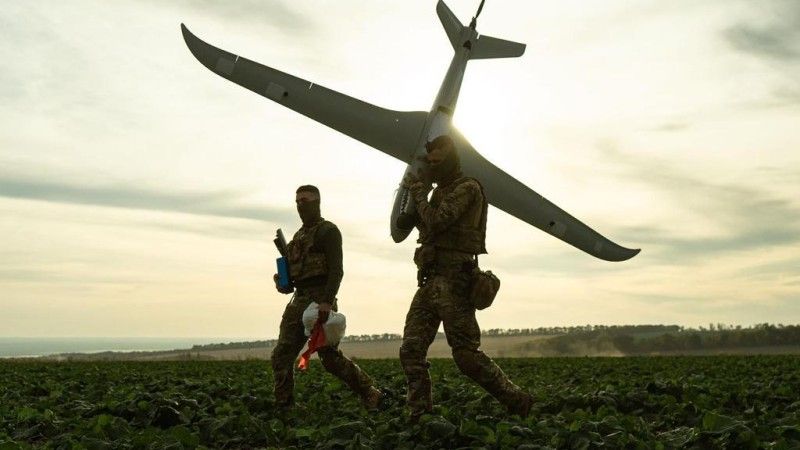
So let’s be clear about this: nothing in this agreement is free. Ukraine is providing the Gulf states with something they desperately need, and they’re asking for something in return. More than 200 Ukrainian experts in the field of defense are already in the Middle East, where they’re instructing Saudi Arabia, the UAE, Qatar, Kuwait, and Jordan on how to shoot down Iranian drones, similar to those that have been dropping on Ukrainian cities for four years now.
Ukraine has learned, through trial and error — the most expensive method of learning — how to disable, jam, and shoot down these drones. Now Kyiv is packaging that knowledge into a commodity. A tradeable asset. A bargaining chip. “We are ready to share our expertise and systems with Gulf partners and cooperate to strengthen the protection of lives,” Zelenskyy announced across his tour, with the careful diplomatic language of someone who knows he’s holding something valuable. Gulf nations “have capabilities that are of interest to Ukraine, and this cooperation can be mutually beneficial.”
That last sentence is the deal. What does Saudi Arabia have that interests Ukraine? Advanced air defence systems. Expensive ones. The kind the West has been slow to provide.

The real price tag: western air defence missiles
Here’s where the narrative shifts. Ukraine isn’t begging anymore. It’s leveraging.
Kyiv is seeking financial support and access to advanced technologies in exchange for its drone defense expertise. But more specifically, Ukraine is proposing a direct swap: cheap Ukrainian drone interceptors, electronic jamming tools, and anti-aircraft guns for the vastly more expensive air-defense missiles that Gulf states currently use to counter Iranian attacks. Gulf states use American-made systems, the kind the Pentagon has been reluctant to provide Ukraine in sufficient quantities. And so, Zelenskyy found a solution: become so valuable to the powers in the Gulf region that they will care about your survival. Why will the Gulf powers give Ukraine expensive missiles in exchange for cheap ones? The cheap missiles work, and they’ve been tested in a war that makes the Middle East war look like a schoolyard brawl.

The geopolitical chess move
This visit happens at a peculiar moment. The Pentagon is also considering transferring some of the military aid and weapons meant for Ukraine to the Middle East due to the conflict with Iran, which is putting pressure on existing American ammunition reserves. Translation: Western military aid for Ukraine is turning into a zero-sum game for the Middle East.
Zelenskyy didn’t wait for the West to choose. He created a new player at the table.
Ukraine is deliberately broadening its circle of partners beyond the traditional Western bloc, engaging the Global South, the non-aligned world, the countries that matter geopolitically but were never supposed to be part of NATO’s preferred coalition. Gulf states aren’t NATO allies, but they have something NATO members have been rationing: air defense missiles and the political leverage to secure them. This is strategic desperation masquerading as partnership.

What's the price for Gulf States?
The agreements “lay the foundation for further contracts, technological cooperation and investments,” according to Zelenskyy’s statements. Translation: these are the beginnings of deeper relationships.
The parties discussed the situation in the Middle East and the Gulf region, Iranian regime assistance to Russia, fuel market conditions, and possible energy cooperation. Energy cooperation. That matters for a Ukraine that will need to rebuild its shattered infrastructure and economy once the war ends — assuming it does. But there’s more. Ukraine is ready for cooperation on investment in the Ukrainian economy, particularly in energy, agriculture, and infrastructure projects after the end of active hostilities. So, Zelenskyy is also selling Gulf partners a vision: invest in Ukraine’s reconstruction now and reap the benefits later. Make yourselves partners in Ukraine’s future, not just its present survival.
The uncomfortable truth about Ukrainian "weakness"
For months, the Western media narrative has painted Ukraine as a victim state: dependent, desperate, running out of ammunition and will. Every news cycle emphasized how much Kyiv needed from the West, how the war was an unsustainable drain on Western resources.
What this week’s agreements reveal is more complex: Ukraine has assets. It has expertise. It has leverage. It’s just not the leverage the West wanted to acknowledge. A Ukrainian drone expert is worth something to Saudi Arabia. Ukrainian anti-drone tactics are worth something to Qatar and Kuwait. The Ukrainian experience of four-year total war is worth something to every nation that suddenly finds itself in an escalating regional conflict. Ukraine does not have the military might to dictate terms, but it has the knowledge. And in an era in which drone wars have become the new norm, knowledge itself becomes weaponry.

The broader game
This is all part of a larger process of strategic repositioning. Zelenskyy is not just visiting Saudi Arabia. Ukrainian officials are assisting Saudi Arabia, the UAE, Qatar, Kuwait, and Jordan with expertise in drones and are assisting them in the development of a defense system. Ukraine is becoming a security donor. Not to rich Western countries but to rising powers in the Global South who need to defend themselves against a threat that the West understands poorly: drones. Iranian drones. Shahed-136s that cost between $20,000 and $50,000 and can cripple a power station. That expertise is valuable. More valuable, perhaps, than Ukraine’s territorial position has been in recent months.
The uncomfortable question for the West
If Ukraine can trade its drone expertise for Gulf air defence systems, why hasn’t the West thought of this first? Why hasn’t NATO formalized partnerships with Kyiv’s defence technology providers? Why has the West treated Ukrainian military innovation as a one-way dependency rather than a two-way exchange?
The answer is uncomfortable: the West assumed Ukraine would remain a consumer of security, not a provider. It assumed Kyiv would be grateful for whatever scraps were offered, not strategic enough to build its own alliance structure. Zelenskyy just proved that assumption wrong.

The Qatar Play: A Master Class in Diplomatic Sequencing
But here’s where the real genius emerges. One day after Saudi Arabia, Zelenskyy was in Qatar. Then the UAE. Historic agreements all across the Gulf.
Not one. Three.
The sequencing wasn’t random. It was surgical.
Saudi Arabia first: the heavyweight, the geopolitical anchor. Signal to the region: Ukraine is serious about this partnership. The initial agreement de-risks the subsequent talks for smaller players. Qatar watches Saudi Arabia sign. The message is clear: this is safe. This is legitimate. The Crown Prince of Saudi Arabia believes in this.
Then Qatar. Then the UAE. Each agreement reinforced the last. Each announcement raised the stakes for the next. By the time Zelenskyy left the Gulf, he had locked in “historic” 10-year defence agreements across the region’s three major economies.
“I believe these are historic agreements. We are reaching understanding on strategic cooperation in the military technology area and in other areas. We are talking about 10-year agreements,” Zelenskyy told reporters on Monday, reviewing his entire tour. Ten-year commitments. Not one-off deals. Long-term strategic partnerships that bind both sides to sustained cooperation.
This is what happens when you have leverage and you know how to use it.

The Broader Architecture
What Zelenskyy just constructed is a network, not a bilateral transaction. Saudi Arabia, Qatar, and the UAE. Each agreement with similar terms: Ukrainian expertise in exchange for missile systems, investment, and energy cooperation. Each locked in for a decade. The sequencing matters because it compounds. When Saudi Arabia moves, Qatar feels the competitive pressure either join the partnership or be left outside a growing security network. When Qatar commits, the UAE’s negotiators work faster. When all three are locked in, the framework becomes self-reinforcing. The logistics alone are masterstroke-level. Diesel deliveries for an entire year secured with “some countries” during the visit, though details remain classified. But here’s the game: when you’re credible in Saudi Arabia, Qatar believes you without argument. When Qatar signs, the UAE’s negotiators work faster. When all three partners are committed to the same 10-year framework, you have diversified supply, not fragile dependence.
Ukraine has just replaced a one-dimensional dependency relationship (begging the West for scraps) with a multi-node supply network across the Global South. If one partner delays, another has capacity. If one faces domestic pressure to pull back, the others continue. If Western air defence missiles dry up, Gulf alternatives still exist. This is what resilience looks like when you think like a network operator instead of a supplicant.
See also


What happens next
This agreement, of course, does not resolve Ukraine’s basic problem: the Russian army remains on its territory, and military support from the West remains a mystery. But what this agreement does, in a more subtle and potentially more lasting way, is to establish Ukraine as a security actor with leverage to trade.
This fundamentally shifts the balance in negotiations over everything else on the horizon: reconstruction agreements, peace agreements, military agreements. Ukraine is no longer simply a victim in this story, but a victim with a voice, a victim with expertise, and a victim who, thanks to careful diplomacy and strategy, is now a vital piece in Gulf security. The price for Kyiv’s knowledge is high-end Western air defense systems, routed through Gulf intermediaries, because direct Western provision has become politically constrained. It’s not ideal. It’s not clean. But it’s leverage.
And leverage, in this war, might matter more than sympathy.
Zelenskyy didn’t just sign agreements. He built a system. That system buys him time, buys him weapons, and most importantly buys him alternatives when the West can’t or won’t deliver.


