- WIADOMOŚCI
The Assan Group scandal: Testing the resilience of the Turkish defence industry

The Turkish defence industry is currently one of the most dynamically developing sectors of the country’s economy. At the same time, it may seem that the authorities are seeking to promote economic growth and gain international recognition through its development.
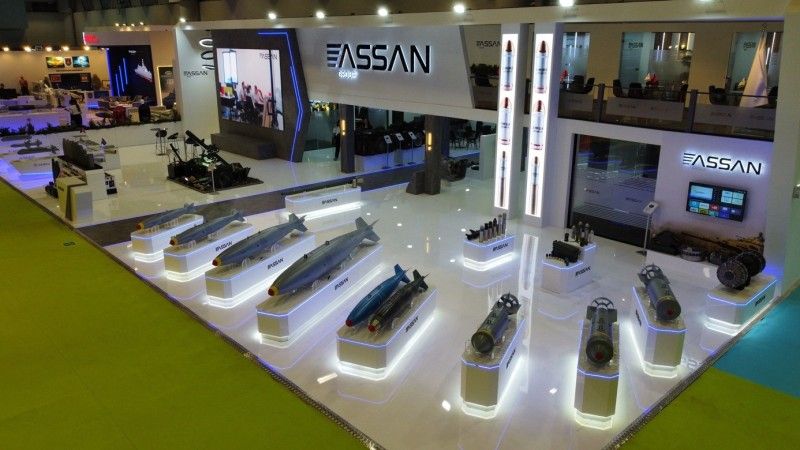
Photo. Assan Group Official Website
Over the past two decades, Ankara has consistently invested in developing domestic production capabilities, reducing dependence on foreign suppliers, and building its own technological potential. The export successes of defence companies, the development of unmanned aerial systems, precision munitions, and armoured vehicle programmes have made Türkiye a prominent centre of the defence industry, right alongside the traditional Western powers.
In this context, the scandal and subsequent sale of the Assan Group – a company operating in the ammunition, missile, and energy systems sectors – have received particular attention. The arrest of the company’s owner, Emin Öner, and its CEO, Gürcan Okumuş, on charges of military espionage and illegally obtaining state security documents has sparked widespread debate about the transparency, oversight, and institutional resilience of the Turkish defence sector. As a result of these allegations, the state decided to take control of the company through the Savings Deposit Insurance Fund (TMSF), and in 2026 the company was put up for sale.
See also


Assan Group as a Key Component of the Turkish Defence Ecosystem
Founded in 1985, Assan Group was one of the companies operating within the growing ecosystem of the Turkish defence industry. The company specialised primarily in the production of ammunition, missile system components, and weapons-testing support solutions. It exported its products to more than 60 countries across several continents and participated in numerous projects related to the development of the country’s defence capabilities.
Over the past two decades, the company actively expanded its presence in international markets. This was particularly evident at IDEX 2025 in Abu Dhabi and IDEF 2025 in Istanbul, where it presented artillery ammunition and aerial bombs compliant with both NATO and selected post-Soviet standards.
The company’s growing position led Assan Group to be perceived as one of the most important and reliable private entities supporting the development of Türkiye’s defence-industrial capabilities.
Allegations of Espionage and Violations of State Security
The situation changed dramatically in August 2025, when the Istanbul Chief Public Prosecutor’s Office launched a wide-ranging investigation into the alleged illegal acquisition and use of documents related to state security.
Assan Group owner Emin Öner, as well as owner and general manager Gürcan Okumuş, were at the centre of the investigation. According to the prosecutor’s office, the company allegedly gained access to confidential documents from state institutions, including the Machinery and Chemical Industries Corporation (MKE) and the TÜBİTAK SAGE research institute. The indictment states that Öner was a partner and manager in companies affiliated with Assan Group and the principal suspect in obtaining documents related to state security in order to expand the company’s operations.
According to the prosecutor’s office, this activity was not limited to isolated cases of unauthorised access to information. The indictment accuses Öner of creating a network of connections involving former and current state officials engaged in projects of strategic importance to national security. Investigators allege that individuals associated with MKE, TÜBİTAK, and the Ministry of National Defence, among others, were employed by Assan Group, and that information and documents relating to national security were subsequently exploited for commercial purposes. The prosecutor’s office also emphasises that the evidence collected against the other suspects constitutes a key element of the case against Öner himself.
The indictment includes charges relating to the use of confidential military procurement plans, technical documentation concerning the production of explosives, reports on defence projects, and other materials deemed important to national security. The prosecutor’s office also alleged that some of the documents may have been transferred abroad through a network of organisational connections. It is worth noting that, despite the serious allegations concerning documents related to national security, publicly available investigative materials, prosecutorial statements, and media reports do not identify a specific country or foreign entity as the ultimate recipient of this information. This means that the potential international dimension of the case remains unclear, and that some evidence is likely to remain classified.
An additional element of the investigation involved allegations concerning Emin Öner’s alleged ties to the Fethullah Gülen movement, which is designated as a terrorist organisation by the Turkish authorities. Investigative documents indicated, among other things, telephone contacts, financial links, and personal connections with individuals accused of operating within FETÖ structures. According to the indictment, analysis of telecommunications data and financial transactions indicated long-term contact with individuals identified by law enforcement authorities as members or associates of the organisation.
The severity of the charges is also reflected in the penalties requested by the prosecutor’s office. In Emin Öner’s case, the indictment provides for a prison sentence ranging from 17 years and 6 months to 36 years for „membership in an armed terrorist organisation” and the „destruction, misuse, fraudulent acquisition, and theft of documents related to state security”.
It is worth emphasising, however, that these charges are still under judicial review and that no final decisions have yet been made. Representatives of Assan Group have consistently rejected the accusations, arguing that the documents in question consist of legally obtained production and supply schedules prepared for the Turkish Armed Forces, rather than classified materials acquired unlawfully.

State Intervention and TMSF’s Seizure of Control
Following the arrests, the Turkish authorities decided to place the company under trusteeship. TMSF subsequently took control of ten companies operating within Assan Group.
This was another example of the trusteeship mechanism being applied to companies deemed to be potentially engaged in activities that threaten state security. Since the failed coup attempt in 2016, which was largely carried out by military personnel allegedly linked to the Fethullah Gülen movement, hundreds of companies have been placed under similar supervision.
From the authorities« perspective, this measure aimed to ensure the company’s business continuity, safeguard its assets, and protect its strategic production capabilities from potential disruptions resulting from the ongoing criminal proceedings.
This was particularly important for the defence sector. Unlike many other industries, the sudden suspension of the operations of a manufacturer of ammunition or military components could negatively affect the fulfilment of domestic orders and export contracts and, consequently, undermine the export credibility of the Turkish defence industry as a whole.
The Sale of Assan Group – Pragmatism or a Warning Signal?
In June 2026, TMSF announced the commencement of the sale process for Assan Group as the „Assan Group Commercial and Economic Entity”. The company was valued at USD 416.5 million, while prospective bidders were required to submit a security deposit of USD 41.65 million in order to participate in the auction.
The scope of the sale is exceptionally broad and extends far beyond a standard transaction involving production assets. TMSF decided to put the entire „Entity” up for sale, encompassing both tangible and intangible assets used in defence-related activities. The sale package, therefore, includes:
- real estate designated for defence activities
- real estate owned by the company
- land previously designated for industrial operations
- production machinery and equipment
- technical equipment and fixed assets
- machinery and equipment covered by lease agreements
- trademark rights
- internet domain names
- existing commercial agreements concluded in domestic and international markets
In practice, this means that the potential buyer will acquire not only the production facilities but also the entire industrial structure, enabling the immediate continuation of operations, which appears to be the state’s primary objective. This sale structure is intended to increase the company’s attractiveness to strategic investors and reduce the risk of the fragmentation of its production potential following a change in ownership.
This decision can be interpreted in two ways. On the one hand, it may be viewed as an attempt to restore the company to normal operations by identifying a new owner. On the other hand, it raises questions about the impact of such actions on the investment climate and perceptions of stability within the sector, particularly among foreign investors.
A key question for potential investors will be whether the Assan Group case is an isolated incident resulting from specific abuses or whether it points to broader systemic problems related to the control of information flows within the defence sector, which could negatively affect the wider business environment in Türkiye.
Lessons for the Turkish Defence Industry
Paradoxically, the Assan Group case can be viewed as evidence of the resilience of the Turkish defence industry. Despite the arrests of senior executives, the investigation into documents related to state security, and the state’s takeover of the company, there was no collapse in production or loss of operational capacity across the wider sector, which is generally regarded as the greatest risk in such circumstances.
At the same time, these events highlighted several significant challenges. First, there appears to be a need to further strengthen mechanisms for protecting classified information and regulating the movement of personnel between state institutions and private defence companies. This challenge is not unique to Türkiye but applies equally to other countries, particularly those whose economic growth is increasingly linked to the defence sector. Second, the growing importance of private actors within the defence industry requires more robust corporate governance standards and more effective compliance procedures. Third, maintaining the confidence of foreign partners requires regulatory predictability and transparency in state actions, an area in which Türkiye continues to face challenges, particularly given the scale of potential state intervention in the operations of private companies and the frequently changing tax environment.
Conclusions
The Assan Group scandal is one of the most serious corporate crises to hit the Turkish defence industry in recent years. It brings together issues of national security, corporate governance, state oversight, and the relationship between the public and private sectors.
Regardless of the court’s final ruling, this case is likely to have long-term consequences for the Turkish defence sector. For Ankara, the key challenge remains striking a balance between safeguarding state security and maintaining an attractive environment for investment and innovation, particularly within the private sector. The future competitiveness of the Turkish defence industry in international markets will depend, to a significant extent, on the effectiveness with which this balance is maintained.