



- ANALIZA
- WIADOMOŚCI
SAHA Expo 2026 as a demonstration of Ankara's geopolitical ambitions

SAHA Expo 2026 in Istanbul was one of the most important defence events in recent years, not only regionally but also globally. This year’s edition of the expo demonstrated that the Turkish defence industry is no longer merely a component of Ankara’s regional security strategy, but is increasingly becoming a tool for strengthening the country’s geopolitical position in the new, increasingly unstable international order. In practice, SAHA Expo 2026 showed that Türkiye is adapting to the changing nature of contemporary conflicts faster than many Western countries.
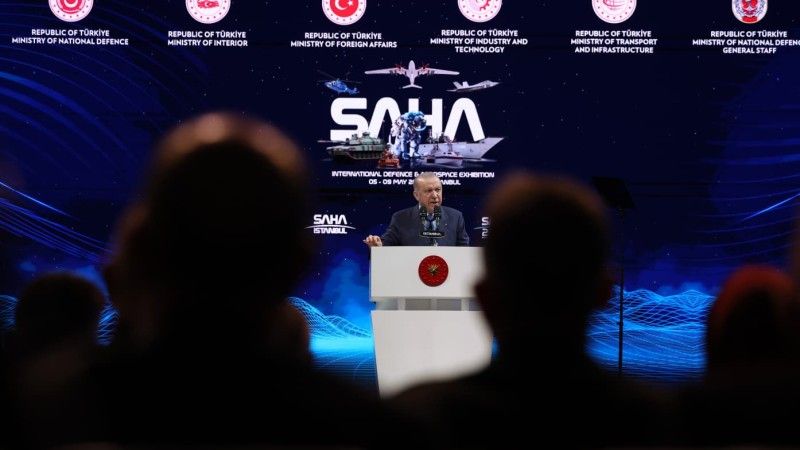
The scale of the Istanbul fair directly reflects Türkiye’s global ambitions, as evidenced by the numbers:
- Participants: Over 1,760 companies from more than 120 countries (including approximately 1,500 domestic enterprises and more than 260 foreign exhibitors).
- Attendance: Nearly 149,000 visitors, including numerous ministerial, military, and industrial delegations.
- Finance and Business: The total value of signed contracts reached approximately $26.5 billion, of which as much as $8 billion consisted of direct export contracts.
The additional figure of nearly 29,000 B2B business meetings confirms that SAHA Expo has evolved from a traditional arms trade fair into a global platform for technological, industrial, and strategic cooperation.
Transforming the modern battlefield
SAHA Expo 2026 took place in the shadow of profound international crises. The Russian-Ukrainian war, the destabilization of the Red Sea basin, tensions surrounding Iran, and the fragmentation of the global security system have forced a redefinition of approaches to armed conflict. The experiences of recent years have successfully challenged existing doctrines, in which traditional military superiority based solely on powerful armies and individual, extremely expensive platforms no longer guarantees victory. Turkish companies clearly demonstrated that they are closely analysing the experiences of contemporary conflicts and striving to design weapons systems adapted to the realities of future wars.
Modern conflicts have increasingly become industrial-scale conflicts, in which success is determined by the ability to achieve cost-effective mass production, supply chain resilience, electronic warfare (EW) capabilities, autonomous systems, and the capacity to operate effectively in an environment of constant disruption.
Recent wars have also led to a surge in investment in cyberwarfare, artificial intelligence, biotechnology, space technologies, and the militarization of space. Arms manufacturers increasingly perceive future conflicts as competition not only between armies, but also between algorithms, data, digital infrastructure, and capabilities in cyberspace and outer space.
Breakthrough technologies
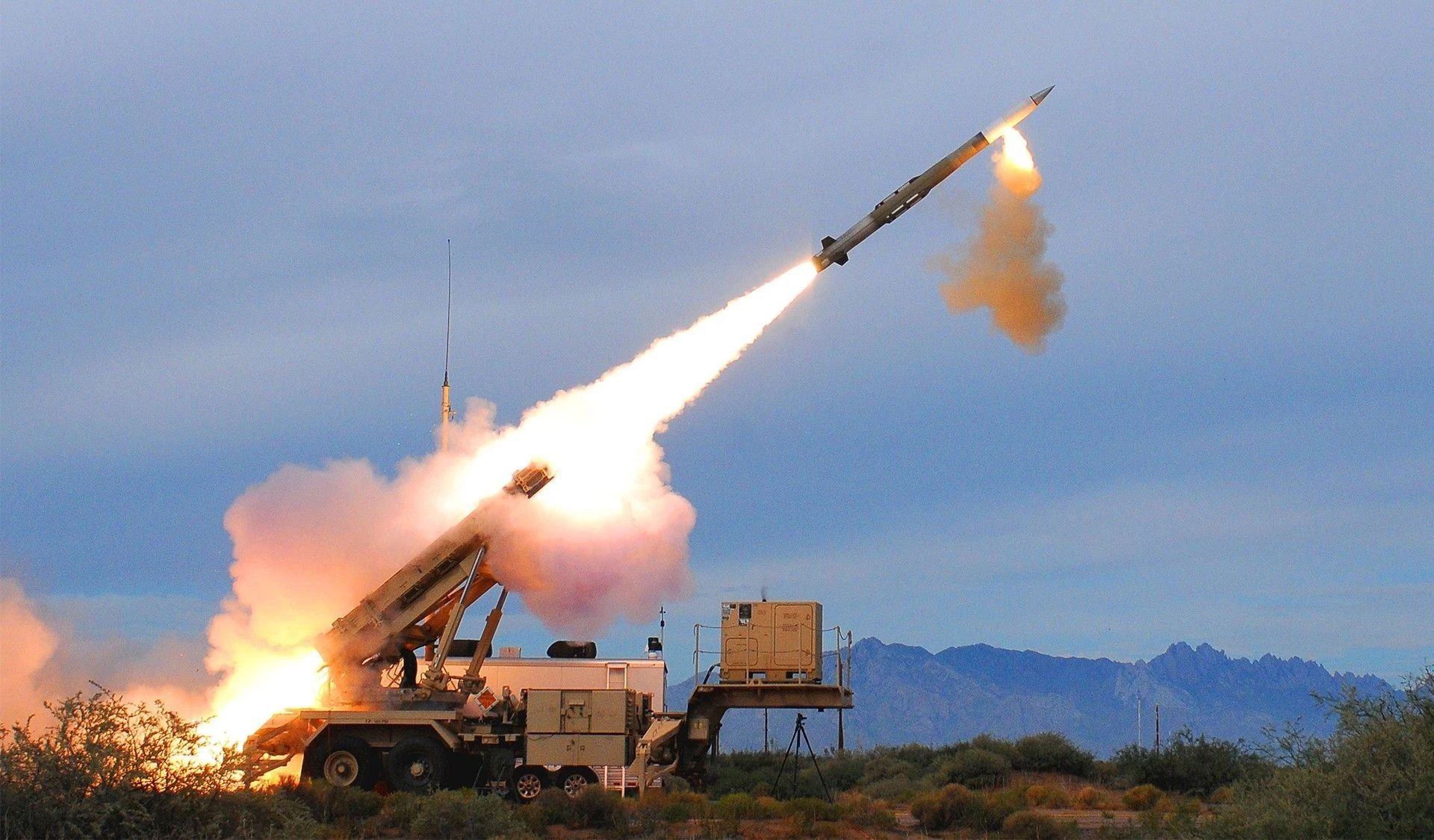
The most visible symbol of this transformation was the achievements of ASELSAN, Türkiye’s largest defence company, which unveiled new components of its developing multi-layered „Steel Dome” air defence system, increasingly presented as Türkiye’s response to the latest integrated air defence systems developed in the West and Israel.
The new products included:
- The ILGAR 3-LT Communications Electronic Warfare System and the KORAL AD Air Defence Electronic Warfare System,
- The MİĞFER Self-Defence FPV Interception System, GÖKALP Autonomous Kinetic Drone Destruction System, GÖKBERK 10 Laser Weapon System, and the EJDERHA 210 High-Power Microwave Weapon System designed to neutralize unmanned aerial vehicles (UAVs).
This presentation directly addressed the urgent need to counter swarms of drones and FPV systems. The company’s CEO, Ahmet Akyol, noted that many of the new systems had been developed according to a philosophy based on the use of commercial components, rather than the traditional model centred on limited production runs of extremely expensive and highly specialized platforms. In practice, this translates into an industry capable of rapidly producing scalable weapons systems that can be deployed in large quantities during prolonged conflicts. Akyol also emphasized that most of the presented solutions could enter service with the armed forces by 2027.
At the same time, ASELSAN aims to increase exports to 40% of total revenues by 2030. By comparison, this figure currently stands at around 25%, up from just 11% when the ASELSAN Next transformation program was launched in 2024.

The era of autonomous combat systems
Unmanned systems played a prominent role at the fair. Baykar showcased its new K2 kamikaze drones, as well as the Mizrak and Sivrisinek loitering munitions. STM, in turn, presented the KUZGUN system, with a range exceeding 1,000 km, and the YAKTU (KIDA) autonomous unmanned aerial vehicle.
In the maritime segment, the KILIÇ kamikaze underwater drone and the TUFAN unmanned surface vessel developed by ASELSAN, alongside the advanced synthetic aperture sonar system developed by Meteksan Defence, attracted particular attention. The development of such systems is consistent with Türkiye’s ”Mavi Vatan” (Blue Homeland) doctrine, which aims to expand Ankara’s power projection capabilities in the Mediterranean, the Black Sea, and the Turkish Straits region.
Güçhan and KAAN
One of the biggest attractions at the fair was the Güçhan jet engine, which, according to numerous reports, is expected to power the fifth-generation KAAN fighter jets currently being developed by Türkiye. The Güçhan engine was presented as a symbol of the growing importance of the „Made in Türkiye” brand and as evidence that the Turkish defence industry is increasingly entering the most advanced segments of military technology.
The project also symbolizes Ankara’s ambition to achieve full technological independence in the aviation sector and to join the elite group of states capable of independently producing advanced combat systems.
However, the significance of the KAAN program extends far beyond the military dimension. Ankara perceives the development of its own fifth-generation fighter jet as part of a broader effort to build strategic autonomy and reduce dependence on foreign suppliers of military technology and the political constraints associated with them.
See also

Controversy surrounding the "Yıldırımhan" program
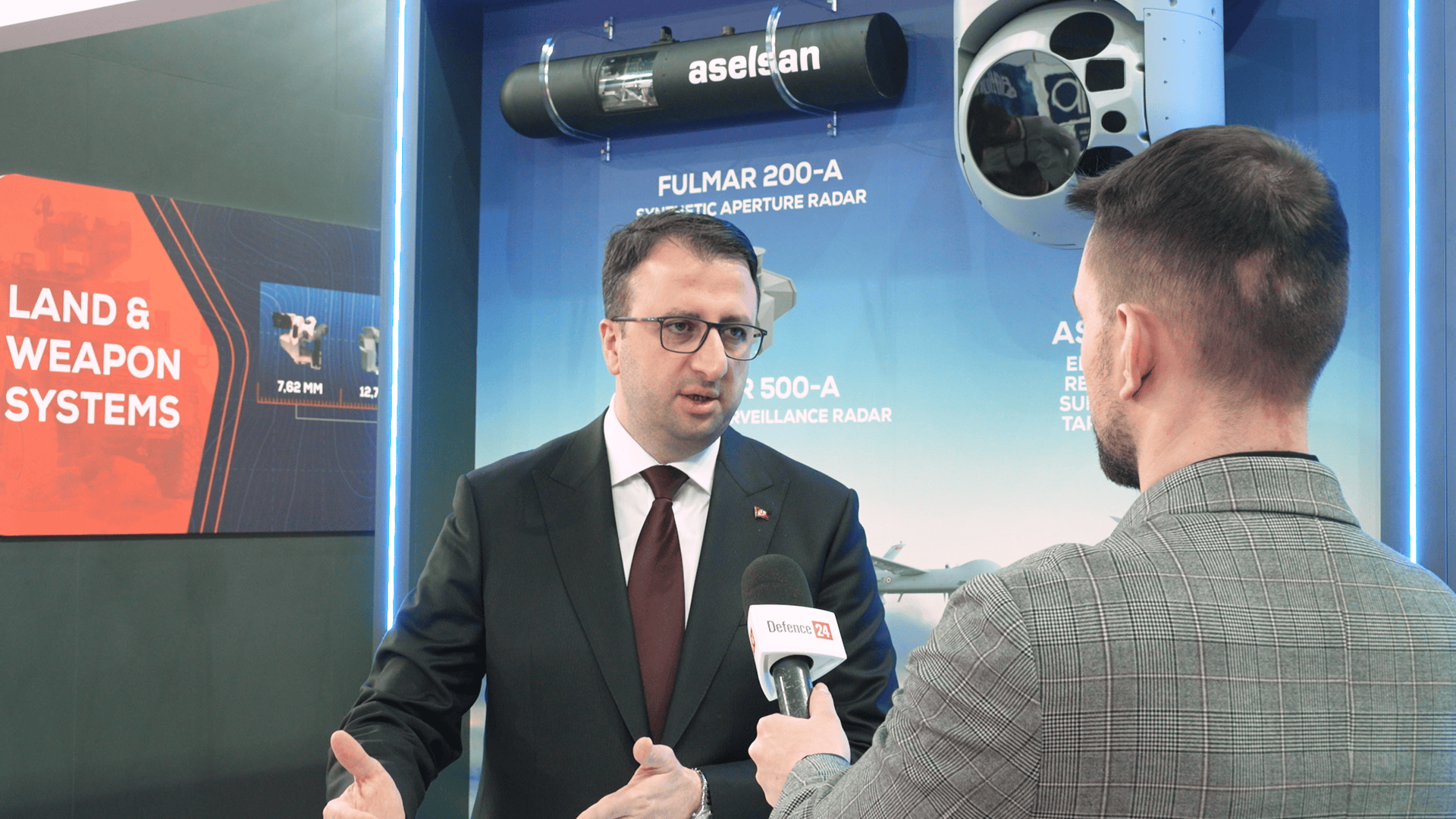
The biggest surprise at SAHA Expo 2026, however, was the presentation of the „Yıldırımhan” system, i.e., Türkiye’s first intercontinental ballistic missile (ICBM), with a declared range of approximately 6,000 kilometres.
The timing of the unveiling was not accidental. Amid escalating tensions between Washington, Tel Aviv, and Tehran, Ankara sought to demonstrate its strategic deterrence potential to the international community.
Not all analysts, however, are convinced of the feasibility of rapidly implementing the program. Experts point out that the development of intercontinental ballistic missiles remains one of the most costly and technologically demanding areas of the modern defence industry. It is also important to note that publicly unveiling the program before the full testing phase is concluded could pose a reputational risk, especially if the project schedule is delayed or the system’s final performance falls short of expectations.
Furthermore, such a capital-intensive project risks diverting financial and engineering resources away from other urgent and strategically important programs, such as the development of the Steel Dome missile defence system or the serial production of the KAAN fighter jet.
Contracts and agreements: who signed what and with whom
The most important contracts signed during the fair indicate several directions of Türkiye’s expansion.
First, the maritime and submarine sectors. Sefine Shipyard Strategic and Unmanned Systems Research Center (SISAM) signed a memorandum of understanding with the Canadian company Kraken Robotics regarding seabed warfare. This is significant because the protection of submarine cables, ports, gas pipelines, and energy infrastructure is becoming a NATO priority.
Second, propulsion and aviation. Turkish Aerospace Industries and TEI signed a contract for the supply of 100 TEI-PD170 engines for the ANKA and AKSUNGUR platforms. This is strategically important, as engines are among the most sensitive technologies in the aerospace industry.
Third, the KAAN program. SSB and TUSAŞ signed a contract for the first production batch of the KAAN Block-10 combat aircraft, comprising 20 aircraft scheduled for delivery between 2028 and 2030. This is one of Türkiye’s most important strategic projects, aimed at reducing Ankara’s long-term dependence on Western combat platforms and aviation technologies.
Fourth, cooperation with Indonesia. ASELSAN signed two contracts for the use of its technologies in the Indonesian Armed Forces, and Baykar concluded its first export agreement for the Kızılelma unmanned combat aircraft. This demonstrates that Southeast Asia is becoming one of the key directions of Turkish defence and technological expansion.
Fifth, European cooperation. Sarsılmaz signed a memorandum of understanding with the Spanish EM&E Group, and Baykar concluded an agreement with the Italian Gruppo Esea. Contacts have also been established with partners from Hungary, Spain, France, and Central and Eastern Europe. Anadolu Agency also listed a number of contracts involving SSB, Roketsan, Altınay, ASFAT, MKE, HAVELSAN, TÜRKSAT, and other entities.

Poland at SAHA Expo 2026
From the Polish perspective, the presence of the Ministry of National Defence delegation, led by Paweł Bejda, was particularly significant. The official statement from the Ministry indicated that discussions with Haluk Görgün, head of the SSB, focused on joint industrial projects, technology transfer, the development of national competencies, and supply chain security.
The Polish delegation also met with representatives of key Turkish defence entities, such as ASELSAN, Baykar, Roketsan, TEI, TUSAŞ, and Sefine Shipyard. This is important because Polish-Turkish defence relations should not be limited to a simple procurement model.
The most promising areas include unmanned aerial vehicles, counter-drone systems, radar systems, electronic warfare, active vehicle protection systems, naval technologies, and precision-guided munitions. Poland and Türkiye operate on two different NATO flanks, but face a similar challenge: how to rapidly increase military capabilities without becoming completely dependent on limited Western European and American production capacity
Spotkanie z prof. dr. Halukiem Görgünem, Sekretarzem ds. Przemysłu Obronnego
— Paweł Bejda (@pawelbejda) May 5, 2026
i Prezydentem SSB podczas targów zbrojeniowych SAHA EXPO 2026 w Turcji.
Rozmowy dotyczyły dalszego rozwoju współpracy Polski i Turcji w obszarze obronności, przemysłu zbrojeniowego, transferu… pic.twitter.com/r827xh4BNR
Summary and conclusions
SAHA Expo 2026 was a demonstration of Turkish ambitions, but also evidence of a broader shift in the global defence industry. Türkiye aims to participate in shaping the future battlefield, from the seabed, through drones and land systems, to airspace, electronic warfare, and missile deterrence.
SAHA Expo 2026, therefore, highlighted three main trends:
First, Türkiye aims to become a security supplier, not just a consumer. Ankara is building an industry that will support its strategic independence while generating political influence through exports.
Second, the Turkish model is attractive, mostly to mid-sized countries. Many countries are reluctant to purchase the most expensive Western systems without technology transfer. Türkiye often offers a more flexible package, including joint production, localization, training, and faster delivery.
Third, future wars will require technological scale. It is no longer just about possessing the latest equipment. It is also about the ability to produce large numbers of systems that are effective enough, resilient to disruptions, and capable of being quickly replaced after losses.


