



- WIADOMOŚCI
- WAŻNE
U.S. reviews troop presence in Poland

The most important point is that American troops are staying in Poland. Sean Parnell stated that the Department of War is reducing the number of Brigade Combat Teams assigned to Europe from four to three, returning to the 2021 level, and that this will temporarily delay the deployment of U.S. forces to Poland.
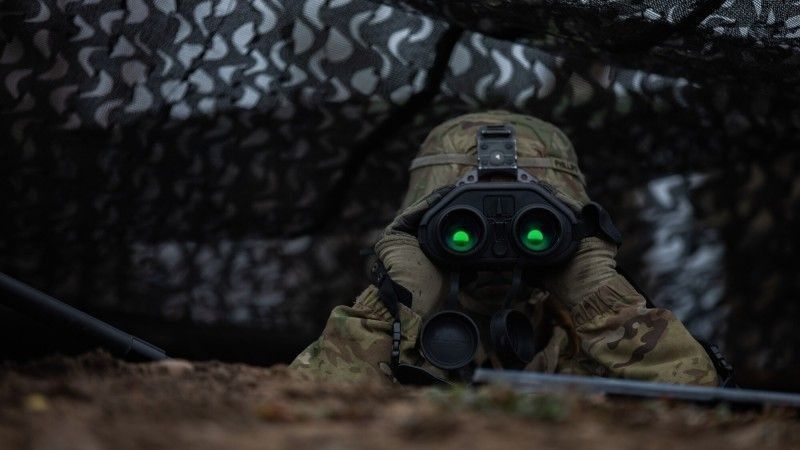
As Sean Parnell wrote on X, the decision follows a broader review of the U.S. force posture in Europe and is meant to support President Trump’s America First approach, including pushing NATO allies to take primary responsibility for Europe’s conventional defence. This does not mean an immediate withdrawal of American forces from Poland. It means that Washington is reviewing numbers, rotations and final deployment structures.
Poland remains a model U.S. ally, and this is important. The statement directly underlines that Secretary Hegseth spoke with Deputy Prime Minister Władysław Kosiniak-Kamysz and that the United States will remain in close contact with Poland, including to ensure a strong U.S. military presence in the country. Therefore, at this stage, the key message is not panic, but continuation of military cooperation.
STATEMENT:
— Sean Parnell (@SeanParnellASW) May 19, 2026
The Department of War has reduced the total number of Brigade Combat Teams (BCTs) assigned to Europe from four to three. This returns us to the levels of BCTs in Europe in 2021. This decision was the result of a comprehensive, multilayered process focused on U.S.…
At the same time, we should not pretend that nothing is changing. It is likely that the number of American troops in Poland will decrease sooner or later, but not immediately by 4,000 soldiers. A more realistic scenario is a gradual reduction or rotation change, perhaps at the level of 1,000 or 2,000 troops, depending on U.S. operational requirements in Europe, the Middle East and the Indo-Pacific.
This is part of a wider American approach. Washington wants Europeans to take more responsibility for conventional defence, while the United States keeps flexibility for other theatres. For Poland, this means two things at the same time: we must keep Americans as deeply engaged as possible, but we also need to build stronger European and regional capabilities, because the U.S. presence will increasingly depend on global American priorities.

For now, cooperation with Washington remains strong. The United States is not leaving Poland, and Poland is not losing its position as one of America’s most important allies in Europe. But the direction is clear: the American presence will be reviewed, adjusted and probably reduced in phases. The task for Warsaw is to make sure that any change does not weaken deterrence on NATO’s eastern flank.


