- WIADOMOŚCI
U.S. missiles move closer to China

The United States is sending its Typhon midrange missile system to Japan for joint exercises with the Self-Defence Forces. This is not only another military drill. It is part of a wider change in U.S.-Japanese defence planning against China.
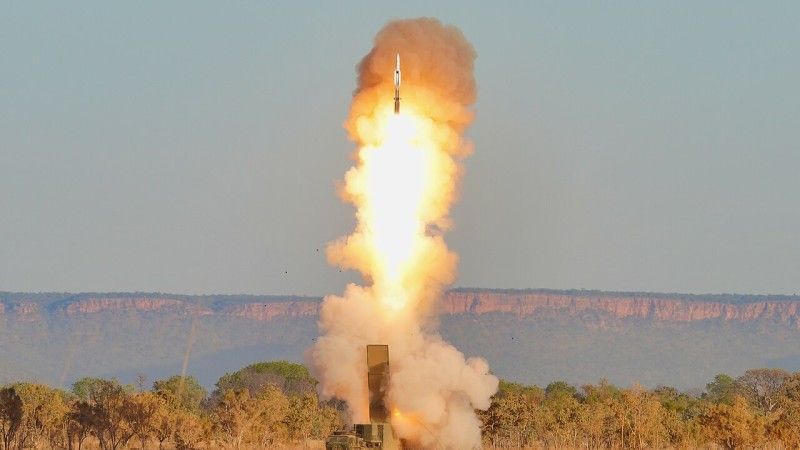
The Typhon system will be deployed to Kagoshima Prefecture and used during the Valiant Shield exercises at Kanoya Air Base, which run until 1 July. It is also expected to take part in the Orient Shield drills in September and then move to a U.S. military base in Japan from around mid-October. Tokyo says this is not a permanent deployment, but repeated training with this system still changes the military picture.
Typhon can fire Tomahawk cruise missiles with a range of up to 1,600 kilometres. That means parts of China fall within striking distance from Japanese territory. For years, Japan avoided such deployments because of its defence-oriented policy. That taboo is now weakening as China expands its missile forces and increases military pressure in the region.
The United States is also expected to deploy HIMARS for the exercises. Last year, Typhon and NMESIS appeared in Japan during Resolute Dragon drills, while NMESIS and the MADIS air-defence system have now arrived in Okinawa for a more permanent Marine Corps presence. This shows that Washington is building a distributed missile and air-defence architecture across the first island chain.
See also


China has reacted sharply, calling Typhon a strategic offensive weapon and accusing Japan of accelerating remilitarisation. Beijing understands the military meaning of this deployment. The United States and Japan are no longer only preparing to defend bases and islands. They are preparing to hold Chinese forces at risk from land, sea and air, including in a conflict around Taiwan or the East China Sea.
The collapse of the INF Treaty in 2019 opened the way for this shift. Moreover, China was never bound by that agreement and built a large arsenal of medium- and intermediate-range missiles while the United States was constrained. Now Washington is trying to close that gap and – the very main ally – Japan is becoming one of the key places where this new missile balance in Asia will be tested.