- KOMENTARZ
- WIADOMOŚCI
Trump’s upcoming visit to China. Expert comments

Amid geopolitical uncertainty, reports have emerged of an upcoming visit by Donald Trump to China. Talks on Iran and the war in the Middle East, as well as on their impact on the global economy, are expected to be held. Will this lead to a resolution of problems in bilateral economic relations between the countries?
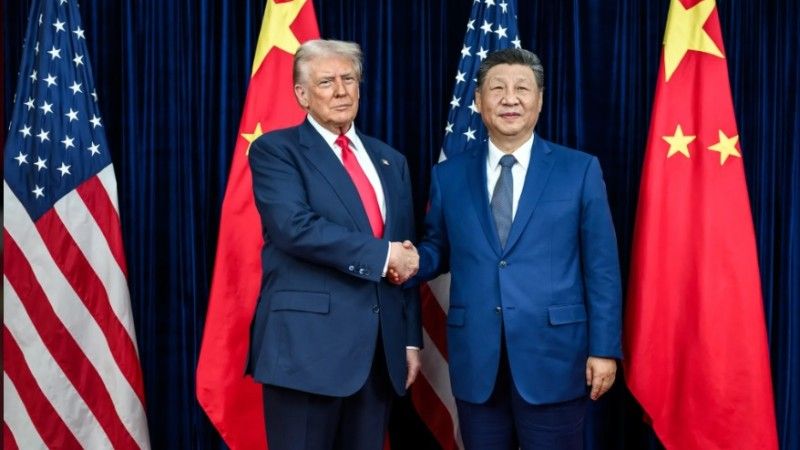
The Chinese Ministry of Foreign Affairs announced that “at the invitation of President Xi Jinping, President of the United States of America Donald J. Trump will pay a state visit to China from May 13 to 15.” One of the topics of the talks is expected to be the issue of the US suspension of arms sales to Taiwan. “President Xi would like us not to do that, and we will have that discussion,” Trump said on Monday. The US president assumes that China will not take over Taiwan during his administration, citing his good relations with Xi Jinping.
In December 2025, the US announced the sale of a record arms package to Taiwan worth more than $11 billion. In response, China imposed sanctions on 20 US defence companies and launched military exercises around the island. Beijing then warned that further arms sales could lead to the cancellation of Trump’s planned visit to China. The US administration decided to suspend additional equipment sales to Taiwan.

Expert Commentary
For the purposes of this article, we requested an expert commentary. We received a response from David Merkle of the Shanghai Representative Office of the Konrad-Adenauer-Stiftung. The expert was asked about the current state of relations between the US and China, why the visit is taking place now, and what should be expected from it.
Mr. Merkle explained that “China and the US are in a stalemate, caught between geopolitical great-power rivalry, the consequences of a complex trade war, growing domestic challenges related to the Iran war in the US and long-term economic pressures in China, as well as fierce technological competition between the two sides.”
Compared to Washington, “Beijing is in a relatively easier position, as Trump needs a quick end to the Iran war—or at least stabilisation of the situation—while China has been able to remain largely calm and present itself to many partners, especially in the Global South, as a ‘stabilising and reliable pillar of the global order.’ President Trump, on the other hand, has already postponed the originally planned March visit, arrives with reduced support from allies and partners, and cannot afford to delay the summit a second time.”
In the expert’s opinion, no breakthrough should be expected from the upcoming summit. It should, however, show us that “both sides are willing to continue bilateral negotiations and demonstrate a shared interest in managing the relationship responsibly. China will likely seek indications from the Trump administration that Washington intends to maintain a relatively restrained tone on Taiwan. Trump will likely encourage China to use its channels with Tehran to support de-escalation and facilitate a diplomatic arrangement that could reduce the risk of prolonged US military and economic entanglement in the Middle East.”
The economic tensions are unlikely to be settled during the summit. “However, both sides share a clear interest in preventing a further escalation of tariffs and trade restrictions, as additional economic pressure would come at considerable political and economic costs for both Washington and Beijing.”