
The Huntingdon train attack: Strategic wake-up call for UK railways

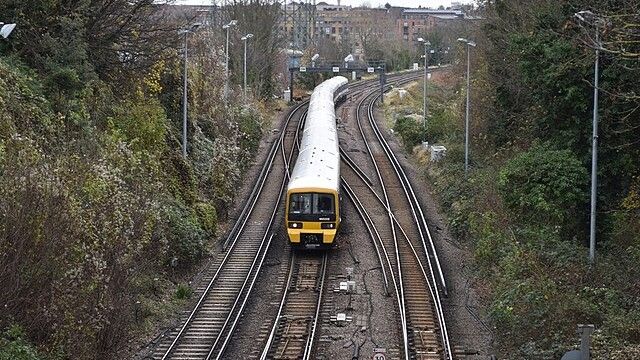
A London-bound train from Doncaster became the site of a shocking mass stabbing on 1 November 2025, leaving 11 people seriously injured and prompting an urgent police response initially treated as a potential terror attack. The incident—swiftly contained near Huntingdon station—has reignited national concern over the vulnerability of the UK’s rail network amid evolving security threats.
Incident overview- a horror unfolds
On the evening of Saturday 1st November 2025, a London-bound train service from Doncaster became the scene of a mass stabbing incident that left 11 people seriously injured, including a railway staff member (A French national of Algerian origin) now hailed as a hero for risking his life to protect a young girl. The suspect was a 32-year-old, British, male with a recent history of having carried out other knife attacks. The immediate concern was whether this was an attack motivated by extremist terrorism or whether it was an isolated act of criminality. The incident was initially declared a major incident by the Police, using the code word „Operation Pluto”, which designated a potential „marauding terror attack”. This was rescinded the following day after it became clear terrorism was not the reason for the attack.
The Police immediately released the suspected attackers« details to promptly suppress conspiracies and disinformation, to prevent any serious potential social unrest. This is a consequence of what followed a horrifying stabbing event by a violence obsessed son of a Rwandan immigrant, who murdered three children in Southport in 2024, which led to very serious nationwide riots.
The incident, which unfolded near Huntingdon station, was swiftly contained thanks to decisive action taken by the train driver (a veteran of the Falklands War), Network Rail signallers and armed police. The attack itself shocked the whole country by its randomness and ferocity and brought into focus urgent questions about the overall strategic resilience of the UK’s railway network and infrastructure.
These questions are necessary in the face of current evolving threats, especially in the so-called hybrid warfare „Grey Zone”, in which the UK rail network could be a prime target for attack and disruption. Historically it should be remembered that until 1998, the UK was involved in combatting an active terrorist campaign conducted by the Provisional Irish Republican Army (IRA) in which both stations and rail infrastructure were targeted, often in strategically significant locations. This all occurred recently enough to enable the crucial lessons learnt in that conflict to remain in the collective memory of both the security forces and in some of the wider population who lived through that period.
Strategic implications. Response coordination and infrastructure readiness
The attack itself occurred during a routine high-speed intercity service, where passengers were confined in carriages travelling at 200 km/ph. In contrast to airports, the UK railways, except for International Eurostar services, do not employ pre-boarding security screening, making them potentially vulnerable to lone actor, low-tech, high-impact attacks which exploit the easy accessibility of rail travel. The incident reignited the debate over airport-style security at railway stations. However, the UK Transport Secretary Heidi Alexander acknowledged the impracticality of metal detectors across thousands of UK stations, citing high levels of passenger traffic and infrastructure limitations.
What was exemplary from an operational rail perspective was the rapidity with which all critical actors responded. It highlights the importance of real-time coordination between train operators, control centres and the emergency services when crisis incidents occur. The success was partly due to the proximity of Cambridgeshire Police HQ to Huntingdon station which enabled a rapid 14-minute armed police response. Had this happened in a remote location then in all probability such an effective response would not have been possible, potentially increasing the victim count manifold.
It should however be clearly signaled that UK railways invest a great deal in all aspects of security and safety which are considered an absolute priority in undertaking every type of operational decision. All rail staff are trained to observe and act immediately upon all suspicious behavior in close coordination with the British Transport Police (BTP) and other security services who have ultimate responsibility for securing the whole railway network.
An example of this is the UK transport network wide British Transport Police public safety campaign called ”See it, Say it, Sorted”. Anyone who wants to report suspicious behaviour on the whole transport network only has to text 61016 to inform BTP. All texts received are screened and prioritized with reports indicating immediate danger or suspicious behaviour receiving the highest priority and immediate responsive attention. This campaign is widely publicized and disseminated by constant announcements, posters and media campaigns onboard trains and at every station. The intention being to inculcate a mindset in which every member of staff and all members of the travelling public, take ownership for security on the public transport network, thus becoming „the eyes and ears” of the Police and security apparatus.
Strategic implications for the railway as national infrastructure
This attack, apart from anything else, highlights that the UK Railways like all railways, are not just transport corridors, but are a vital component of the UK strategic critical national infrastructure. The Huntingdon attack, though not terror-related, is a serious warning about the disruptive potential of hybrid threats, in which lone actors or state proxies in a conflict situation, could potentially exploit soft targets to sow fear and chaos, to psychologically demoralize the population at large. The goal of such operations is to create the illusion that an unseen enemy hand can strike anywhere and at any moment to „get inside people’s heads”, bringing about a sense of hopelessness and defeatism across all sections of society at large.
For this reason, the UK must now treat railway security not simply as a domestic concern but as a wider strategic priority to be integrated into all aspects of national strategic and resilience planning. This is especially so as in a crisis/conflict situation the railways will play a central role in all aspects of military logistics, economic continuity and civil mobility. The Ukrainian War shows how the railways have played such a vital logistical lifeline for both sides and the targeting priority they have elicited. There is no reason to think that in war time, the situation would be any different for UK railways. Consequently, a clear strategy backed up by rigorous training of staff is now needed to ensure resilience and continuity of operations. What could therefore be suggested as part of a program of strategic readiness?
Read more

National Railway Security Strategy
Before anything else, there needs to be both an internal and external culture shift in which the UK railways are not simply seen as a group of commercial entities, but as a key component upon which the UK Armed Forces will have to critically depend on the event of a serious conflict. This shift in both mindset and role awareness must be taken seriously by all UK railway stakeholders, from the lowest to the highest level, so that everyone has a clear understanding that railways are the Steel Arteries that will keep the nation and its critical defence assets moving in every eventuality. I am not saying that this is not already to some extent the case, but more must be done at an official level to signal a determination in this regard.
One way of possibly achieving this could be to establish a dedicated formal Railway Security Command, which could integrate cooperation and coordination between Train Operating Companies, Network Rail - infrastructure operators, Ministry of Transport, Ministry of Defence, intelligence/security services, British Transport Police and all other Police Forces. Such a body would act directly and efficiently in threat assessment, incident response, exercise simulation and strategic communication to all stakeholders at every level.
Since the last dedicated UK military railway unit, 275 Railway Squadron- Royal Logistics Corps, was disbanded in 2014, UK Train Operators should prioritize the recruitment of military and police veterans into all levels of railway operations which could potentially provide an active reserve of ready-trained and experienced personnel. As well as newly recruited veterans, all existing staff with previous military training could reactivate their service, blending their military and railway skillsets to form a Veteran-led Railway Security Reserve Force. This could act as an industry-wide cadre that could patrol, secure and monitor known sensitive locations and points across the whole rail network, pre-empting and reducing the potential impact of saboteurs. Additionally, the Veterans in the Force could serve to both train their civilian colleagues in basic military skills and serve in Railway and the Military liaison/adviser roles, releasing other Regular or Reserve forces for in-theatre operations. In this way the UK Railways could set an example in implementing the concept of a „whole society” approach to national strategic and security planning.
Conclusion
The Huntingdon train attack is not simply a horrific, isolated incident, but a very timely and critical strategic wakeup call not just for the UK Rail Community, but for the United Kingdom as a whole. As the UK faces rising geopolitical tensions and very real hybrid threats, its railway network must continue to evolve from a passive commercial conduit of commuters to being a resilient, secure and strategically protected asset ready to function with a conflict ready mindset. The time for reactive measures is now over. What is required is a proactive, whole-of-society approach to both rail security and its wider strategic implications such that if the worst was to happen, everyone will take ownership of the responsibility to keep the United Kingdom operationally moving.