



- ANALIZA
- WIADOMOŚCI
Strengthening of military cooperation between Vietnam and Russia
Moscow remains the leading arms supplier to Vietnam, and Russian weapons systems have played a key role in the modernisation of the Vietnam People’s Army. This cooperation also has political significance for Hanoi, aligning with Vietnam’s strategy of diversifying its partners, maintaining a balance between the great powers, and preserving its independence on the international stage.
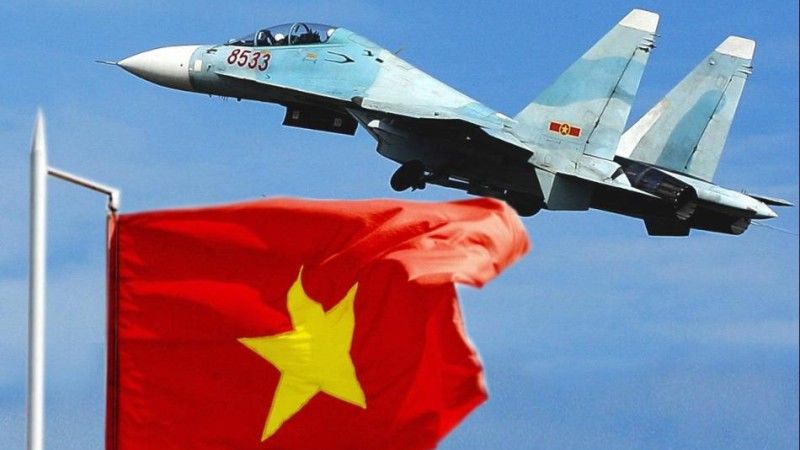
The origins of military cooperation between Hanoi and Moscow date back to the Indochina wars. The Soviet Union assisted North Vietnam in fighting the American-backed Republic of Vietnam in the south, and later during the Vietnamese intervention in Cambodia and the border war with China. Currently, military relations between Vietnam and Russia constitute a key pillar of the two countries« strategic cooperation.
Soviet Involvement During the Vietnam War
Although after the recognition of the Democratic Republic of Vietnam by some Eastern Bloc countries in 1950, aid to the Vietnamese communists fighting the French was primarily provided by the People’s Republic of China, the USSR also began to support them in the last stage of the conflict. In the second half of the 1950s, Moscow delivered 23 000 tons of equipment, 7 000 less than China, of the estimated 50 000 that flowed to North Vietnam at that time. However, during this period, there was no decisive support from Moscow or Beijing for a military solution towards South Vietnam. Nikita Khrushchev announced that he would not support the war, likely fearing a confrontation with the United States after the Cuban Missile Crisis and a possible alliance between a unified Vietnam and China.
Changes in Soviet foreign policy occurred with the election of Leonid Brezhnev as Secretary of the Communist Party of the Soviet Union, who focused on strengthening Moscow’s influence worldwide. Following the incidents in the Gulf of Tonkin in August 1964 and the launch of the US bombing campaign in March of the following year as part of Operation Rolling Thunder, the Soviets shifted from a reserved stance to active, albeit indirect, involvement. The USSR did not seek an open confrontation with the US but wanted to increase the cost of the US intervention and strengthen the position of the North Vietnamese. While it supported Hanoi diplomatically on the international stage, it also encouraged the North Vietnamese to negotiate. All aid, including military assistance, was to flow through China, which agreed to the transport of Soviet equipment. However, fearing a growing Soviet role in the region, the Chinese repeatedly sabotaged supplies, prohibiting Soviet transport aircraft from overflying their territory and, under various pretexts, delaying the transfer of equipment by rail. The Vietnamese were aware of Moscow’s intentions to increase its influence in Southeast Asia. Still, without its participation and military support, the likelihood of conducting effective military operations was much lower.
The Scale of Soviet Aid During the Vietnam War
Moscow could offer BM-13 Katyusha and BM-21 Grad rocket launchers, as well as modern S-75 Dvina air defence missile systems, which were essential in neutralising American air raids. Soviet Pacific Fleet units present in the South China Sea played a crucial role. Reconnaissance ships, operating as civilian vessels, targeted B-52 bombers flying from American bases toward Vietnam, warning Vietnamese troops of the impending danger and giving them time to regroup.
The USSR also actively participated in the formation of the North Vietnamese Air Force. Even in the 1950s, before the American phase of the conflict began, the Soviets trained Vietnamese pilots and, during the war, supplied MiG-17s, MiG-19s, and the more modern MiG-27s. The USSR also sent its advisors to Vietnam, estimated at 10 000-15 000. These were primarily military specialists training anti-aircraft warfare, but also included tank operators, sailors, communications specialists, and Soviet arms industry workers. Aircraft mechanics and Soviet pilots were also sent to Vietnam. T-34-85, T-54, and T-55 tanks, 122-, 130-, and 152-mm barrel artillery, and AK-47 and AKM automatic rifles were also supplied.
American intelligence data indicates that Moscow provided North Vietnam with 3 bln USD in aid between 1954 and 1973. The most significant amount flowed in 1972, during the North Vietnamese offensive lasting from late March to early 1973, known as the Spring-Summer Offensive (Viet.Chiến dịch Xuân-Hè), the Easter Offensive (Viet.Chiến dịch Lễ Phục Sinh), or the Fiery Red Summer (Viet.Mùa hè đỏ lửa). North Vietnam’s full-scale conventional offensive required massive supplies of modern heavy weapons, particularly artillery, tanks, and air defence systems. Moscow sought to strengthen Hanoi’s negotiating position ahead of the Paris peace talks. SIPRI data indicates that between 1954 and 1975, North Vietnam purchased weapons from the Soviet Union valued at over 10.5 bln USD, with the most significant sales of military equipment occurring in 1972-73 for the aforementioned reasons, and at the beginning of the war in 1966-68.
Official Vietnamese statistics, in turn, indicate that between 1955 and 1975 Moscow supplied the Vietnamese primarily with approximately 1 350 missile launch systems, over 18 000 missiles, over 1 000 various types of missiles, over 300 fighters, about 700 tanks, about 600 armoured vehicles, over 50 warships, about 20 transport ships and about 1 330 artillery tractors.

Collaboration in the Final Years of the Cold War
After the end of the Vietnam War and the reunification of the country, the authorities in Hanoi found themselves in the Soviet sphere of influence. When Vietnam invaded Cambodia in late December 1978, the USSR also supported Hanoi. Various types of MiG aircraft, missiles, small arms, and radars were delivered as late as August. When reports emerged that China intended to invade Vietnamese territory in response to Hanoi’s overthrow of the Pol Pot regime, the USSR, in early February 1979, dispatched a group of more than a dozen reconnaissance ships and cruisers to the South China Sea to gather intelligence and inform Vietnam about Chinese movements. After the outbreak of conflict on February 17, Soviet assistance remained limited to logistical support, intelligence, and maritime presence. Soviet Tu-95 bombers, then used for long-range reconnaissance missions, were dispatched, and airlifts were organised to supply Vietnam. Moscow avoided direct participation in the fighting, which could be explained by the ambiguous provisions of Article VI of the Treaty of Friendship and Cooperation, concluded in November 1978, regarding the possible defence of Vietnam. The Soviets wanted to avoid confrontation with China, and Brezhnev urged restraint from further escalation of the conflict, which ultimately ended on March 16. The Soviet Union remained the primary source of arms imports, and the years 1979-1984 saw a renewed increase in the value of purchased equipment, which, however, began to decline in the second half of the 1980s.
A crucial element of the Soviet presence in Southeast Asia was access to the base at Cam Ranh Bay, which Moscow officially leased for 25 years from May 2, 1979. Under the agreement, the base could accommodate up to 10 warships, 8 submarines, and 6 escort vessels, and the military airfield could accommodate up to 16 missile aircraft, 9 reconnaissance aircraft, and 3 transport aircraft, with the possibility of increasing the number. The Soviets expanded the base’s signals intelligence (SIGINT) centre, which also enabled satellite communication with the Pacific Fleet headquarters in Vladivostok. In February 1984, the decision was made to expand the base, and on April 20, an agreement was signed to construct radar stations and houses for Soviet soldiers and workers. Access to the Cam Ranh base enabled the Soviet Union to operate not only in the South China Sea but also in the Indian Ocean, enabling intelligence gathering and the projection of Soviet power in the region. With the end of the Cold War rivalry and the rise of Mikhail Gorbachev, the base’s strategic importance diminished somewhat. Moscow even proposed its closure in exchange for the closure of American bases in the Philippines. By 1989, offensive weapons, including MiG-23s and Tu-16s, had been withdrawn from Cam Ranh. In turn, personnel numbers were reduced from 5 000 to 2 500.
Military cooperation in the 1990s and early 21st century
The Russians were still present at the base in the 1990s, but a declining defence budget and disagreement over a potential lease price led to Moscow’s withdrawal from Cam Ranh. Russia was willing to pay 60 mln USD, while decision-makers in Hanoi were considering a total of 200-300 mln USD. In June, the Vietnamese authorities announced they would not lease the port to other countries, prompting the Russian authorities to announce in October 2001 that they would withdraw from the base before the 25-year lease expired. The operation began in January 2002, and on May 2, 2002, the base was handed over to the Vietnamese.
The early 1990s brought a cooling in Hanoi-Moscow relations, including on the military front, due to the growing export of Russian arms to China. Incidents were becoming increasingly frequent in the South China Sea region around the disputed Paracel and Spratly Islands. Rising Vietnamese-Chinese tensions resulted from China’s adoption of the Territorial Sea and Contiguous Zone Law in February 1992, which defined the scope of Chinese jurisdiction and confirmed claims within the nine-dash line.
In June 1994, during Prime Minister Võ Văn Kiệt’s visit to Moscow, Russia and Vietnam signed an agreement that, in subsequent years, led to the purchase of 12 Su-27 Flanker fighters, 25 Su-22 Fitter aircraft, several batches of Su-27s (36 of which arrived in Vietnam in the 1990s), 8 Project 1241 Molnya missile corvettes (Tarantul - NATO classification), and a Project 636 Varshavyanka submarine (Kilo - NATO classification). In the first decade of the 21st century, Vietnam purchased 4 Su-30MK2 multi-role fighters, 2 S-300PMU-1 anti-aircraft missile systems, another 2 Project 1241 Molnia missile corvettes, 8 Project 10412 Svetlyak patrol boats, and 2 Project 11661E Gepard frigates.
Cooperation in the second decade of the 21st century
Russian-Vietnamese arms trade relations continued to develop, supported by the general trend stemming from Moscow’s 2012 Asian pivot, which led to the upgrading of ties to a comprehensive strategic partnership the same year. Beijing’s growing assertiveness in the South China Sea was reflected in a rise in incidents. One of the most significant crises in China-Vietnam relations, related to the PRC’s deployment of theHYSY 981 drilling platform in disputed waters in May 2014, accelerated the Vietnamese military’s modernisation. Among other things, Russia delivered to Vietnam 6 Project 636 Varshavyanka submarines (NATO – Kilo) - contracted back in 2009, 4 K-300PBastion-P coastal defence missile systems, 32 Su-30MK2 aircraft, 2 more Project 11661E Gepard frigates, 64 T-90 tanks, and a decision was made to import 12 Yak-130 combat and training aircraft.
SIPRI estimates the value of all equipment delivered to Vietnam from 1995 to 2024 at 7.574 bln USD. The vast majority of weapons (71.1%) were purchased between 2011 and 2018, totalling 5.39 bln USD. Military cooperation flourished, unaffected by the Russian annexation of Crimea in February/March 2014. This year, the highest value of equipment purchased by Vietnam was recorded.
In November 2013, while Vladimir Putin was in Vietnam, an agreement was signed that simplified procedures for the Russian military’s use of the Cam Ranh base. Numerous visits at the level of defence ministers also symbolised the strengthening of cooperation. In March 2013, Sergei Shoigu visited Hanoi, arriving at the invitation of his counterpart, Phùng Quang Thanh. At the meeting, assurances were given regarding further plans to purchase Russian equipment, and Moscow pledged assistance in training the Vietnamese Navy.

Photo. SIPRI
In April 2016, the new Vietnamese Defence Minister, Ngô Xuân Lịch, visited Moscow and, in turn, hosted Sergei Shoigu in Hanoi in January 2018. During the next meeting between the two ministers, held in Moscow in April 2018, the two sides signed a road map for 2018-2020. In February 2020, Lịch and Shoigu met again in the Russian capital. The Vietnamese minister spoke about the support the Vietnamese had received from the Soviet Union in the past and Russia’s involvement in regional security mechanisms within the Association of Southeast Asian Nations (ASEAN). At the end of the meeting, the two ministers signed a document outlining a shared vision for defence cooperation for 2020-2025.
Vietnamese-Russian defence relations in the third decade of the 21st century
Over time, cooperation began to be affected by sanctions imposed on Russia after the annexation of Crimea and by the United States Congress’s passage of the Countering America’s Adversaries Through Sanctions Act (CAATSA) in August 2017, which authorised retaliatory actions against countries purchasing arms from Russia. Furthermore, doubts arose about the capabilities of Russian arms production, which was one of the external factors slowing the modernisation of the Vietnamese army. Despite these challenges, defence relations continued to strengthen through the organisation of official visits by defence ministers. At the turn of November and December 2021, Phan Văn Giang met with Sergei Shoigu in Moscow, and the ministers discussed cooperation priorities for the coming years.
The full-scale invasion of Ukraine only continued the declining trend in Vietnamese arms exports from Russia. However, Vietnam did not condemn the Russian aggression, continuing meetings at the highest and ministerial levels. In August 2023, Minister Giang attended the Moscow Conference on International Security in the Russian capital and met with Russian Defence Minister Sergei Shoigu. In the first half of December 2025, Shoigu arrived in Hanoi, already in his new role as Secretary of the Security Council of the Russian Federation.
Strong competitors in the arms trade for Russia appeared, from which the Hanoi authorities could also purchase weapons. These primarily include Israel, South Korea, and the United States. Recently, news broke that Vietnam had agreed to buy at least 24 F-16 fighter aircraft, but a visit by Secretary of War Pete Hegseth in November 2025 did not bring any key decisions on the matter.
In mid-2025, it was reported that Russia and Vietnam had developed a method to conceal payments for military equipment to circumvent Western sanctions. The countries used profits from joint energy ventures to repay arms contracts, avoiding cash transfers. Vietnam allegedly made repayments from shares in the Rusvietpetro joint venture operating in Siberia. It was reported that the authorities in Hanoi could buy about 40 Su-35 fighters worth 8 bln USD under a secret agreement, 9 electronic warfare systems for this type of fighter and 26 mobile ground jamming systems worth USD 190 million.
Summary
Russia remains Vietnam’s most crucial partner in defence cooperation. After the outbreak of the war in Ukraine, military relations between Hanoi and Moscow did not collapse. Instead, a controlled risk reduction occurred, and Vietnam shifted from purchasing expansion to managing its existing dependence. Russia’s aggression against Ukraine forced the diversification of Vietnam’s arms supplies, and the authorities in Hanoi are currently seeking compatible technologies that would enable independence from Russian components. The Vietnamese will certainly seek new arms trade partners. However, recent reports indicate that Russia will continue to play a significant role in Vietnam’s plans to maintain the capabilities of the Vietnam People’s Army.


