



- ANALIZA
- KOMENTARZ
- OPINIA
- WIADOMOŚCI
Security and defence of Central and Eastern Europe

A factor that may influence changes in the geopolitical arrangement of the Central and Eastern European region is international cooperation within organisations such as NATO and the European Union. Increasing the integration of the states of Central and Eastern Europe with these organisations and strengthening the defence capabilities of NATO members may contribute to enhancing security in the region.
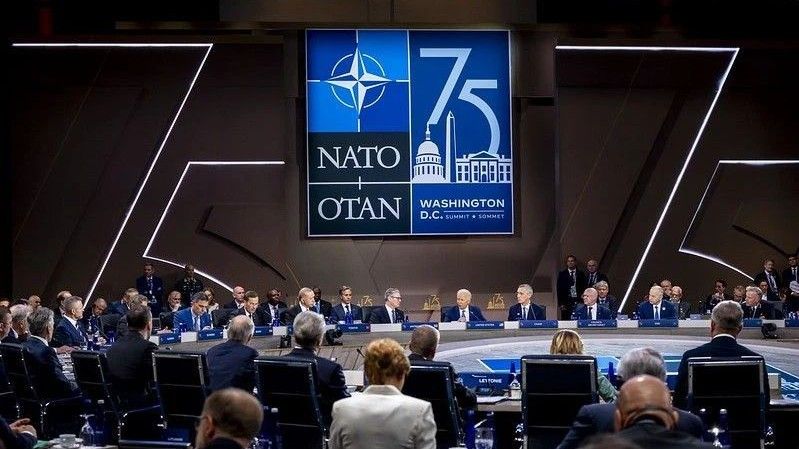
The integration of states such as Poland, Lithuania, Latvia, Estonia, Romania or Bulgaria into the structures of NATO and the European Union constitutes a guarantee of security, both in military and economic terms. Cooperation of the states of Central and Eastern Europe with the USA, the United Kingdom and France within initiatives for regional security may also play a key role in strengthening defence. Joint military exercises, exchange of intelligence information, as well as cooperation within missile defence systems are elements that contribute to increasing stability in the region.
Additionally, the strategic location of the countries of Central and Eastern Europe, including proximity to the borders with Russia, makes them a key link in NATO defence structures. The strengthening of these states constitutes an important element in the Alliance’s defence policy, which may result in a further limitation of Russian influence. In the long-term context, the states of Central and Eastern Europe, making use of the potential of NATO and the European Union, should strive for further integration of their defence and security structures, as well as for the creation of new regional mechanisms that will be able to respond better to the challenges connected with geopolitical instability. Tightening cooperation with Ukraine, both within bilateral agreements and within joint regional initiatives, is a step towards building more resilient security structures that will be able to meet the challenges of the 21st century, ensuring stability and peace in Central and Eastern Europe. The aforementioned differences in the perception of threat have their roots in the historical and geopolitical experiences of the states. The states of Central and Eastern Europe, which for many years were under the influence of the USSR, have a deep conviction that Russia’s actions constitute a direct threat to them. These states, including Poland, Lithuania, Latvia, Estonia, the Czech Republic and Slovakia, treat the war in Ukraine not only as a regional conflict, but also as an attempt at Russian expansion which may threaten their own sovereignty.
Therefore, they intensify their actions in the field of defence cooperation and military support for Ukraine, but also within NATO and the European Union. Western European states, in turn, although also interested in restraining Russian aggression, are more inclined to avoid escalation of the war and advocate diplomatic solutions to the conflict. Such a difference in threat perception leads to tensions, especially in the context of decisions taken in Brussels. Increasing NATO’s military presence, particularly rapid reaction forces and early warning systems, constitutes a response to growing threats to the Central and Eastern European region. These actions should be complementary to the national defence strategies of the individual states of the region, which face diverse security challenges. An important challenge for NATO and the states of Central and Eastern Europe is the growing role of tactical nuclear weapons in the Russian strategy of deterrence and escalation. The Russian Federation is developing the doctrine of so-called „nuclear de-escalation”, which assumes the limited use of tactical nuclear weapons in order to intimidate the opponent or force the cessation of hostilities on terms favourable to Russia. This concept is particularly dangerous because its aim is to exploit differences in threat perception among NATO states, which may lead to divisions within the Alliance.

The introduction of a new nuclear doctrine in November 2024, which expands the catalogue of situations enabling the use of nuclear weapons, should be interpreted as another element of Russian deterrence policy aimed at destabilising the region. In response to this threat, the states of Central and Eastern Europe should intensify cooperation within NATO, particularly in the area of strategic planning and military exercises. It is also important to develop capabilities in missile defence. Investments in modern military technologies, such as unmanned systems or artificial intelligence, may significantly increase the defence capabilities of the states of the region and their interoperability within the Alliance. The credibility of the „nuclear de-escalation” doctrine constitutes a key factor influencing the level of risk of Russia undertaking military aggression. Therefore, the most effective response to the threat arising from this doctrine is NATO action aimed at weakening Russia’s confidence in its effectiveness. The NATO summit in Warsaw in 2016 was a step in this direction. The actions undertaken there were aimed at strengthening the credibility of the Alliance’s nuclear response, particularly in the context of Russia’s advantage at the level of tactical nuclear weapons. It must be unequivocally clear to
Russia that any crossing of the nuclear threshold will cause the threat of a nuclear war covering all levels of escalation, not only the tactical dimension limited to Europe. The most serious risk of military conflict in the Central and Eastern European region remains a full-scale war, constituting a potential threat to the entire globe. This results from the enormous disparity of strategic potentials, both military and non-military, between NATO and Russia. For this reason, a conscious and deliberate full-scale aggression on the part of Russia is almost impossible. However, the risk of such a war may result from a Russian miscalculation, especially within possible attempts to achieve victory in a limited conflict. Incorrect assessment of the effectiveness of the de-escalation doctrine using tactical nuclear weapons may lead to its failure and consequently to escalation of the conflict to a full scale. Thus, the risk of global war is in a sense a function of the risk of a limited conflict. Every state planning military aggression must possess forces capable of carrying out three basic tasks: conducting an offensive on the opponent’s territory, defending its own borders and protecting its own territory. In the case of analysing Russia’s capacity to threaten the states of Central and Eastern Europe, it should be emphasised that this would require it to assemble a potential several times exceeding NATO capabilities. However, even assuming the absence of direct involvement of all member states of the Alliance, NATO possesses sufficient potential to deter Russia.
Moreover, the eastern border of NATO, particularly after the accession of the Scandinavian states to the Alliance, forces Russia to engage significant resources to secure its own borders. A key challenge for NATO remains strengthening the credibility of its deterrence potential at all levels of escalation. A clear message that the use of tactical nuclear weapons will not provide Russia with an advantage but will only lead to escalation of the conflict to a full scale is necessary to minimise the risk. At the same time, NATO should strive to maintain strategic superiority in terms of defensive and offensive capabilities, which will enable effective deterrence of potential adversaries. On the basis of the conducted research, it was established that, taking into account Russia’s current policy, particularly the actions of President Putin and his entourage, the Kremlin’s strategy of kinetic actions is directed at the complete subordination of former Soviet republics and the political and economic dependence of states belonging to its sphere of influence from before the collapse of the USSR. The implementation of such a scenario would mean reversing the development of the states of Central and Eastern Europe to the state before 1989, as well as a possible return to a bipolar world and the resumption of the arms race between two economic and military blocs. The lack of full cohesion in the approach to the defence of NATO’s eastern flank and differences in readiness for military involvement constitute a serious challenge. Although NATO as a whole recognises the threat from Russia and Belarus, each member state has different political and strategic priorities, which makes it difficult to achieve full unity in the implementation of a common defence doctrine.

In such conditions, border states must take into account the possibility that the Alliance will act in a more cautious and balanced manner, which means that they will not always be able to count on immediate assistance in the event of a crisis. Therefore, a key element is not only the ability to cope with threats alone, but also striving to maintain solidarity and cooperation with other NATO states in order to respond effectively to crisis situations. Without strong international cooperation, the defence capability of the eastern flank states may be seriously threatened, and allies will be forced to seriously reconsider their defence policy in the face of modern challenges posed by hybrid warfare. Nevertheless, building military potential alone is not sufficient to counter aggression effectively. Modern defence also requires an appropriate political platform that will enable quick and efficient decision-making regarding responses to threats. One of the key elements of this platform is the strategic alliance with the United States. The USA play an invaluable role in ensuring security in Europe, both through their military presence and political support within NATO.
For this reason, European states should strive to maintain close relations with the USA and use their support in the face of threat. Another important pillar of security is membership of NATO and the European Union. These organisations constitute basic security guarantees for the states of the eastern flank of NATO, and their collective defence, based on Article 5 of the North Atlantic Treaty, creates strong foundations for deterring potential aggressors.
Membership of NATO and the European Union also provides the opportunity for the exchange of intelligence information, sharing of experience and joint response to threats, which increases the effectiveness of defence.


