



- WIADOMOŚCI
- ANALIZA
- PILNE
Russia feeds Iran intelligence — and tactics

Recent reports indicate that Russia is transferring intelligence and combat experience to Iran, exporting lessons from Ukraine into a new theatre. These adaptations are shaping Iranian drone operations and shifting conflict dynamics in the Middle East, creating a feedback loop of warfighting innovation that may not remain far from Europe.
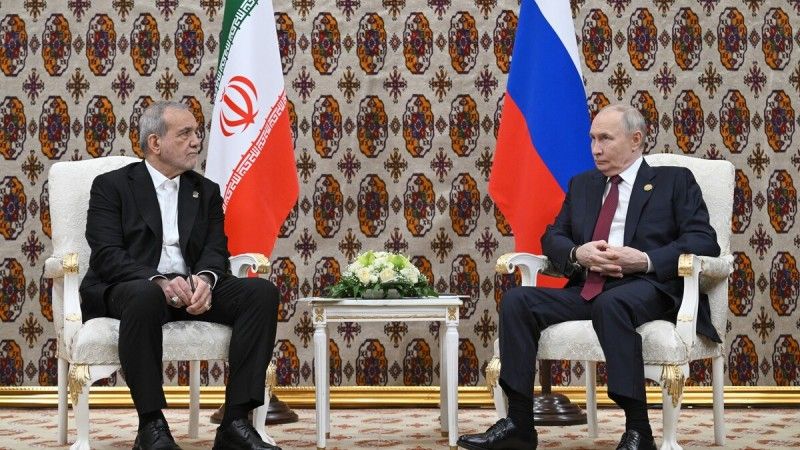
Photo. Kristina Kormilitsyna (”Rossiya Segodnya“), President of Russia
Sharing intelligence, sharing experience
Last year’s episode of U.S. restrictions on intelligence sharing with Ukraine proved that military effectiveness depends on something more than sheer material capabilities. While assets such as drones, ammunition, and ballistic missiles form the backbone of military operations, their operational value intrinsically connects to the availability of strategic enablers, such as access to satellite-based intelligence.
In this context, the reported transfer of satellite imagery from Russia to Tehran emboldens Iran’s military capabilities. Data provided by the Russian Aerospace Forces is believed to include detailed information on U.S. and allied military positions, including radar systems, air defence assets, and naval movements.
Yet the Iran–Russia cooperation extends beyond space-based intelligence; it also heralds a transfer of operational and tactical concepts. Russia, having deployed thousands of Iranian-designed Shahed drones, initially relied on Iranian supplies but gradually shifted toward domestic production. Subsequently, the locally manufactured variants have been adapted to improve targeting precision and resistance to electronic warfare jamming. Additionally, the lessons learned from the Ukrainian battlefield — including drone deployment patterns, strike altitudes, and coordinated swarm tactics.
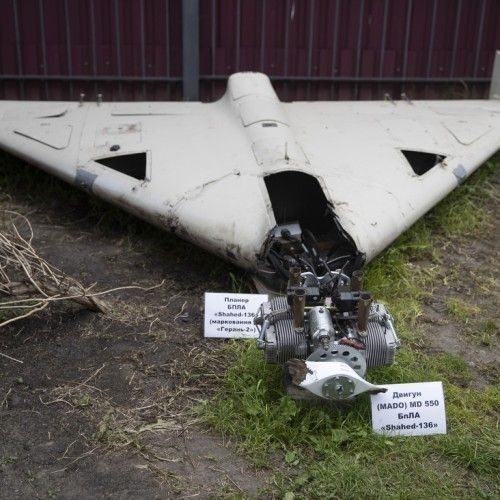
These modifications are now being shared back with Iran, creating a feedback loop of operational learning. In this regard, the analysis of recent Iranian strike patterns indeed suggests an increasing focus on radars and command-and-control, mirroring the Russian tactics in Ukraine. This would suggest that the Iran–Russia relationship is evolving into a mutually reinforcing knowledge exchange, where both actors refine their capabilities through shared combat experience.
In reality, cooperation between Russia and Iran has never truly stopped. Even when many suggested that Moscow was distancing itself from Tehran, Iran continued to benefit significantly from this relationship — militarily through arms transfers, politically through alignment, and institutionally through access to structures where Russia maintains strong influence. Both states have also cooperated closely in Africa, expanding their operational footprint beyond their immediate regions. It is also important to note that Russia has supported the activities of the Islamic Revolutionary Guard Corps (IRGC) on a global scale. In this context, any form of Russian support for Iran should not be seen as a new development, but rather as a continuation of a long-standing and pragmatic partnership.
The limits and perils of Iran–Russia partnership
At the same time, the United States appears to downplay the scale of Russian support for Iran. In reality, however, Washington’s intervention in Iran was not only about Tehran itself. It was also a signal directed at China. While the U.S. fulfilled its commitments to Israel, which strongly pushed for confrontation with Iran, the broader objective was to demonstrate power in a global context. In Europe, we often perceive the United States as being too soft on Russia, particularly in the Ukrainian context. Yet from the American perspective, Russia is not the primary adversary — and this is a fundamental problem for European security thinking.
It is also important to note that intelligence is an enabler, not a substitute for capability*. While it improves targeting and efficiency, it does not eliminate structural-material gaps. As the well-known adage suggests, „quantity has a quality of its own.” In this context intelligence can serve as a force multiplier, but it cannot fully offset the material gaps, which are present in Iran.
See also


The greater risk lies therfore in the transfer of combat experience. For Europe, this raises concerns that similar tactics could be replicated in other theatres, including NATO’s frontline states such as Poland and the Baltic states, which have already experienced an uptick in airspace incursions. The increasing sophistication of drone swarms and targeting methods is likely to place mounting strain on existing air defence systems over time.
Lastly, while not formally institutionalised and largely pragmatic in nature, cooperation between states such as Russia and Iran continues to deepen. Paradoxically, it may be precisely this lack of formal alignment — and thus the absence of institutional constraints— that enables a more agile, flexible, and rapid form of collaboration
Iran isn't Europe's war
The significance of the evolving Iran–Russia relationship lies not only in its immediate operational outputs, but in its potential to further enhance already lethal capabilities, particularly in drones and electronic warfare. This is a development NATO must treat with urgency. In response, the Alliance should strengthen strategic communication, expand intelligence sharing, and accelerate the rebuilding of its defence posture — especially in the defence-industrial base and integrated air and missile defence, with particular attention to regions most vulnerable to Russian incursions.
But when it comes to the conflict intself, the Alliance is neither willing nor able to respond decisively in the context of Iran. Just as NATO avoids escalation in relation to Russia beyond its immediate borders, it remains cautious in the Middle East. NATO reacts primarily within Europe, particularly when incidents occur near its borders — for example in Estonia, Lithuania or Poland, where consultations under Article 4 or coordination under Article 3 are activated. However, no actor within the Alliance is willing to escalate further. In the Middle East, the situation is largely left to regional actors. European NATO member states present in the region — such as France or Italy — operate on a strictly defensive basis, protecting their own interests rather than engaging in collective military action.

While maintaining a degree of operational flexibility, Europe should focus primarily on rebuilding and strengthening its own defence capabilities, ensuring that recent efforts are consolidated rather than diluted. This does not preclude engagement beyond the European theatre. France, for instance, maintains a significant military presence in the Middle East that could be leveraged in response to contingencies. Still, for European NATO states, the development of homegrown capabilities must remain the foremost priority.
NATO allies should also prioritise greater coordination in targeting interconnected adversarial alignments. As cooperation between Russia and Iran deepens, a division of effort could produce mutually reinforcing outcomes: European pressure on Russia may constrain its capacity to cooperate with Iran, while U.S. actions against Iran could weaken its support to Moscow. This logic extends beyond the Iran–Russia nexus. Coordinated approaches toward China–Russia and North Korea–Russia relationships could similarly exploit structural interdependencies.
Ultimately, NATO members must remain focused on the conflict at their own borders. The primary security challenge for the Alliance is not the Middle East, but Russia and the ongoing war in Europe. While the Iran–Russia relationship will continue to develop, NATO countries currently lack the strategic leverage to directly influence this dynamic. Instead, they must prioritise securing their own interests where it matters most. Any broader engagement risks diluting already limited capabilities. In the long term, NATO may expand its partnerships with Middle Eastern countries, but today its core challenge remains Russia — and this must remain the central point of strategic focus.
Authors: Karolina Kisiel and Dr. Aleksander Olech


