



- WYWIADY
- WIADOMOŚCI
“Iran after the war will not be the same country” [INTERVIEW]

“Today’s leadership is not as strong as it once was. Mojtaba Khamenei is not Ali Khamenei. Nor is the Islamic Revolutionary Guard Corps as strong as it was before the war. If the government does not send a signal of reform or ease the pressure, it may face serious unrest” - says dr. Arman Mahmoudian of the Global and National Security Institute (University of South Florida).
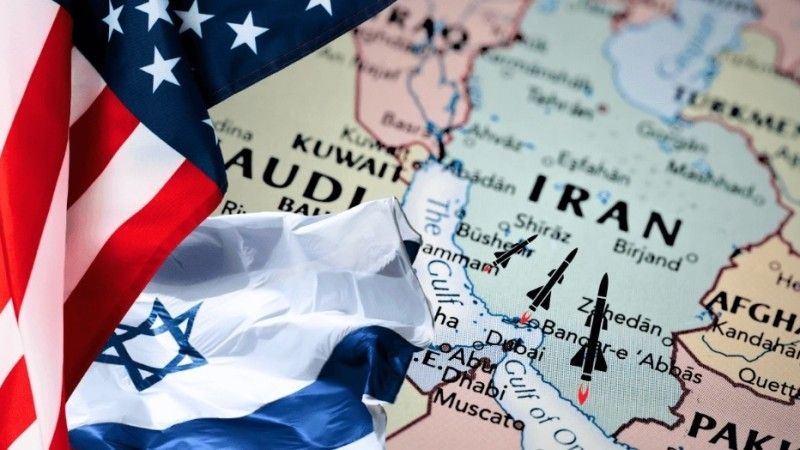
An interview with Dr. Arman Mahmoudian, a full-time in-house research fellow at the Global and National Security Institute (University of South Florida), an expert on Middle Eastern and Russian affairs.
Prof. Robert Czulda: My first question concerns your general impression of the current situation in Iran, particularly the war and the broader crisis in the Persian Gulf. How do you see it?
There are things that I expected and things that I did not expect. I expected the war would happen. What I did not expect was that it would happen before the complete failure of negotiations. They were supposed to meet again the following Friday, but the war started before that meeting took place.
I also did not expect that they would target Khamenei. I knew Israel had been discussing this option, I discussed it during the June war, but I didn’t expect they would actually carry it out.
I’m not surprised, however, by the retaliatory campaign. Many people say that Iran’s attacks on neighboring countries show panic or a paralyzed command-and-control system. I have no doubt that the Iranian command-and-control system has been damaged and that many senior figures have been removed. But in my view this does not necessarily mean total paralysis.
If you look at Iranian rhetoric before the war, they are doing exactly what they promised. Ayatollah Khamenei said very clearly in one of his last speeches that the next war would not be limited to direct exchanges of fire. It would become a regional war. Similarly, the commander of the IRGC said that they would „set the region on fire.”
After the June war, Iran reformed parts of its command-and-control structure. They realized they were highly vulnerable to intelligence penetration and targeted strikes against high-value individuals. As a result, they revived an institution that existed during the Iran–Iraq War in the 1980s: the Supreme Council of Defense.
This is different from the Supreme National Security Council. The goal of the Supreme Council of Defense is decentralization of command and control. Regional commanders and provincial governors were given greater autonomy. They were informed about their operational boundaries, what they can and cannot do, but they were also told that in wartime they would have autonomy within those boundaries.
See also


So what we are seeing now is Iran trying to set the region on fire and attacking neighbors. This is not unexpected. It is a deliberate strategy that Iran had already promised.
Iran knows that its war with the United States is asymmetrical. Their capabilities are not equal. Therefore, Iran is trying to create pressure through economic means, especially through energy and investment.
The Strait of Hormuz is crucial not only for oil but also for many other petroleum and chemical products. It is a highly strategic position. So we are seeing a war in which the United States and Israel are trying to win through military pressure, while Iran is responding through economic disruption, by disrupting oil flows and investment.
Countries like the UAE, Qatar, Kuwait, and Bahrain used to be among the most stable places in the world. They hosted many American and European investors. Now they are under missile attacks. If you live in Dubai or Kuwait today, you might be facing more missile attacks than Israel itself.
That creates long-term consequences for investors and for the region. That, in short, is my view of the general direction of the war.
What does this strategy tell us about the current philosophy of the Islamic Republic and the condition of its political and security structures?
The Iranian Islamic Revolution emerged out of chaos, like many revolutionary regimes. From the beginning, revolutionary governments often embrace military conflict as part of their identity. You can see this in the French, Cuban, or Russian revolutions.
Iran experienced this during the Iran-Iraq War. The current war reinforces the regime’s anti-American ideology. In the Iranian narrative, the United States attacked Iran in the middle of negotiations. That is how they interpret it: the negotiations were betrayed.
In this context, how would the succession of Mojtaba Khamenei impact the current landscape?
I believe his rise may have a greater impact on the ideology of the Islamic Revolution than the war itself.
The revolution of 1979 was supposed to end what Ayatollah Khomeini described as „2,500 years of monarchical tyranny.” In monarchy, power is inherited from father to son. The revolution was meant to end that system and transfer power to the oppressed.
Today, however, we are witnessing power being inherited again. When Mojtaba Khamenei was announced as the Supreme Leader, I said on BBC World that this decision defeats the very purpose of the revolution. Iran now appears to be developing powerful political „houses”: the house of Khamenei, the house of Larijani, and so on.
If the regime survives the war, this ideological contradiction, hereditary succession, may become its biggest internal crisis.
There is also the issue of continuity of power and effective governance. If the leadership keeps being targeted, governing the country becomes difficult. Do you think that could become a serious problem?
Yes. If Israeli or American strikes continue removing top leaders, it would create a strong sense of insecurity within the regime. If decision-makers feel they cannot rely on the stability of the top leadership, they will assume more autonomy and responsibility.
More importantly, they will prioritize their own survival. Over time, that could destabilize the system.
Officially, the Islamic Republic claims it has a line of succession. But there are uncertainties. For example, we do not know the current physical condition of Mojtaba Khamenei. It has been more than 48 hours since he was announced as Supreme Leader, yet he has not released a public video or message. That is very unusual in Iranian political tradition.
Some Iranian sources even suggest he may have been wounded during the war. If that is true, it raises the question of who is actually running the country. My guess is that the IRGC would fill that vacuum.
If civilian or clerical leadership continues to be removed, the vacuum would likely be filled by the IRGC, pushing Iran toward a more overt military authoritarian system.
See also

If Mojtaba Khamenei survives and remains in power, what could that mean for Iran domestically and internationally?
It depends on how he decides to conclude the war. Survival alone is not enough. The key question is what comes next.
Will he return to confrontation with the United States, or pursue détente?
Iran is severely damaged. It has lost a significant portion of its conventional military capability, and parts of its industrial sector have been damaged. The country is already under sanctions and facing economic protests. Public frustration and resentment are already very high.
The leadership today is not as strong as it was earlier. Mojtaba Khamenei is not Ali Khamenei. The IRGC is also not as strong as it was before the war.
If the government does not send a signal of reform or easing pressure, it could face major unrest. But the situation is complicated because Mojtaba Khamenei also has personal motivations. His family members reportedly died in the attacks. That creates the possibility that he could be driven by ideology and vengeance.
If that happens, both domestic repression and international confrontation could intensify.
Within the current power structure, do you think there is a chance that moderates could gain power in the near future?
It is too early to say. The war has brought the Islamic Republic to an irreversible stage. Even if it survives, it will not be the same system as before.
A whole generation of leadership has been removed. New leaders will need time and resources to consolidate power. For example, Ali Khamenei himself needed about ten years to fully consolidate his position.
Mojtaba’s situation is even more difficult. That lack of consolidation could create opportunities for other actors, both moderates and extremists. However, the group most likely to benefit is the IRGC, because they have both weapons and financial resources.
If the Revolutionary Guard gains more power, do you think they would behave pragmatically or adopt a more hawkish approach?
We will have to wait and see who emerges as the leadership. Many IRGC commanders have reportedly been killed, so the internal hierarchy is not entirely clear.
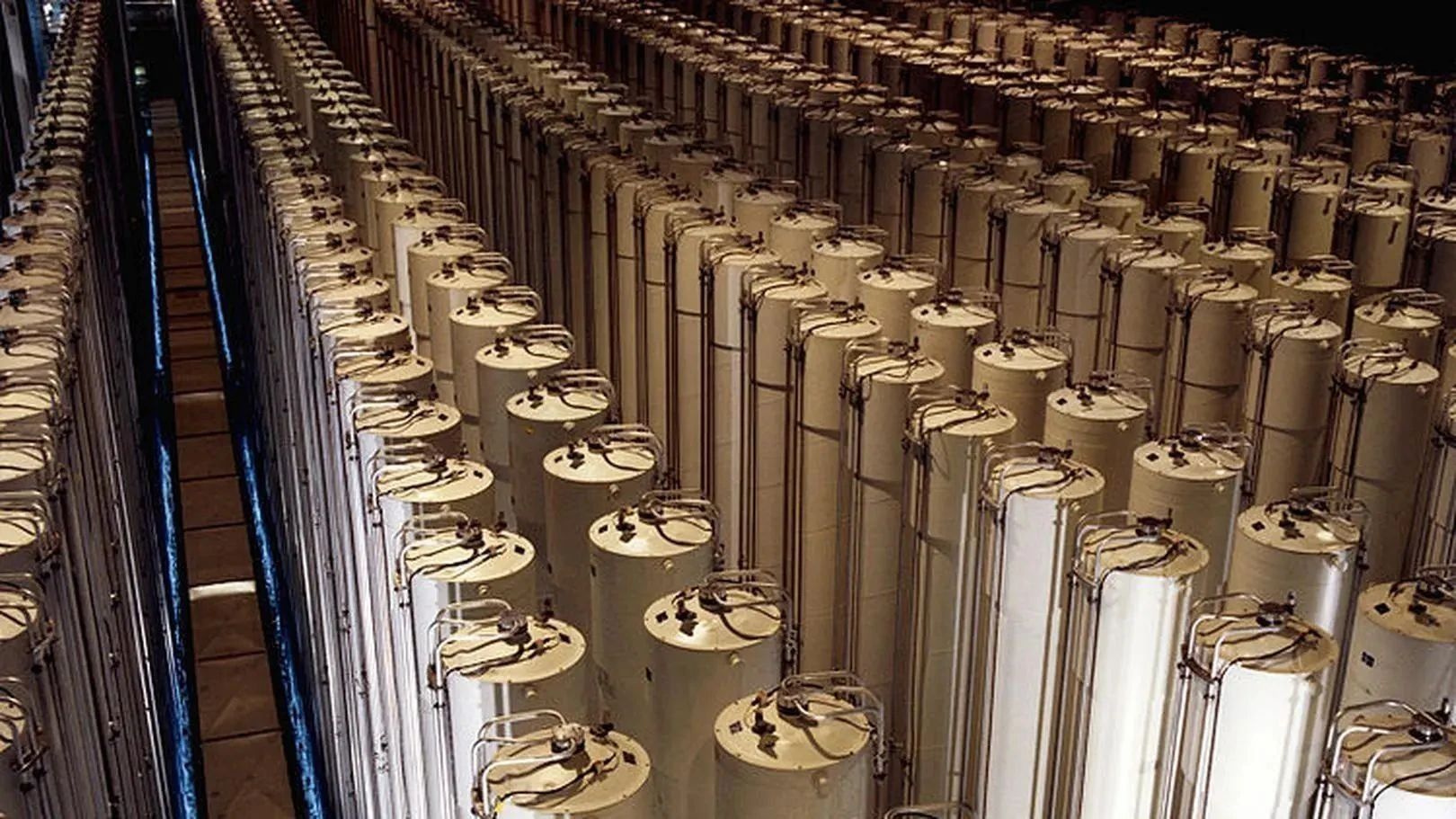
The IRGC has historically demonstrated both tendencies. On the one hand, they have ideological motivations. For instance, according to U.S. intelligence assessments, the IRGC played a role in pushing for the weaponization of Iran’s nuclear program up until the program was halted in 2003.
But at the same time, the IRGC has also shown pragmatism in a number of situations, particularly in dealing with the United States. For example, in the case of Iran’s response to the killing of Qassem Soleimani, some reports suggested that the IRGC leadership was actually urging Ayatollah Khamenei to pursue a much more restrained retaliatory response. They were not ready for a full-scale war and did not want to escalate the situation further.
So the IRGC may have ideological incentives to adopt radical rhetoric, calling for continued struggle or even jihad against the United States, but they also have pragmatic incentives.
Today they are entering what could be described as the peak of their power inside Iran. They have more influence than ever before. And when actors possess a great deal of power, they also have much more to lose.
When people have a lot to lose, they tend to engage in more careful cost-benefit calculations. So it is possible that, having achieved what they long wanted, dominant influence inside the country, they may behave more pragmatically. But this pragmatism would still be driven primarily by their own interests.
How do you evaluate Russia’s approach to the war? Some analysts argue that Russia benefits from the conflict, while others say it is ultimately bad news for Moscow.
It depends largely on the endgame. If the Islamic Republic survives the war, Russia could benefit from the situation.
There are several developments happening right now that favor Russia. First, the instability in global energy markets benefits Russia both economically and politically. Russia earns significant revenue from oil exports, and higher energy prices strengthen its position.
Politically, the situation also gives Moscow leverage. Just recently, Russian officials stated that they can respond to Europe’s current energy needs. In other words, they are attempting to restore their energy leverage over Europe.
Second, the war may strain Western defense resources. Some of the munitions used by the United States, Israel, and Arab states for air defense are similar, or in some cases identical, to the types used by Ukraine or by NATO member states. Russia may therefore hope that Western defense production becomes overstretched, which could eventually lead to shortages for Ukraine and US allies.
If the Islamic Republic survives the war, Iran will also become even more dependent on Russia. Iran will need assistance rebuilding its military capabilities and will rely on Russia diplomatically, especially in the UN Security Council. This would increase Russia’s influence in Iran.
However, if the war leads to the collapse of the Islamic Republic and the emergence of a new regime, the situation would look very different for Moscow.

What do the Iranians think of Russia?
Russian policymakers understand that many Iranians, particularly in the diaspora, hold very negative views toward Russia.
Historically, Russia is remembered in Iran as a hostile power. During the 19th century, Iran lost roughly one million square kilometers of territory to Russia and, to a lesser extent, to Britain. These events remain deeply embedded in Iranian historical memory.
At the same time, Iranian society, unlike its government, is relatively pro-Western.
Prime Minister Benjamin Netanyahu recently mentioned this in an interview. He asked the interviewer: „Do you know which country in the Middle East is the most pro-American after Israel?” The journalist could not answer, and Netanyahu responded: „Iran.” In many ways, that observation is accurate. Anyone familiar with Iranian society understands that a large portion of the Iranian public currently holds very pro-American attitudes.
There are several reasons for this. One is a general attraction toward globalization and Western culture. Another reason is simply the logic of „the enemy of my enemy is my friend.” Many Iranians deeply resent their own government and sometimes assume that anyone opposing the regime might be on the right side.
If a future Iranian government emerges that is pro-Western and anti-Russian, Russia could face serious geopolitical consequences.
In that case, Russia would already be dealing with Western expansion along its northern borders through Finland, a pro-Western Ukraine to the west, and potentially a pro-Western Iran to the south of the Caspian Sea. For Moscow, these developments would mean that Western influence is tightening strategically around Russia.
So Russia’s position depends entirely on the outcome of the war. If the Islamic Republic survives, Russia could benefit. If it collapses, the long-term costs for Russia would likely outweigh the benefits.
How do Iranian decision-makers view Russia today, particularly given that the Kremlin’s assistance during the war appears to have been very limited?
So far we have not seen any substantial material assistance from Russia. There is no evidence that Moscow has sent weapons or military equipment. There are rumors about intelligence cooperation, but it is difficult to verify them. Even if intelligence sharing exists, it may not be decisive. Iran’s main problem right now is not intelligence. It is technology. Intelligence can tell you where a target is located, but if you lack the technological capability to act on that information, it may not change much on the battlefield.
Iran’s foreign minister recently made a statement suggesting that Iran remains in constant communication with partners such as China and Russia and that these partners are assisting Iran in various ways. However, he did not specify what those forms of assistance are.
My interpretation is that Iranian officials want to signal, both to the Iranian public and to the international community, that Iran is not isolated and still has powerful partners.
Whether that assistance has materially changed the battlefield so far, however, is another question. At this stage, there is no clear evidence that it has.
How has the war affected Iran’s relations with the Arab monarchies of the Persian Gulf?
The war has caused serious and possibly irreversible damage to the recent détente between Iran and the Arab states. Since around 2021, Iran had made considerable efforts to improve relations with countries such as Saudi Arabia and the United Arab Emirates. In fact, those diplomatic efforts produced some meaningful progress. But during the war, Iran seems to have prioritized survival over maintaining détente.
In the context of a war with the United States, the Arab states represent pressure points. By applying pressure to them, through missile attacks or threats, Iran may believe it is indirectly pressuring the United States. That appears to be the strategic calculation.
However, whether this strategy actually works is uncertain. In pursuing it, Iran has essentially abandoned its policy of détente with the Gulf monarchies.
Even if Arab governments wanted to rebuild relations afterward, public opinion could make that difficult. For example, if you are a citizen of Kuwait and your country experienced more missile attacks than Israel, you might question your government if it quickly resumed friendly relations with Iran. Arab leaders are certainly aware of this dynamic.
See also

My final questions concern the immediate future. What do you expect to happen in the coming days?
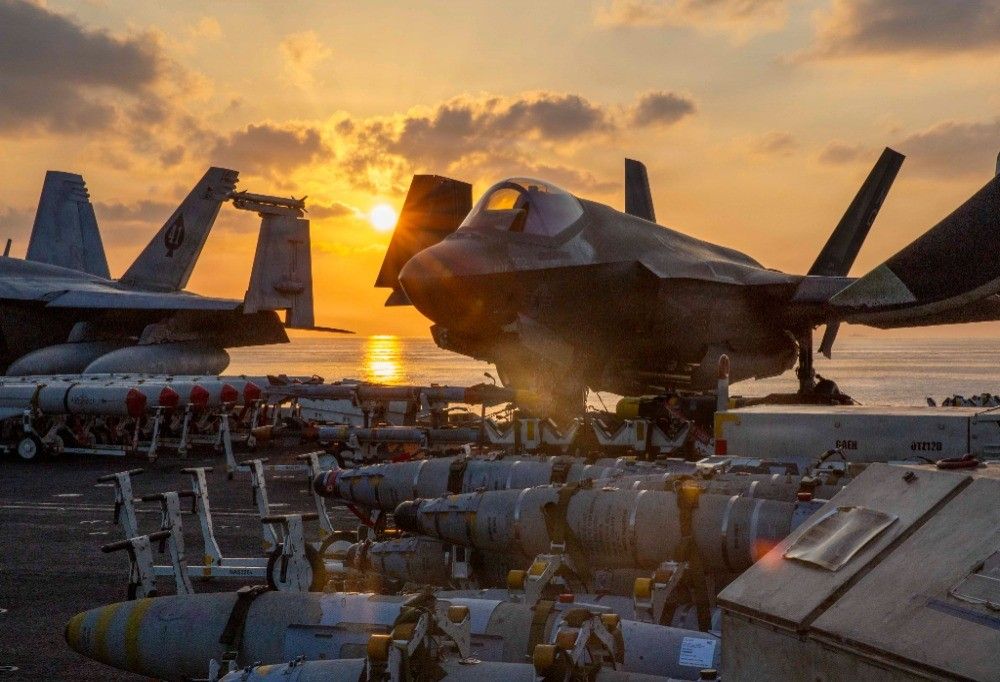
In the short term, I believe the war will continue. The United States will likely continue operations until it is confident that Iran no longer possesses meaningful offensive capabilities.
This probably means targeting remaining missile launchers, many of which are still operational, and disabling major missile bases. Some of these bases have already been struck, but not all have been completely destroyed. In several cases, airstrikes have damaged the entrances to underground facilities, preventing missiles from being moved in or out. However, the missile infrastructure itself may still remain intact. There are examples, such as the base near Kermanshah, where the facility was completely destroyed.
Finally, how do you envision Iran five or ten years from now?
There are several possible scenarios. One scenario is that Iran becomes a failed state, with its territorial integrity collapsing. In that case, we might see the emergence of autonomous ethnic regions, for example in Balochistan or Kurdistan, while the central government loses effective control. This is not necessarily the most probable scenario, but it is certainly the worst one.
Another scenario is that Iran becomes a heavily isolated state, similar to North Korea. In that case, the regime survives but closes the country even further, imposing strict controls and maintaining a highly militarized system.
A third possibility is that the regime remains in power but attempts some internal reform. In this scenario, the leadership recognizes the severity of its problems, both internationally and domestically, and attempts a form of internal transformation, somewhat similar to what China did in the past.
And of course there is the possibility that the current regime collapses entirely. In that case, a new leadership might emerge either from within the existing political elite or from outside the country.
Which scenario ultimately unfolds will depend heavily on what happens in the coming days. For example, if the United States and Israel begin targeting Iran’s core infrastructure, power grids, electricity production, oil facilities, the consequences could be enormous. Rebuilding such infrastructure would require years and billions of dollars, resources Iran currently lacks.
So the way the war develops in the immediate future will play a decisive role in shaping Iran’s long-term trajectory.


