



- WIADOMOŚCI
- KOMENTARZ
France quietly returns to Chad

France is trying to rebuild military cooperation with Chad, but not in the old format. After being pushed out of N’Djamena in January 2025, Paris is now looking for a smaller, more discreet and more flexible presence. The aim is not to recreate the former French military footprint in the Sahel, but to regain access, influence and operational relevance in one of Africa’s most important security corridors.
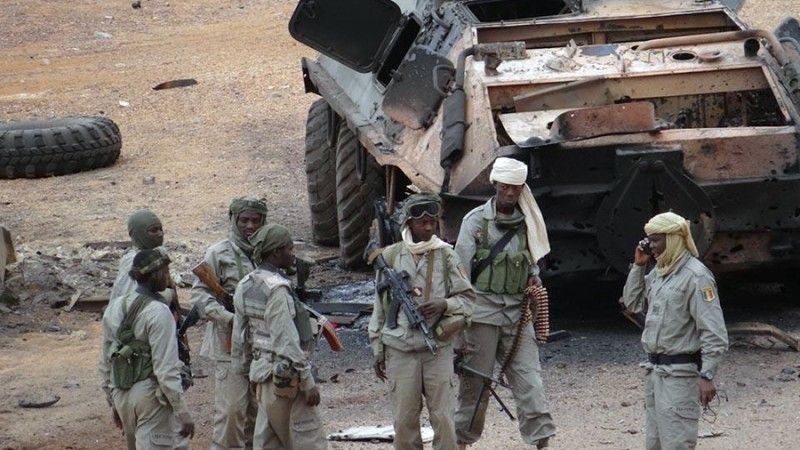
According to Le Monde, Paris and N’Djamena are working on a new bilateral military arrangement roughly a year and a half after Chad ordered the departure of around 1,000 French soldiers. The future model is expected to avoid permanent French bases and instead focus on targeted cooperation, training, intelligence support and limited deployments responding to Chadian needs.
This matters because Chad remains a strategic country for France and for wider Sahel policy. It sits between Sudan, Libya, the Lake Chad basin and Central Africa. The civil war in Sudan is creating pressure on Chad’s eastern border, while jihadist groups remain active around Lake Chad. N’Djamena also remembers that rebellions have previously threatened the capital from neighbouring territories.
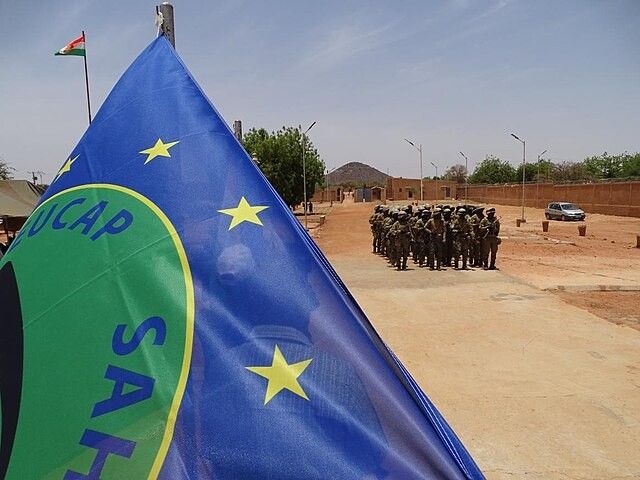
President Mahamat Idriss Déby removed French forces in the name of sovereignty, but his alternatives have not delivered enough. Emirati ties are complicated by the war in Sudan. Turkish drones are viewed in N’Djamena as expensive and not fully convincing operationally. Russia, meanwhile, has not shown in Mali that it can provide a better security model than France. This does not mean Chad is returning to the old relationship with Paris. It means Déby still needs reliable military support.
The first area of renewed cooperation is likely to be air power. Since the French departure, Chad has struggled with rapid medical evacuation, air support for ground forces and intelligence collection. These are exactly the areas where French assistance previously mattered. Discussions also include training, exercises, intelligence support and possible sales of helicopters and aircraft to the Chadian military.
For France, the key issue is access. French officers would like to regain limited access to the Adji-Kosseï air base in N’Djamena, not by deploying hundreds of troops permanently, but by securing the ability to land, take off and operate if needed. This would give Paris a useful point of support in central Africa without reproducing the old base model that became politically toxic in the Sahel.
See also


The broader French approach in Africa is changing. After Mali, Burkina Faso, Niger and Chad, Paris understands that large permanent deployments are now politically vulnerable and easily targeted by anti-French narratives, including those amplified by Russian networks. The new model is more modest: small detachments, specific missions, air access, training, counter-terrorism support and cooperation requested by partner states.
This is not a full French comeback in Chad, nevertheless, it is a cautious attempt to return through the side door, with fewer soldiers, less visibility and more dependence on Chadian political consent. For Paris, Chad remains too important to abandon. For N’Djamena, France may again become useful, not because the old relationship worked well, but because the alternatives have shown their limits, especially: Russia, the United Arab Emirates and other actors. Above all, Chad could open itself up to other partners, including those from Europe.


