



- WIADOMOŚCI
- WAŻNE
First Board of Peace meeting. What was decided?
The first meeting of the Board of Peace was held in Washington on February 19. Representatives from 49 countries participated in the inaugural session.
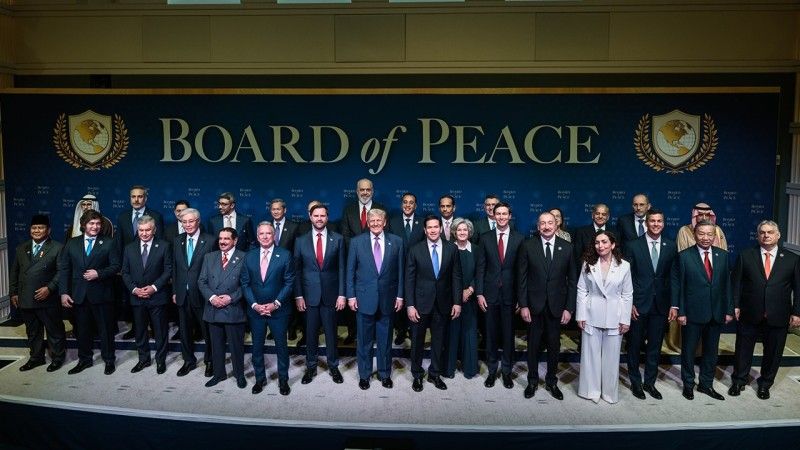
The main topics of discussion included the plan for rebuilding the Gaza Strip and the details regarding the aid program for Palestinians. Representatives from 49 countries attended the meeting, many of them as observers. At the level of heads of state or government, the following countries were represented: Argentina, Indonesia, Romania, Uzbekistan, Kazakhstan, Vietnam, Pakistan, Hungary, Cambodia, Egypt, Armenia and Albania.
Between 26 and 27 countries participated as members of the Board of Peace. These included, among others, Argentina, Egypt, Indonesia, Israel, Pakistan, and Turkey. Hungary and Bulgaria were the only European Union member states that joined the Board of Peace. The vast majority of EU countries took part in the event as observers.
Russia, China, and France did not attend the meeting. Belarus was also absent, despite having received and accepted an invitation, as it failed to obtain a visa allowing entry into the United States.

Several decisions were made during the meeting. Recruitment for Palestinian police forces began, with 2,000 applicants registering within the first few hours. Indonesia will send at least 8,000 soldiers to Gaza to operate as part of international security forces in the region. Kazakhstan also declared its willingness to deploy its military personnel there. Morocco announced its readiness to send police officers to Gaza. The United States will contribute USD 10 billion to the Board of Peace. The United Arab Emirates plans to allocate USD 1.2 billion, while Saudi Arabia and Kuwait each pledged USD 1 billion. During the meeting, it was announced that USD 7 billion had already been raised for the reconstruction of the Gaza Strip.
Some experts view the Board of Peace as a temporary body, entirely dependent on the ongoing presidency of Donald Trump. Critics also point to the lack of concrete outcomes during the discussions and the impression that Trump may seek to use the Board to advance his own interests beyond the Gaza Strip. Nevertheless, the US president’s initiative has not been ignored. It is worth noting that most Western countries ultimately decided to participate in the session, even if only as observers. However, it would be premature to suggest that this newly established body could replace the United Nations. The Board could instead serve as a forum where non-Western countries actively assert their presence and, in doing so, strengthen or deepen cooperation with other actors, such as European Union member states.


