
Africa as a strategic partner for European Union

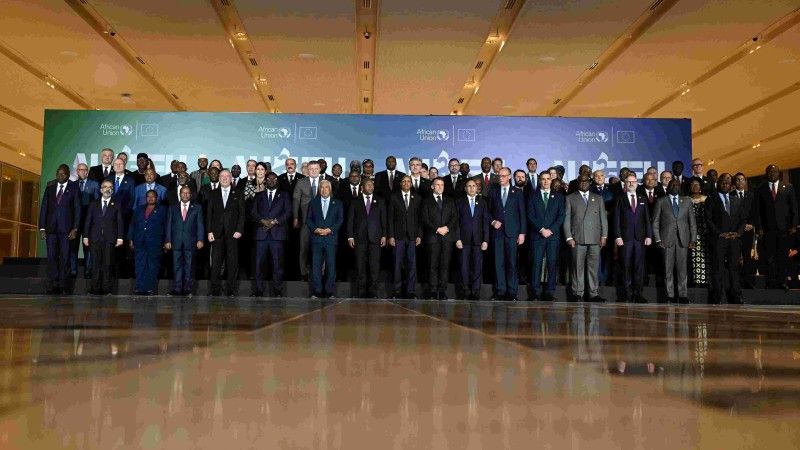
When the attention of international community focused on the Russian-Ukrainian negotiation plans and American engagement in this matter, heads of states of African Union and European Union met at seventh EU-AU summit in Angola to strengthen the partnership and multilateralism between continents. The summit brought together 82 countries with a population of almost 2 billion people. Leader’s meeting was focused on trade relations with main objective to increase the European commitment in terms of direct investments in Africa.
In the context of peace and security policy, Antonio Costa (President of the European Council) mentioned that reinforcing relations between both sides are required to maintain the international order in Ukraine, Palestine, Sudan, the Democratic Republic of the Congo and in other wars around the world, stressing the importance of upholding the UN Charter and peaceful resolution of conflicts. What is more, the AU and EU pledged deeper cooperation to address regional challenges, focusing on support for African-led peace operations and enhancing conflict prevention mechanism within African Peace and Security Architecture (APSA).
Heads of states in the broad perspective touched upon the economic aspects. Participants agreed to accelerate the implementation of the African Continental Free Trade Area (AfCFTA). Consequently, EU has negotiated preferential trade agreements with 19 African countries, which means more than 90% of African exports enter the EU market of 450 million consumers free of import duties. Also, they called for reforming the international debt infrastructure to reduce the burden of debt for African countries. Furthermore, the summit emphasised the progress in Global Gateway Investment Package which assumed €150 billion programme to support African countries to strengthen growth and accelerate climate and digital transitions. In this area one of the crucial projects which Brussels is investing in is the Lobito Corridor – a 1,300-kilometre rail and infrastructure project, connecting mineral-rich areas of the Democratic Republic of Congo and Zambia to the Atlantic coast. This is linked to fact that Europan Union seeks to secure critical minerals required for green transition purposes and electronic goods production with main objective to reduce European dependency on Beijing.
Regarding climate issue, leaders committed to continue their strategic cooperation in the energy sector through the Africa-Europe green energy initiative, which aims to provide at least 50GW of electricity from renewables for 100 million people by 2030. Both parties recognised the urgent need to address food insecurity caused by climate change, conflicts, and global market volatility and agreed to increase the collaboration on UN reform, including stronger African representation in the Security Council.
In addition, EU will continue supporting the digitalisation of public services and digital entrepreneurship in Africa. They also committed to strengthening cooperation to prevent irregular migration with main objectives to improve border management and combat human trafficking and smuggling networks.
The summit notably reinforced multilateral collaboration between both sides – a critical step given China’s rising presence in Africa and the unpredictability of U.S. policy. Brussels would like to bolster the partnership with Africa to increase the trade diversification – which bring mutual benefits. This direction should be maintained and intensified as African continent has huge economic potential – worth to mention that 40% of its population is under 15 years old – strong contrast to Europe’s aging demographic. Certainly, this summit should be perceived as at least a political declaration that European Union maintains its presence in Africa rather than leaving the other. This announcement is promising beginning, but the time has come to move from commitments to implementation.


