- WIADOMOŚCI
East Front News #90: secret draft in Germany and Ukraine’s diplomacy in Türkiye and Syria

East Front News is a weekly newsletter summarizing the past week’s most important events concerning security and the situation in the Central and Eastern Europe region. It includes original opinions and comments, along with key news items significant from a Polish perspective. If you would like to receive this newsletter, please sign up by clicking
Secret draft? Germany's sneaky new travel ban
Germany has sparked controversy over a little-noticed provision in its new defence legislation requiring men aged 17 to 45 to seek permission before staying abroad for more than three months. Although not a return to conscription, the rule stems from a Cold War-era law and was quietly reactivated under the Military Service Modernisation Act, catching public attention only months after it came into force.
The measure forms part of a broader effort to rebuild Germany’s mobilisation capacity, including expanding the Bundeswehr and strengthening reserve structures. While authorities have since softened the rule in response to backlash, the episode reveals Berlin’s intention to restore legal and administrative tools for rapid mobilisation, even as official policy continues to emphasise voluntary military service.
Author: Jakub Bielamowicz

France left to fund Rafale F5 alone after UAE withdrawal
France will have to finance the Rafale F5 programme on its own after the United Arab Emirates withdrew from the project. The dispute centred on access to sensitive technologies, particularly in the field of optronics, which Paris refused to share. The loss of a potential contribution of up to €3.5 billion places a greater burden on France’s defence budget and may lead to delays in development and delivery.
The decision also carries broader strategic implications, highlighting tensions within a key defence partnership in the Gulf. Despite long-standing military cooperation and major arms deals, the situation exposes clear limits in technology transfer and industrial collaboration. At the same time, the Rafale F5 remains crucial for France’s future capabilities, with plans including drone integration, advanced electronic warfare systems, and next-generation strategic weapons.
Author: Aleksander Olech

New investments at CRW Telesystem-Mesko drive the development of the Piorun system
New investments at CRW Telesystem-Mesko, including a modern facility worth around PLN 150 million, are set to significantly boost production capacity for the Piorun system and accelerate the development of advanced optoelectronic technologies. The company is focusing on expanding its design, testing, and manufacturing capabilities while strengthening cooperation within the Polish defence industry, particularly with Mesko and the wider PGZ Group.
At the same time, Telesystem is pursuing a dual-track approach to the Piorun programme—continuing improvements to the current system while developing its successor, Piorun 2. The company is also advancing work on laser-guided systems, precision munitions, and optoelectronic solutions, aiming to increase its role in both domestic and European defence projects, supported in part by EU funding mechanisms.
Author: Jędrzej Graf

Ukraine's multi-theatre diplomacy in Türkiye and Syria
President Volodymyr Zelensky’s visits to Türkiye and Syria signal a broader shift in Ukraine’s foreign policy, moving beyond the Euro-Atlantic sphere and into a more active role across the Middle East. Kyiv is no longer acting solely as a state seeking support, but increasingly as one offering military experience, technology, and strategic cooperation to regional partners, particularly in areas such as maritime security, defence, and food security.
This diplomatic expansion also reflects a wider effort to challenge Russian influence outside Europe and to position Ukraine as a more consequential actor in global security. By deepening ties with Türkiye, engaging with Syria’s new leadership, and building links with Gulf states, Ukraine is attempting to turn wartime experience into long-term political capital while embedding its interests in a broader international framework.
Author: Natalia Potera

Germany expands its role in the Baltic security architecture
Germany is steadily expanding its presence and influence in the Baltic security architecture, as evidenced by another high-level visit. This week, the President of the Bundestag, Julia Klöckner, travelled to Estonia and Lithuania to discuss mounting cyber threats and reaffirm Berlin’s commitments to the region, further cementing strategic alignment.
While the visit formally centred on digitalisation and resilience, its real significance lay in the strategic messaging directed at both the Baltics and Russia. In Lithuania, Klöckner said the Baltics „were right all along about Russia” and reaffirmed that „Germany is and will remain on Lithuania’s side.” The message carries even greater weight as Berlin prepares to deploy up to 5,000 troops to Lithuania by the end of 2027. Citing the arrival of soldiers« families and the construction of a new military base in Rūdninkai, she wanted to make it clear that Berlin is „not here for a short time.”
With a semi-permanent military presence and defence contracts worth billions, Germany is emerging as a key security guarantor and arms supplier in the Baltics. This marks a new role for Berlin, one that naturally brings greater political influence in the region, but also increased exposure to the Russian threat.
Author: Kacper Kremiec
Russia's bases abroad. Unrecognised states, the former USSR and Syria
Russia maintains a network of military bases across former Soviet states and unrecognised territories, including Kyrgyzstan, Tajikistan, Transnistria, and South Ossetia. These deployments, often numbering from around 1,000 to over 4,000 troops, include air, ground, and support units, as well as specialised facilities such as anti-submarine testing sites and space observation systems. However, the war in Ukraine has already impacted these forces, with some units redeployed to the front, reducing their strength abroad.
In Syria, Russia’s position has become increasingly uncertain following political changes and shifting regional dynamics, limiting its ability to operate key bases such as Tartus. Overall, while Moscow retains a global military footprint, its capacity to expand or sustain overseas bases appears constrained, suggesting a future focus on maintaining influence primarily in neighbouring regions rather than pursuing broader power projection.
Author: Jarosław Ciślak

Early warning aircraft from the USA for Poland?
Poland is considering new airborne early warning and control aircraft to replace its current interim Saab 340B AEW-300 platforms, which are expected to remain in service only until around 2030. Among the available options, large systems like the Boeing E-7 Wedgetail are seen as impractical, while smaller jet-based solutions such as Saab GlobalEye and the American AERIS system are emerging as more suitable candidates.
The AERIS system developed by L3Harris offers several advantages, including a conformal radar layout enabling full 360-degree coverage, higher operational altitude, and compatibility with F-35 fighters without additional integration. The company has also expressed willingness to involve Polish industry in production and maintenance, suggesting potential for deeper industrial cooperation alongside the acquisition.
Author: Maciej Szopa

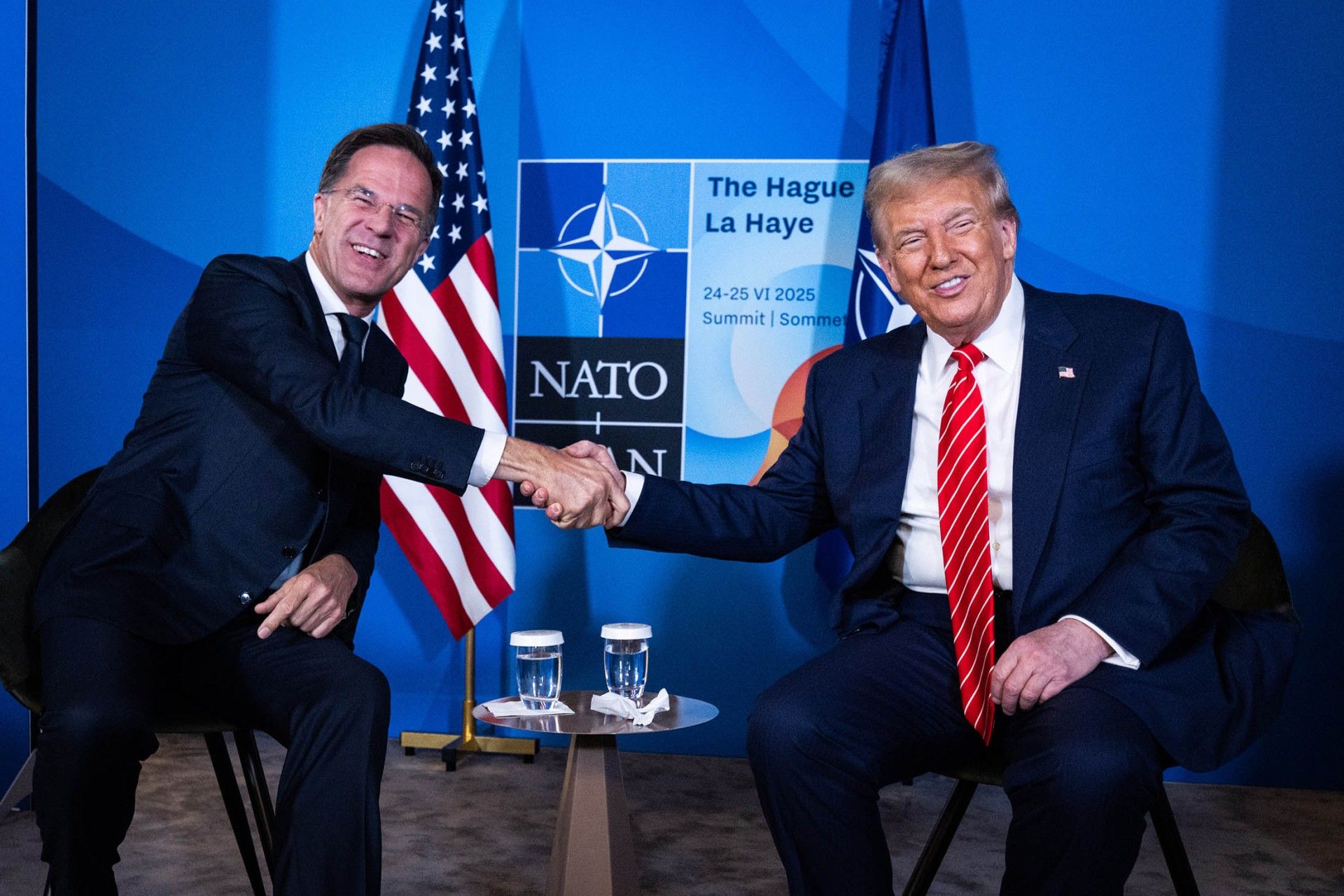
Mark Rutte supports president Donald Trump
NATO Secretary General Mark Rutte expressed understanding of President Donald Trump’s frustration with some allies during a meeting focused on their stance in the war with Iran. While acknowledging American concerns, Rutte emphasised that most European countries had provided meaningful support through logistics, bases, and overflight access, while also backing efforts to limit Iran’s nuclear and missile capabilities.
At the same time, tensions within the Alliance remain visible, particularly regarding differing levels of engagement. Although Rutte dismissed claims of NATO’s failure and downplayed the risk of a US withdrawal, he suggested that Washington may still respond to less supportive allies through military or economic measures, highlighting ongoing strains in transatlantic relations.
Author: Patryk Jagnieża