
Poland SAFE Plenipotentiary for Defence24: A Record-breaking standard for European defense investments

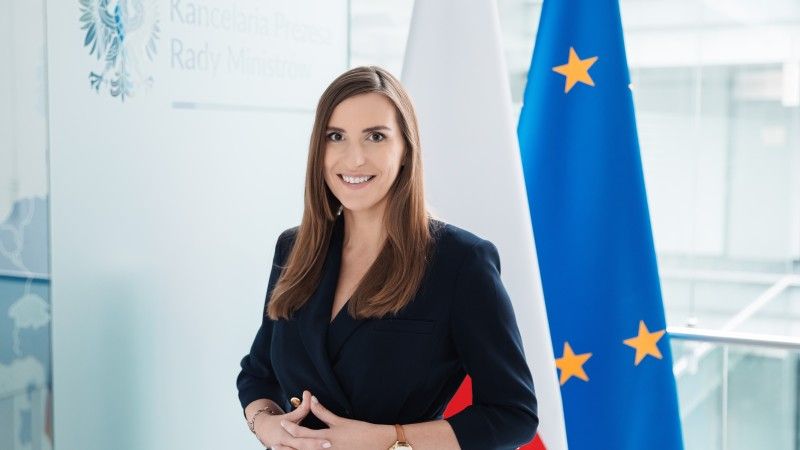
Photo. Polish PM’s Office
Poland, as the largest beneficiary of the EU’s SAFE (Security Action For Europe) defense investment support program, is viewed by the European Commission as a leader of the initiative. „Many countries are observing Poland’s efforts to secure EU loans,” Magdalena Sobkowiak-Czarnecka, the government’s SAFE plenipotentiary, told Defence24.pl.
The deadline for submitting final investment plans, which determine the disbursement of allocated funds, is the end of November. Out of the €150 billion SAFE program, the EU has earmarked €43.7 billion for Poland.
„We are finalizing the application that we will submit to the European Commission by 30th November – the SAFE regulation explicitly sets this date. The largest part of the application is the description of specific projects, the so-called investment plan. That is where the bulk of the work lies today. The plan itself is ready, but the heaviest burden currently rests with the Armaments Agency, which is translating the plan into the Commission’s requirements and properly detailing it,” Sobkowiak-Czarnecka explained.
Beyond the Ministry of Defence
She emphasized that preparing the application and the investment plan is not just a Ministry of Defense exercise. Multiple ministries are involved: Ministry of Finance – responsible for the financial and loan aspects, ultimately signing the loan agreement with the Commission; Ministry of Infrastructure – projects listed include military mobility initiatives; Ministry of Interior and Administration – supporting border guard modernization and the „Eastern Shield” program; Ministry of State Assets – overseeing the state defense conglomerate (PGZ), managed by Deputy Minister Konrad Gołota; Ministry of Development and Technology – responsible for private industry engagement; Ministry of Foreign Affairs – some contracts fall under common procurement with other member states; Ministry of Digitalization – addressing cyber defence efforts and cyber forces. „This is therefore an all-government exercise. My role is to coordinate, maintain an overarching perspective, and assemble all the pieces into a coherent whole,” she said.
Avoiding Surprises
„We are finalizing the application while maintaining continuous dialogue with Brussels. Another meeting took place on Thursday. I adopted the strategy of discussing individual stages of the plan with the European Commission in advance, to avoid surprises after submitting the application”, she added.
She emphasized that, since this is the first EU program of this scale in the field of armaments, everyone is still learning how to navigate it. She also referred to the announced legislative changes necessary to allow funds to be used not only for equipment purchases but also for strengthening the industry. „Work has begun on legislative changes necessary to finance not only equipment purchases through SAFE but also to increase production capabilities. This work is being led by the Ministry of National Defence, the Ministry of Finance, and the BGK Bank, which will act as the fund’s operator,” she said. She noted that there is more time here, as the loan agreement is planned to be signed at the beginning of March.
The government plenipotentiary for SAFE is not concerned that Poland will ultimately receive loans smaller than the allocated amount. „We have a plan prepared for €43.7 billion; this is the plan we will submit to the Commission, based on the amount the EC allocated following preliminary requests submitted by member states. The entire plan, including the so-called reserve part, amounts to nearly €60 billion. In my view, there is no risk here,” she assured.

Photo. Polish PM's Office
A permanent dialogue with the EC also serves this purpose, to „ensure that every element of the plan meets the strict criteria on which the possibility of procurement under SAFE depends.” „And there are,” the plenipotentiary admitted, „a lot of them—they concern the country of origin of the product and the company (the so-called 65 percent component); a very clear list of products that can be purchased under SAFE has been defined; there is also a condition for joint procurement (common procurement).” „Another criterion is that the product must be delivered by the end of 2030, which in the defense industry is not a distant deadline,” she noted.
„We are discussing each project with the Commission in detail, so that if something raises doubts with the Commission, we can make changes. We are ready for this. I assumed, primarily with the General Staff of the Polish Armed Forces and the Armament Agency, that we will prepare a longer list so that, in case of doubts, we can replace a project that raises concerns with another,” she explained.
What about partners outside Europe?
„What is not yet known—and will not be clarified by November 30, is the participation of additional partners. This concerns the United Kingdom and Canada, where negotiations are the most advanced, and also, in the more distant future, Korea. Last summer, it seemed that the Commission would complete negotiations with the UK by November 30, but today there is little indication of that,” she admitted.
Read more

She counted among the clearly defined requirements that 65 percent of the component must come from the European Economic Area, while 35 percent may come from outside the EEA. „We do not have a loophole for additional partners. If one appears, the Commission does not close the entire process on November 30, and if negotiations are finalized later, the member state participating in SAFE has the right to revise the plan; changes can be made,” she said.
Others will follow
The plenipotentiary does not hide that the procedure of the European Commission, which is only now issuing the so-called guidelines for the SAFE regulation itself, raised concerns. „Our position is clear: the binding legal act is the regulation. This is the position I take when talking to the EC. We adhere to what is written in the regulation. The guidelines are not a legally binding act. It would be difficult, in Poland’s case, where the list includes nearly 100 projects, to rewrite the plan a week or two before submission just because new guidelines appeared,” she emphasized.
The European Commission strongly emphasizes, and we feel this, that Poland is a leader in this project; it will receive the largest funds. Many countries are watching how we approach SAFE; this will also serve as a reference for them; hence the closer cooperation between the Commission and us.


