



- KOMENTARZ
- ANALIZA
- WIADOMOŚCI
Nordic countries say „no” to nuclear weapons, but the door remains ajar

Why is the nuclear debate returning with such force today? There are several reasons. First, Russia’s invasion of Ukraine and the Kremlin’s nuclear blackmail have prompted European nations to rethink atomic deterrence. Second, uncertainty about America’s commitment to Europe, especially after Donald Trump’s recent statements regarding Greenland, has led many to seek alternatives. And third, France has launched an initiative to extend its nuclear umbrella to European allies, forcing countries across the continent to take a stance.
The Nordic countries find themselves at the very center of this discussion for a reason. They border Russia in the far north, their territory is crucial for Arctic security, and Finland shares the longest border with Russia of any NATO member state. Add to this the issue of Greenland, which has become the object of American appetites, and the strategic location of Iceland, Norway, and Sweden in the North Atlantic. When the leaders of the five Nordic nations and Canadian Prime Minister Mark Carney met in Oslo on March 15, 2026, the nuclear issue was high on the agenda.
What was said at the Summit?
Norwegian Prime Minister Jonas Gahr Støre was the most unequivocal in his statements. During the press conference following the summit, he stated clearly: „Our policy is very clear. There will be no deployment of nuclear weapons in Norway.” He emphasized that Norway does not intend to change its legislation on this matter and sees no need to do so.
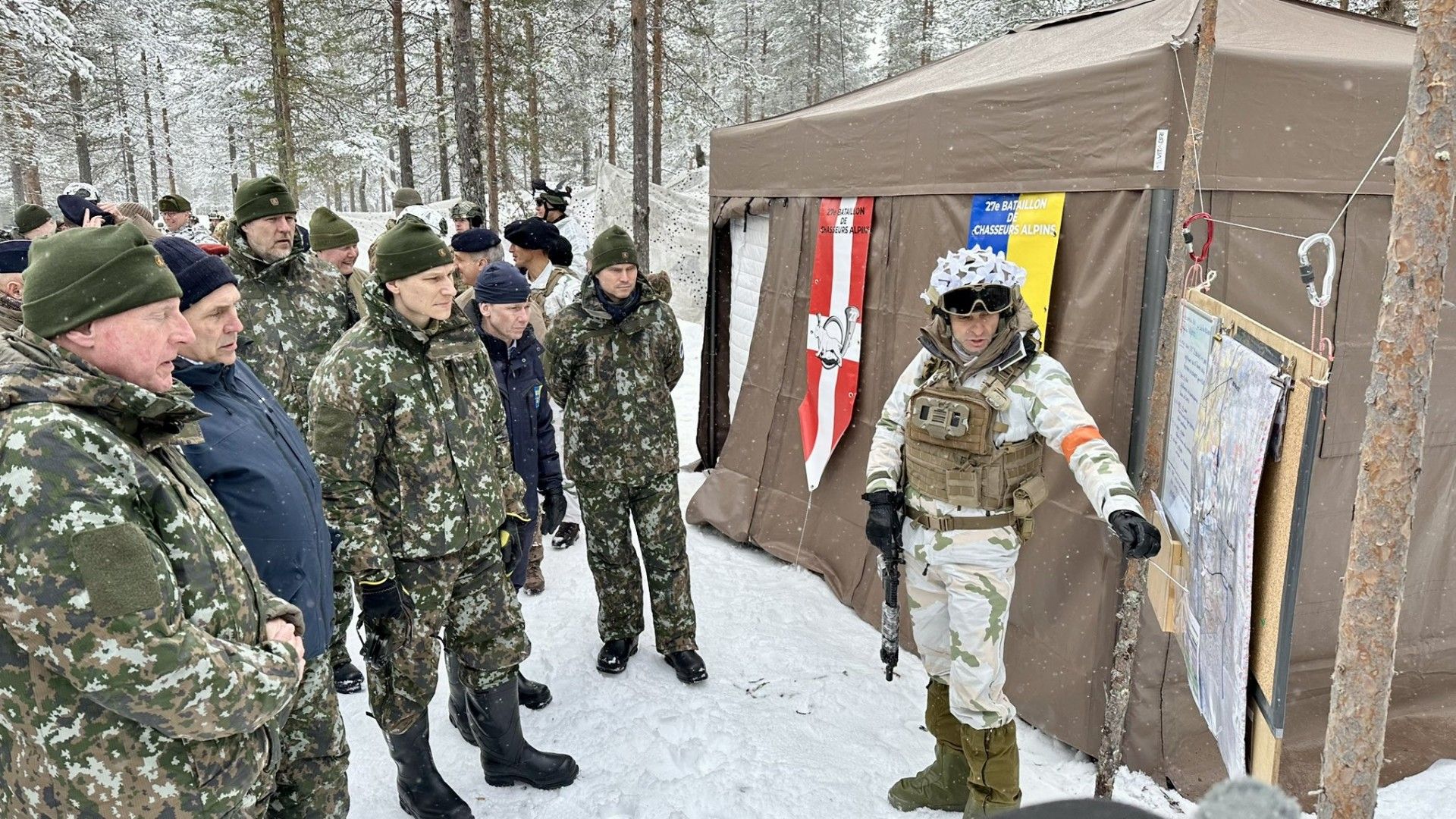
Finnish Prime Minister Petteri Orpo, although present at the summit, did not make such a firm declaration. Days earlier, the Finnish government had announced its intention to amend the Nuclear Energy Act of 1987, which prohibits the import, production, possession, and detonation of nuclear devices on Finnish territory. Defense Minister Antti Häkkänen justified the decision by pointing to the fundamental change in the security situation following Russia’s invasion of Ukraine. Following the summit, Orpo suggested the government could issue a declaration committing Finland not to allow nuclear weapons on its territory during peacetime, while still lifting the legal ban.
Danish Prime Minister Mette Frederiksen focused on the broader context, emphasizing that nuclear deterrence is part of Europe and NATO’s overall security system. However, she echoed Støre’s position that while strengthening deterrence capacity is a key NATO goal, this should not predetermine specific locations.

Swedish Prime Minister Ulf Kristersson, who also participated in the summit, has previously ruled out the permanent stationing of nuclear weapons in Sweden during peacetime, while leaving the door open to changing this position in the event of war. Icelandic Prime Minister Kristrún Frostadóttir, whose country has no military, traditionally advocates for nuclear disarmament.
Nuclear support across the Nordic countries
The situation varies across the region and is evolving dynamically. What remains common is a growing awareness of the Russian threat and a willingness to participate in European discussions on nuclear deterrence, while maintaining considerable caution.
In Finland, the legislative process is underway to enable the transport and storage of nuclear weapons in crisis situations. The ruling coalition, which holds a parliamentary majority, has sent the draft bill for consultation, with comments due by April 2, 2026. Finnish politicians have repeatedly stressed that changing the law does not automatically mean deploying weapons, but merely creates that possibility for the future. For Finland, which shares the longest border with Russia of any NATO member, this issue has particularly practical dimensions. However, the move has sparked unusually broad debate, with opposition parties, experts, and peace advocates questioning both the decision-making process and whether it could distance Finland from Nordic security traditions.
See also


Denmark is experiencing a heated debate over nuclear weapons just weeks before parliamentary elections scheduled for March 24, 2026. Defense Minister Troels Lund Poulsen, while currently ruling out the stationing of nuclear weapons on Danish territory, does not rule out changing this policy in the future.
– We live in an uncertain and fragile world, and for that reason I will not rule out that at some point in the future it might be necessary to reconsider the Danish nuclear arms policy – he told Danish public broadcaster DR.
Going further, the opposition Liberal Alliance party proposes immediately lifting the 70-year-old ban on storing nuclear weapons in Denmark. Moreover, advisors to the party have proposed creating a joint Nordic nuclear weapon, dubbed „Mjölnir” after Thor’s mythical hammer. The idea suggests that Denmark together with Sweden, Norway, Finland, and optionally Iceland would build their own nuclear program, arguing that nuclear weapons would protect the Nordic countries in a new „age of predators”.

Experts: Many obstacles are visible
However, experts point to numerous obstacles. Professor Rafał Kopeć from the University of the National Education Commission in Krakow notes that we may be witnessing the beginning of a process of rejecting the 1968 Nuclear Non-Proliferation Treaty. „In the past year, there has been increasing talk about acquiring nuclear weapons in Japan, South Korea, and precisely the Nordic countries. This is no longer an abstract topic.”
Artur Kacprzyk from the Polish Institute of International Affairs draws attention to technical and political hurdles. He recalls that in the 1960s, Sweden was on the verge of acquiring its own nuclear weapons but ultimately abandoned the effort. Today, secretly violating the treaty is much more difficult due to the International Atomic Energy Agency’s monitoring system. Moreover, Russia would almost certainly strike nuclear installations to halt work on a nuclear arsenal, just as the US and Israel have done regarding Iran.

Sweden is experiencing something of an identity crisis. As Emma Rosengren, an international relations researcher at Stockholm University, notes, for a long time Sweden was seen as a neutral country, and the idea of peace was an essential element of national identity. Joining NATO in 2024 changed this perspective. Prime Minister Kristersson maintains that dialogue with France does not mark a shift in official nuclear policy, but according to experts, it is difficult to argue that this does not represent a major shift in Swedish security policy. Interestingly, Sweden had its own nuclear development program from 1945 to 1972, designed to protect the country from the Soviet Union.
Norway remains the most skeptical toward changes. Although Foreign Minister Espen Barth Eide has declared openness to dialogue with France, he has repeatedly stated that Norway will not store nuclear weapons in peacetime. Norwegian experts point out that all Nordic countries have an „automatic tendency towards anti-nuclear and pro-disarmament,” stemming from a time when they didn’t need to think about nuclear weapons because the Americans handled it behind the scenes.


