



- ANALIZA
- WIADOMOŚCI
Germany wants a larger army, at least on paper [ANALYSIS]

For the first time in its postwar history, Germany has adopted a formal military strategy for the Bundeswehr. The document, unveiled on Wednesday by Defence Minister Boris Pistorius, is intended to prepare Germany’s armed forces for future threats.
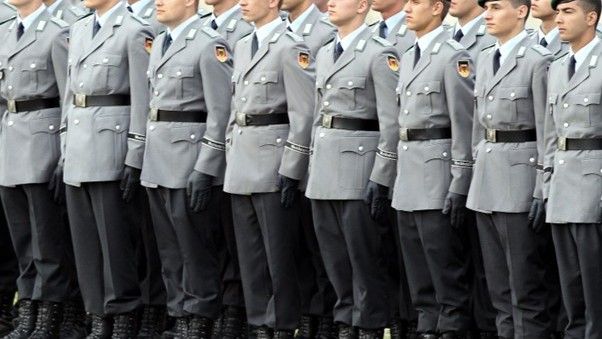
Photo. Wikimedia Commons
At its core, the strategy calls for a rapid expansion of military personnel. By the mid-2030s, the Bundeswehr is expected to grow to 460,000 troops, including 200,000 reservists. The most significant increase is planned by 2029, aligning with new NATO force requirements for collective defence. What’s missing, however, are the details. Neither the Bundeswehr nor the Defense Ministry has provided a clear roadmap for how such a dramatic expansion would be achieved, especially given the military’s already serious staffing shortages.
The document also introduces a „capability profile,” a revamped reserve strategy, and plans to cut through layers of bureaucracy. Pistorius emphasized the need for a shift in mindset, noting that „rarely has a military strategy been as necessary as it is at this historic moment.”
Declarations vs. reality
According to Deutsche Welle, the Bundeswehr currently has around 185,400 active-duty personnel. While that marks a slight increase, it barely dents a personnel shortfall estimated at up to 60,000 positions. That gap alone makes the new targets look ambitious, arguably overly so. This is not the first time Pistorius has announced sweeping plans to rebuild the armed forces. As recently as June last year, the goal was to reach 203,000 troops by 2031, a target already considered challenging at the time. Even then, analysts pointed out that such growth would likely require significantly higher defense spending and potentially the reintroduction of conscription, perhaps modeled on Sweden’s hybrid system.
A telling example of the gap between plans and reality is Germany’s 45th Armored Brigade in Lithuania. Its tank and mechanized infantry battalions are reportedly staffed at just 28–47 percent, while artillery, reconnaissance, and logistics units operate at roughly 10 percent capacity.
These difficulties are not new, they stem from decades of underinvestment after 1990, and persist despite the 2022 Zeitenwende and the gradual increase in defense spending. Personnel shortages affect specialists in particular (NCOs, logistics, air defense, engineering), which prevents effective force rotation, sustained long-term missions, and the maintenance of high readiness levels. The Parliamentary Commissioner for the Bundeswehr, Henning Otte, has openly stated that if the voluntary model does not work, a return to conscription should be considered. These shortages weaken the overall deterrence posture of NATO, including its ability to reinforce the eastern flank in the event of a threat.
It is also difficult not to mention equipment-related problems in this context, which further complicate the implementation of the above declarations. Procurement under the modernization of the Heer (army) focuses mainly on replacing worn-out equipment (the Marder being phased out by 2030, the Wiesel by 2030 without a full successor), rather than building new capabilities. There are shortages of ammunition, spare parts, and infrastructure. The result? Units are not fully combat-ready, and modernization turns into „equipment without crews.”
Germany must come to terms with the fact that without radical reforms, more efficient recruitment, shorter procurement procedures, and political consensus, these goals may only be perceived as a planning stage.


