- ANALIZA
- WIADOMOŚCI
Fog of war: Nuclear gambit on the horizon

At the St. Petersburg Economic Forum, Malofeev and Dugin presented a report on Russia’s future until 2050. In its initial version, the use of nuclear weapons was included in the „good” scenario. Malofeev then publicly accused his co-authors of transferring this element to the „inertial” scenario without his knowledge. This isn’t an anecdote. It’s a diagnosis.
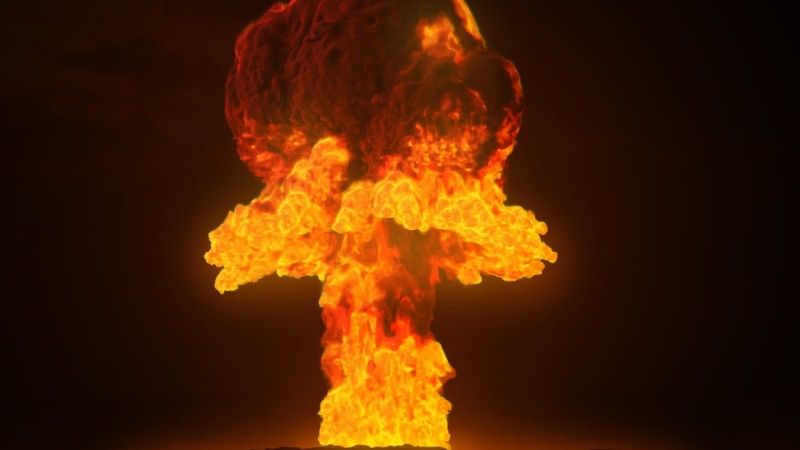
In Russian strategic thinking today, the debate isn’t about whether to use nuclear weapons. The debate is about which scenario category to place them in. And that’s precisely why the dispute between the report’s co-authors is more important than the report itself. Because a gambit isn’t an act of desperation or madness—it’s a cold, calculated move. In other words, I’m sacrificing material, seizing the initiative, forcing my opponent to make a mistake. Russia isn’t considering nuclear weapons as a last resort. It’s considering them as an opening move.
A report that is not journalism
On June 3, during PMEF-2026, in a panel titled „Main Threats to Russia in the Second Quarter of the 21st Century,” Konstantin Malofeev, an Orthodox oligarch and founder of the Tsargrad media empire, presented a forecast report co-authored by Alexander Dugin. The latter added key information at the end. The material was presented at the Academy of the General Staff of the Armed Forces of the Russian Federation.
This changes everything.
The General Staff Academy is no ordinary military academy. It is a center where, for nearly twenty years, concepts have been born which Russia then implements in operational practice, within the living organisms of sovereign states. So when a report reaches this roof, it ceases to be an opinion and becomes part of a closed institutional system. The material first passed through a seminar at the RANChiGS—the Russian Academy of National Economy and Public Service under the President of the Russian Federation, the main forge of state personnel—and only from there did it reach the audience of an institution training the army’s highest command staff. This is not journalism. It is a product of the system.

The appearance of analysis, the essence of mobilisation
The report took the form of a classic analytical product, i.e. fifteen threats divided into five areas – geopolitics, ideology, demography, economy and technology. For each of these threats, the authors tracked the evolution from 2000, through 2014, to the perspective of 2036 and 2050. Each variant was assigned one of three scenarios: „good”, „bad” and „inertial”. The methodology is simple. It’s the content that matters.
The „good” scenario for 2036 assumes the use of nuclear weapons, the annexation of Kyiv, Odesa, Kharkiv and other Ukrainian territories, the collapse of the European Union, the crisis of Americanocentrism and victory in the ideological war. For 2050, the same scenario envisages Russian leadership in global security, full multipolarity, its own Eurasian macroregion, and the implementation of the doctrine of the triune Russian nation, i.e. the doctrinal unification of Russians, Ukrainians, and Belarusians into a single national organism.
The „bad” scenario is defeat in the war with Ukraine and the West, Ukraine’s accession to NATO, the loss of the post-Soviet space, the revival of frozen hotbeds and – on the horizon of 2050 – the „colonisation of Russia” by Western powers, the division of zones of influence and the complete loss of sovereignty.
The „inertial” scenario involves the hegemony of Washington or Beijing, a frozen Ukrainian conflict, and a regionally limited Russia that retains the appearance of agency but loses the ability to shape the global order.
It is worth dwelling on what is not included in this report. There is no moderate scenario. There is no scenario in which Russia does not annex half of Ukraine, does not use nuclear weapons, and yet achieves some kind of acceptable order. This binary structure is deliberate, and it’s precisely this that reveals the document’s true function. It’s not an analysis—it’s a mobilising framework. Either total victory, with the destruction of the European order, or collapse and colonisation. The grey zone was eliminated because its existence would undermine the rationale for further escalation and provide the elites with arguments for compromise.
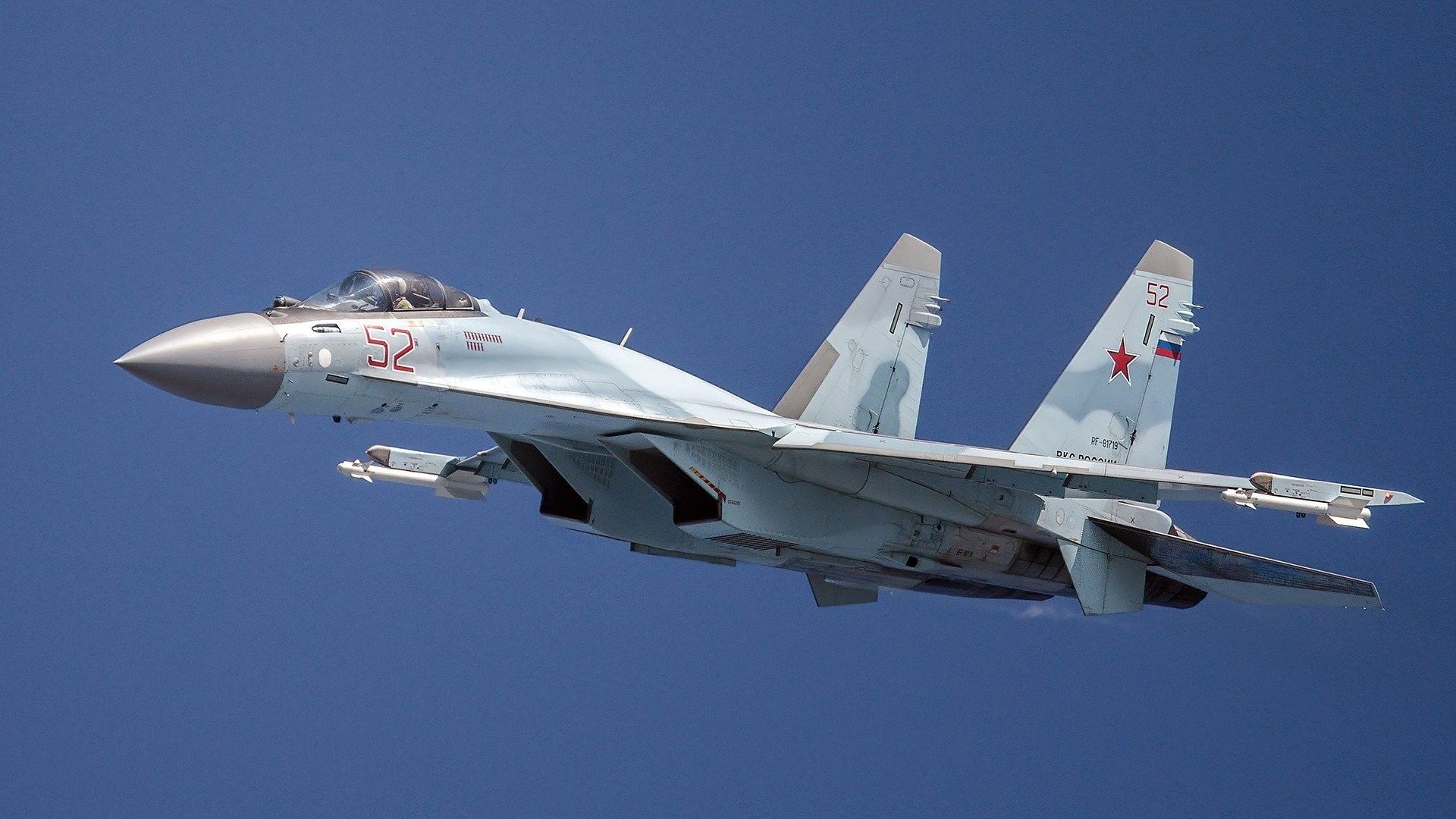
The bomb dispute: A symptom more important than the incident
After the presentation, Malofeev publicly accused his co-authors of manipulating the text. He claimed that the use of nuclear weapons was supposed to be included in the „good” scenario, but someone had moved this element to the „inertial” scenario without his consent. He was furious—and this is the most important moment in the entire story.
I have observed that Malofeev has been building his image for months as a man who openly and bluntly demands a tactical strike. In April, he explicitly called for the use of a 20-25 kt charge on western Ukraine, with a 72-hour warning to the civilian population. As you can see at PMEF-2026, he wanted to have it written in black and white as the optimal strategic choice – a tool for success, not a side effect.
The rest of the panel, including most likely Dugin himself, considered this tactically unwise and shifted the use of nuclear weapons to an „inertial” scenario. The intent was clear: an atomic bomb is something that „might happen if nothing changes”—not a conscious, rational decision.
The difference is subtle but fundamental. In the „good” scenario, the use of nuclear weapons would be an instrument of success—an opening gambit, a move for the initiative. In the „inertial” scenario, it becomes a drift effect, an inevitable consequence of the system’s inertia. Malofeev wanted a narrative about the „rationality” of the strike because it fits with his public positioning. The rest preferred a version that was easier to defend politically. But I believe both versions assume one thing: nuclear weapons will be used. The dispute in the Kremlin was solely about how to categorise this—not whether it was permissible.
This exchange between the co-authors says more than the report itself. It shows that within the Russian conservative camp, the normalisation of the nuclear option is a fait accompli. The debate isn’t about its permissibility. It’s about how to sell it. And this is precisely what should be worrying both in Washington and in European capitals.
See also

Legalisation of autocracy and the logic of Western weakness
A separate issue is the list of recommendations that Malofeev presented as a ranking of response measures. Ideology and de-Westernisation came first. Elite nationalisation, understood as the systemic separation of Russian elites from the West, came second. Autocracy came third. Dugin, speaking at the end, stated directly that autocracy already exists in Russia, but „its legalisation is progressing slowly.” This statement is a diagnosis in itself. The system no longer hides what it is—the only problem, in the eyes of its ideologists, is the excessively slow pace at which it is formalised.
Among the „actions of the opponents” (meaning us), Malofeev mentioned the demonisation and demilitarisation of Russia, the alleged pact between the West and China against Russia, information-psychological warfare and – what is particularly noteworthy – the pacifism of the West. In the Russian perspective, Western reluctance to escalate is not a chance for peace, but a tool to weaken the will to resist. This is precisely the logic that interprets any Western hesitation as weakness, and any willingness to compromise as an invitation to another step forward. Anyone who thinks the West’s reticence can be interpreted by the Kremlin as a gesture of goodwill isn’t reading the same documents.
The General Staff Academy as an institution of continuity
Understanding why the General Staff Academy is key to interpreting this report requires a brief step back in time. After the war with Georgia in 2008, which ruthlessly exposed the systemic weaknesses of the Russian armed forces, the Centre for Military-Strategic Studies of the General Staff began work on a new concept of conducting military operations. In Western literature it was called „hybrid war” or „war of the new generation”. In Russian terminology it functioned as „non-linear war” or „war of the new type”. For years, I’ve called it Balanced Warfare—because its essence is thoughtful proportion, not chaos. Balance of means, phases, and planes of influence is its core, not hybridity or irregularity. The fundamental texts were written since 2010 and published in „Voennaya Mysl” primarily by Sergei Chekinov and Sergei Bogdanov. Gerasimov gave these works a public face in 2013 with his famous article, but the intellectual core of the concept was created earlier and elsewhere – within the walls of the same General Staff Academy to which Dugin is now taking his report on nuclear scenarios.
The practical side of the concept, its operational implementation, was the responsibility of the GRU. General Igor Sergun, then head of the Main Directorate of the General Staff (formerly the GRU), directly planned and supervised the operation to annex Crimea in 2014. Alexei Dyumin, creator of the Special Operations Forces (SSO) in their current form, personally led the „little green men” on the peninsula in February 2014, as deputy chief of the General Staff of the Russian Armed Forces and commander of the SSO.
The operation was textbook. Securing the Verkhovna Rada, seizing communications nodes, and neutralising Ukrainian armed forces bases—all without firing a shot. It was a laboratory-like demonstration of Sustainable Warfare in action. The SSO, whose formation began in 2009 on the basis of the elite 322nd GRU center in Senezh and was officially announced in 2013, became the physical instrument of a concept that matured in the offices of the General Staff Academy.

Dyumin: an architect in the shadow
Sergun did not live to see the full realisation of his plans. He died in January 2016 in circumstances that have not yet been satisfactorily explained. Dyumin’s status rose significantly after Crimea, but he quickly encountered the realities of Kremlin intrigue. In December 2015, he was appointed deputy defence minister to Shoigu, but instead of overseeing combat operations and special forces, which would seem natural for a man with his achievements, Shoigu assigned him oversight of the construction department, military medicine, and military property management. For the Hero of Russia, who several months earlier had conducted one of the most effective special operations in the history of the Russian army, it was humiliating. After just five weeks, in February 2016, Dyumin was transferred to the position of acting governor of the Tula Oblast. Interestingly, Shoigu officially proposed his candidacy – which many observers interpreted as a sophisticated way of getting rid of an overly ambitious subordinate. But the exile turned out to be a sham – the President of the Russian Federation himself got involved.
Tula Oblast lies less than two hundred kilometres from Moscow, within easy reach of Putin, who needed his man close, not far. During his eight years as governor, Dyumin received support no other governor could have dreamed of (being a governor in the Russian Federation is a risky business). The Ministry of Defence built its infrastructure, the Moscow government reconstructed the riverbanks, and state corporations and private capital invested on a scale inadequate to the region’s status. In 2024, Putin returned him to the center, appointing him his assistant for the defence-industrial complex and secretary of the State Council, and in September of the same year included him in the Security Council.
Another is General Kim – the unofficial co-author of the concept of Sustainable War, a veteran of Afghanistan, Tajikistan and the second Chechen war, and later the head of the Center for Reconciliation of the Parties in Syria – who today commands the Ukrainian front as Gerasimov’s deputy.
See also

The essence of sustainable war
The concept I am talking about was based on several assumptions that define the Russian approach to the conflict to this day. The line between war and peace is deliberately blurred – actions drawn from the military-political arsenal begin long before the first shot is fired, in the informational, psychological, economic and diplomatic spheres. The ratio of non-military to military means was to be four to one – not because military power is unimportant, but because the aim was to weaken the enemy before the kinetic phase, so that the armed conflict itself would be short, limited and decisive.
Eight phases of escalation were formulated: from creating a favourable political backdrop, through special operations, disinformation and recruitment of enemy officials and officers, stirring up social discontent, to a direct military strike using precision weapons, airborne troops and special forces. The whole thing was conceived as a system, not a set of separate tools. Hence, „balanced”—because none of the elements works in isolation from the others, and the strength of this concept lies in the discipline of balancing pressure on many levels simultaneously.
Network of connections: Who is really behind the report?
The question remains how seriously the material signed by Malofeev and Dugin should be taken, since neither of them formally holds any state positions. In my opinion, the answer lies not in their names, but in the network of connections behind them. Malofeev hasn’t operated in a vacuum for years. Tsargrad isn’t simply a propaganda channel—it’s a nexus connecting ultraconservative circles with specific power factions. Malofeev has been repeatedly linked to circles within the Federal Protective Service (FSO), from which Dyumin comes. Dyumin began his career at the Main Security Directorate – the predecessor of the FSO – in 1995, and in 2012 served as deputy head of the Presidential Security Service. This is the same circle of people who physically protect Putin while simultaneously implementing his most sensitive operations. For example, it was Dyumin who personally evacuated Yanukovych from Ukraine to Russia on the night of February 22-23, 2014. When Tsargrad has been promoting Dyumin as a potential successor to Putin for years, it does not do so out of journalistic whimsy, but because Malofeev and Dyumin operate in the same power-oligarchic circles.
Dugin, on the other hand, although formally functioning as a philosopher, has maintained extensive contacts at the General Staff Academy for years and himself admitted that the material in question was presented there. So when I look at this report, I don’t see two journalists daydreaming. I see a product backed by a backroom team at FSO, at GU, at the General Staff Academy, and at RANChiGS—and by Putin himself. This is not an opinion – it is a strategic projection of groups that have real instruments to implement it, because some of them personally built these instruments.
Institutional continuity: from theory to the front
What we see on Malofeev and Dugin’s slides is not a random intellectual exercise. It is a continuation of the conceptual tradition of the same institution that, eighteen years ago, developed the tools of Sustainable Warfare, which Russia used to crush Georgia, annex Crimea, and destabilise the Donbas. The people who created it are now Gerasimov’s deputies, Putin’s aides, and secretaries of the State Council. The difference is that in 2008, the concept concerned how to wage war. Now, it concerns its strategic purpose and time horizon. The means and the end meet in the same building, in the same Academy, in front of the same auditorium.
Anyone who is convinced that Malofeev and Dugin speak solely for themselves should remember that the concept of Sustainable Warfare also began with articles in a trade magazine that I read two decades ago as an officer of the SWW – and then I watched it end with an operation on the living organism of a sovereign state.
What does this mean for NATO's eastern flank?
For those observing this situation from the perspective of the eastern flank, this material has at least four practical dimensions that cannot be underestimated.
The first dimension concerns the geography of ambition. We are dealing with a document in which the scenario considered „good” explicitly assumes the dissolution of the European Union and the annexation of further Ukrainian territories. However, this does not end with Ukraine. In previous versions of this type of projection, circulating in the Russian expert space, there were explicit concepts of creating a buffer, subordinate state on the territory of Ukraine and Poland or a new East Slavic entity. Even if Poland is not mentioned by name on the PMEF-2026 slides, the logic of the „good” scenario is clear. The Russian Eurasian macroregion, the collapse of the EU and the crisis of Americanocentrism require the neutralisation of NATO’s eastern flank – and the eastern flank is primarily Poland, the Baltic states and Romania.
The second dimension concerns the Kremlin’s internal dynamics. The „bad” scenario is constructed to permanently close the space for compromise discourse within the Russian elite. Every concession is tantamount to colonisation. This narrative is aimed directly at Russia’s business and political elites, intended to consolidate support for continuation and escalation. But there is also a second layer to it – if these Russian elites really buy into this logic, no ceasefire or any „deal” will be an end in itself for them. In this narrative, freezing the conflict is an „inertial” scenario, i.e. unacceptable, leading to US-Chinese hegemony and the marginalisation of Russia. This fundamentally undermines Western hopes for stabilisation through compromise – the Kremlin sees compromise as merely a stage, not a goal.

The third dimension, and in my opinion the most important, concerns the logic of deterrence. The normalisation of the nuclear option in Russian strategic discourse has a direct impact on calculations on the eastern flank. If the Russian conservative mainstream – supported by circles with a background in the FSO and GRU – treats the use of nuclear weapons as part of a „good” or at least „inertial” scenario, the European response must take this dimension into account. Building conventional capabilities is necessary, but not sufficient. We need to build the credibility of nuclear deterrence to a level that will prevent Russian calculations from considering the nuclear option as a rational gambit. And I don’t think we could do it with European forces.
The fourth dimension is its documentary value. For Poland, this material is invaluable evidence. It is a self-confessed document in which Russian circles close to the center of power directly describe a world in which the conditions for success are the dismantling of the European order, the use of weapons of mass destruction, and the creation of new faits accomplis on the territory of sovereign states. Such material should be cited in every debate about arms supplies to Ukraine, sanctions, defence budgets and the deterrence architecture.
It should be on the tables in Washington, Berlin and Paris not as another piece of Russian propaganda, but as proof of the intentions of groups that have the institutional infrastructure to implement it – because some of them personally created this infrastructure.