- WIADOMOŚCI
- WYWIADY
Estonian general: We are ready for Russia

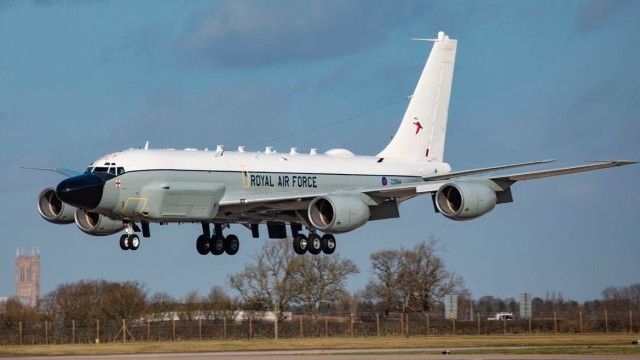
How real is the threat to Estonia from Russia? One of NATO’s smallest but most determined Allies has been preparing for crisis scenarios for years. Dr. Aleksander Olech speaks with Lt Gen Andrus Merilo, Commander of the Estonian Defence Forces, about Estonia’s defence priorities, security in the Baltic Sea region, and the challenges facing NATO’s eastern flank.
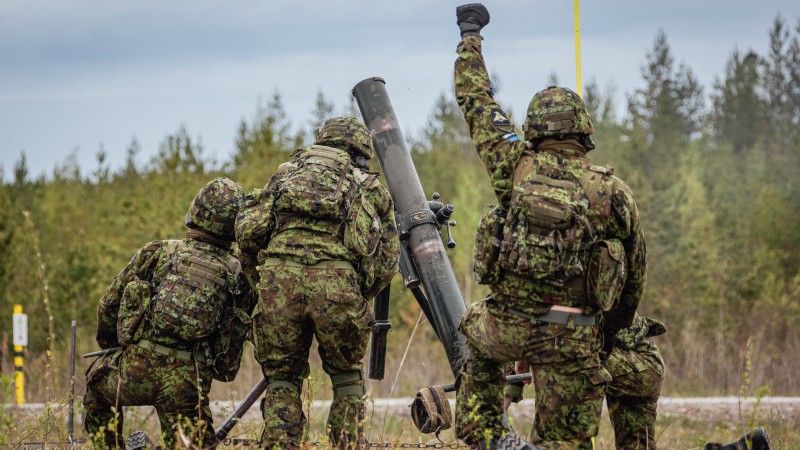
Photo. @NATOJFCBS / X
Dr. Aleksander Olech: Estonia is one of the key frontline states on NATO’s eastern flank. How do you currently assess the military situation in the Baltic region in the context of Russia’s war against Ukraine?
Lt Gen Andrus Merilo: The threat is present, but fortunately not imminent. Russia’s aim of achieving a stronger position in world politics and expanding its sphere of influence over its neighboring countries seems to have remained. Therefore, the will to act seems to persist.
In addition to the will, there’s the matter of capabilities. Russia is a large country with vast resources. Prior to initiating the full-scale war against Ukraine, it was stocked with significant amounts of munitions and equipment, both modern and dating back to the beginning of the previous century. These stocks have been rapidly utilized in, and successfully neutralized by, Ukraine. Additionally, the number of trained military personnel in Russian units behind Estonian borders has decreased, as the units are involved in fighting in Ukraine and have encountered significant losses. Thus, the capabilities have been reduced.

However, to our knowledge, Russia has shifted from delivering outdated equipment from storage to the front lines to using both modern assets right from the factory, as well as equipment acquired from its allies. From one angle, this shows their capability to significantly increase production and develop their weapon systems. Additionally, when its own production is complemented by the outsourcing of weaponry and ammunition, then the assets produced by Russia can be used to restore its stocks and re-equip its units. Therefore, they are now able to regenerate their strength, and often do it faster than the West can increase its production and capabilities.
NATO has significantly strengthened its forward presence in the region in recent years. How do you evaluate the Alliance’s current deterrence posture in the Baltic states?
Indeed, NATO has rapidly increased its readiness to defend its Eastern flank. Regional plans have been reviewed, supplementary units have been allocated, various exercises have been conducted, and the Baltic states themselves have grown stronger due to their new capabilities (e.g., long-range fires). Additionally, Sweden and Finland’s joining NATO has shifted the balance of forces and presence of NATO significantly.

However, I don’t think that the number of tactical units on the field, or a couple of extra brigades in the Baltic states, is an ultimate deterrent for Russia. Instead, I believe deterrence lies on the strategic level, and that resolve, decisiveness, dedication, and unity of NATO are the real deterrents. For example, forces from three nuclear countries (the U.S., UK, and France) are currently serving in Estonia. If those countries, together with the rest of NATO, demonstrate their readiness to defend every inch of NATO territory, and Russia faces the risk of being defeated by NATO, then this acts as the real deterrent.
The war in Ukraine has changed many assumptions about modern warfare. Which lessons from the battlefield are most relevant for the Estonian Defence Forces?
Firstly, as seen from our procurement of the previous as well as the future years, the need for ammunition is significant. The amount of artillery shells and precision-guided munitions required for defensive maneuvers is colossal. Therefore, we have been stocking up on ammunition. A significant amount of defence investments is dedicated to munitions.
However, as import and logistic channels might become hampered, own production capabilities are needed. Thus, the Estonian government is contributing to increasing and scaling the defence industry, so that ammunition and equipment can be produced in Estonia.

As we have observed in Ukraine, the equipment and tactics are in constant development. The competition of out-smarting and out-developing your adversary is ongoing. Each new solution finds a quick response from the opposing side. This requires constant analysis and, based on the results, development of equipment and tactics. For this reason, the Force Transformation Command was established in 2025 as part of the Estonian Defence Forces – to learn lessons from Ukraine and put them to the best use for Estonian defence.
And finally, Russia has demonstrated its lack of value for human life. They are conducting so-called „meat attacks”, sending a senseless number of troops to face the Ukrainian defenses, and to get killed on the field just to keep the pressure on Ukraine. We will not do that. For us, human life has a high value. Every Estonian soldier matters. We prefer the Ukrainian way of using equipment instead of people, and using wisdom instead of mass.
Estonia has been steadily increasing its defence spending and military capabilities. What are the key priorities for the development of the Estonian Defence Forces in the coming years?

First and foremost, human resources. We have to get the best people to our forces, keep them adequately trained, both full-time military and our reserves, and maintain their will-to-fight and skills during service and refreshment training. In order to raise battle readiness in all domains, we are transforming our training system and giving additional training to instructors this year. This is connected both with lessons from battlefields and with establishing new capabilities.
Secondly, we need to be able to strike the adversary on their territory with long-range fires. This is connected with the active defense concept that NATO used to prioritize during the Cold War, but has slightly forgotten later. War needs to be transferred to the aggressor’s territory, and as many Estonian people should be kept away from harm’s way as possible.
Thirdly, ammo. We need to be prepared to impact the enemy both on short range, as with artillery, and on long range, as with precision munitions. But in parallel, we need to stock up on anti-tank, anti-air, and other munitions.
Additionally, our command and targeting cycles need to get faster. We need to be faster in detecting, assigning, and neutralizing targets.

Simultaneously, our Electronic Warfare capabilities need to be ramped up for the aforementioned reasons.
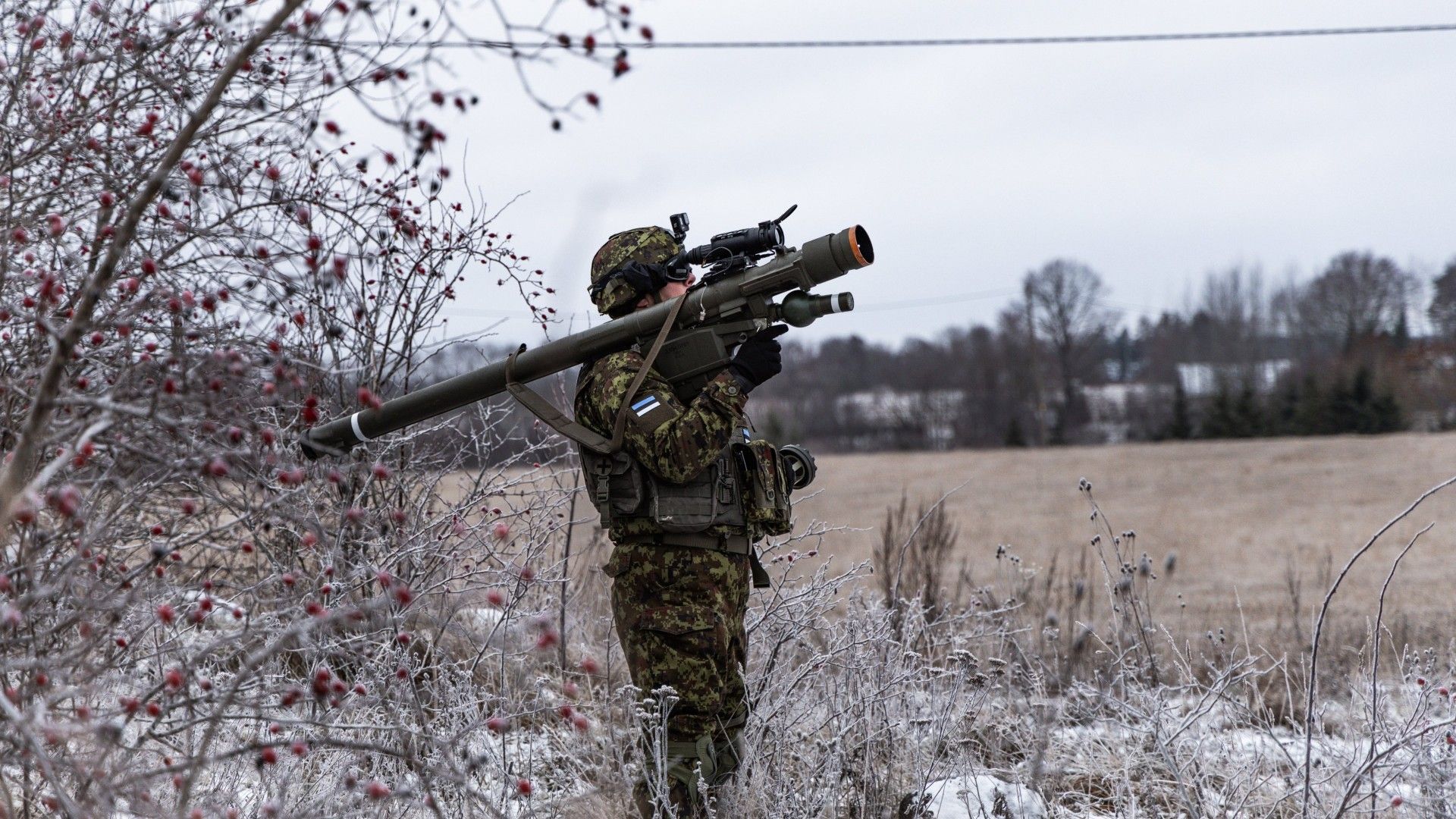
Estonian air defence needs to get stronger to mitigate the threats we have witnessed already today. Anti-aircraft and anti-drone assets are a priority, and Estonia is already ramping up its surveillance capabilities, as well as the capability of countering air threats. We have acquired very-short-range systems Piorun and Mistral, the first medium-range system IRIS-T is about to be taken into service this year, and preparations are ongoing for procuring missile-defence systems.
And finally, we need to increase the capability to utilize unmanned systems instead of people. This increases the survivability of our troops, as well as enabling the scalability of our force.
Poland and Estonia play an important role in strengthening NATO’s eastern flank. How do you assess the current level of military cooperation between our countries?
Cooperation between Poland and Estonia has been nothing but exemplary. Poland, like Estonia, takes its defence seriously and acknowledges the role of self-defence capabilities in the collective defence framework. The way Poland increases its defence capabilities should be a role model for a lot of the countries in the region.
Hybrid threats, including cyber operations and disinformation, remain a major challenge for the region. How is Estonia strengthening its resilience against such threats?
For the Estonian people, the Russian threat is not a surprise. We have witnessed it throughout our history. Our people know what the Russian mindset is about, and how our own defensive capabilities are existentially important. Additionally, the collective defence of NATO is important for the safety of Estonia. So, the initial level of protecting the people, using psychological defence, has been established.
Nowadays, Estonia as a state is working intensively to mitigate the non-military threats to the nation, e.g., hybrid threats on the sea, migration-related threats on land, or cyber matters. Cooperation has been increased domestically, as well as internationally, but there is still room for improvement. As for cyber, we had to counter significant cyber-attacks in 2007, and have learned from it, be ready to counter such attacks also in the future. But even now, Estonian entities encounter daily cyber-attacks.

However, it is important to acknowledge that hybrid threats are on purpose „hybrid” – the aim of them is to act in the „gray” zone and create as much confusion, disinformation, and division as possible.
Thus, we are learning from all that and strengthening our defensive capabilities and procedures as much as possible.
Looking ahead, what should be NATO’s key priorities in strengthening security and deterrence in the Baltic Sea region?
Although we de jure live in peacetime, de facto, we are facing the spillover of the Russian war against Ukraine, mostly via the air domain, increased threats to critical infrastructure in the Baltic Sea, the utilization of migration as a tool of hybrid warfare, sabotage acts, intelligence gathering, and overall pressure from Russia. This is not at peace anymore.
Initiation of the vigilance activities, Eastern Sentry and Baltic Sentry, has been a welcome step from NATO. As for the future, the perception of the threat could be stronger. We want to believe that the war won’t reach us, but this is somewhat of an idealistic dream. Slow preparations for war leave us weaker, and for Russia, weakness is an opportunity. We need to deny them this opportunity.