



- WIADOMOŚCI
- ANALIZA
How the Russians protect refineries against drones? Secret documents leaked

Nets, steel cables, scaffolding, containers and makeshift protective walls – this is how Rosneft is trying to save its refineries and fuel depots from Ukrainian drones. Faced with ineffective air defence and no possibility of fully securing the infrastructure, the company is resorting to improvised measures, although it itself admits that such solutions cannot provide complete protection.
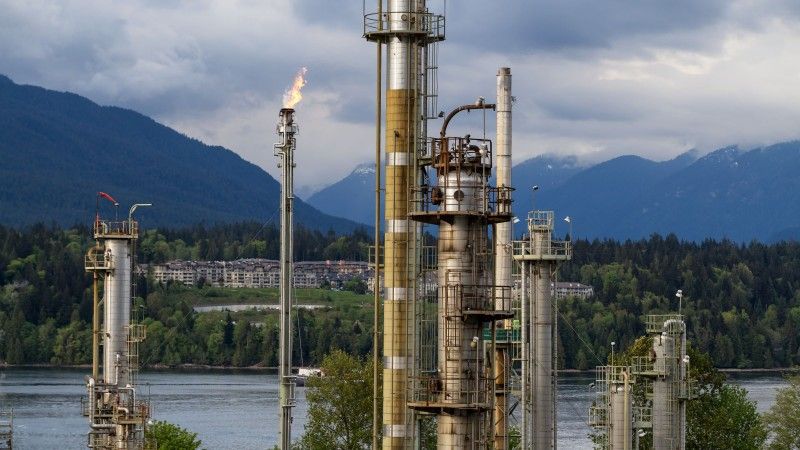
Ukrainian drones are increasingly reaching not only fuel depots or facilities located close to the front line, but also the most important elements of Russia’s resource infrastructure. Refineries, industrial plants and infrastructure that for years generated huge revenues for the Kremlin and strengthened its political leverage are becoming targets. Securing these sites has therefore taken on particular importance for Moscow. Damage to crude-processing installations means not only costly repairs, but also a rapid impact on exports, supply chains, budget revenues and the ability to continue financing the war.
Rain of drones
The situation is further complicated by the fact that destroyed infrastructure can no longer be rebuilt as efficiently as before. Sanctions have made access to certain technologies, equipment and components more difficult, making repairs to key installations more arduous, time-consuming and expensive. As a result, even a single strike can leave consequences felt for years. The problem is compounded by the limited effectiveness of Russian air defence. There are simply too many sites that need to be protected, and they are dispersed over an enormous area, meaning that some of the unmanned aerial vehicles can easily reach their targets despite existing safeguards.
Against this backdrop, a document obtained by the Dallas outlet takes on particular significance. It describes a confidential, 21-page report devoted to systems for protecting Rosneft facilities „against unauthorised use of unmanned aerial vehicles”. The material obtained by the outlet from Russian sources is highly valuable, as it contains up-to-date and detailed information on how the infrastructure is being secured and on the weak points of these measures.
It is all the more valuable because many of these protective elements cannot be captured in satellite imagery, so the document provides a much deeper insight into how the Russians are trying to protect fuel depots, refineries and other strategic sites. Dallas also draws attention to the language of the report itself, written in the characteristically bureaucratic tone of the Russian system, which allows the realities of war to be described as a technical problem in industrial security. In this way, Russia seeks to dress up its own ineptitude in a more neutral, bureaucratic language.
The document does not present any breakthrough defence system, but rather a collection of stopgap, ad-hoc solutions that can be deployed quickly, at relatively low cost and without lengthy procedures. The emphasis is primarily on passive protection, based not on engaging drones in the air but on nets, cables, shields, walls and other structures intended to make a strike more difficult or to limit its effects. The material paints a picture of improvised defence that may sometimes disrupt an attack and sometimes reduce the scale of destruction, but does not offer full protection. Indeed, the authors of the report themselves admit that such structural measures do not guarantee the safety of the protected sites and do not eliminate the effects of an explosion or fragmentation.
The presentation begins by classifying the threat. The Russians assume that their facilities may be attacked by two basic types of drones, namely fixed-wing UAVs and multirotors. They also identify three main forms of attack: 1) a drone striking the site directly, 2) the dropping of an explosive charge or ammunition, 3) damage caused by fragments and debris from the drone.
In practice, all elements of the infrastructure may be at risk, from individual tanks to technological installations, and even a single strike can disrupt the functioning of the entire chain without which a refinery cannot operate normally.
Equally important is what the document says about active defence. The Russians acknowledge that their electronic warfare systems and kinetic means are primarily effective against operator-controlled drones flying at altitudes above 35 metres. Meanwhile, the Ukrainian long-range drones striking Russian refineries are said to travel autonomously along pre-programmed GPS coordinates and do not require a radio link that could be jammed.

Two zones of protection
The Russians divide protection into two zones. The first is to be located close to the protected object and is intended to reduce fragmentation damage, stop drone debris and provide protection against direct contact with a dropped payload weighing up to around 3.5 kg. The second is to be positioned further away and act as an outer protective layer that would stop or deflect the drone before it reaches the target. The document states that such a more distant line can take the form of a vertical wall up to 36 metres high. In this way they are trying to build something like an improvised multi-layer defence around selected sites, to provide at least a slightly greater margin of safety.
The most eye-catching idea is the shielding of individual tanks using nets and cables. Above and around the tank, a structure is to be built on supports, with cables running down towards the ground and anchored to the foundations or concrete blocks. The authors of the document praise the simplicity of such a system, its rapid installation and the ease with which damaged sections can be replaced. At the same time, they do not conceal the fact that the structure is not resistant to fragments from UAVs.


Another variant involves the use of pipes arranged around the tank. On paper, this looks better than a simple net, but in the real conditions of a refinery it may be much more problematic. Such a system is intended to increase the distance between the tank wall itself and the cable barrier. In theory, this improves the chance that the drone will be stopped, or at least damaged, before it strikes the protected object. In practice, the solution is more difficult to implement because it has to take account of existing infrastructure, including stairs, platforms, ancillary installations and the geometry of the tanks themselves.


Yet another idea is to erect construction scaffolding around the tanks, as it can be assembled relatively quickly, individual sections can be easily replaced after damage, and the structure itself does not have to be treated as a permanent installation. The last point is very important, because, as Dallas reports, the entire document is marked by a clear desire to avoid formally classifying such shields as permanent structures. The aim is to bypass mandatory inspections, approvals and permits that could delay the work by many months. However, the advantages of scaffolding are matched by equally serious drawbacks. The presentation notes that there are not enough of them to protect all the company’s facilities, that they are expensive, and that there are also problems with snow loads and firefighting operations.
In the following sections of the document, the Russians move on to the construction of outer protective walls. In one variant, these are to be based on tall posts spaced 20 to 30 metres apart. Horizontal load-bearing cables and vertical cables spaced every 40 centimetres are to be suspended between them. The whole structure is intended to damage the fuselage and wings of an incoming drone and reduce the risk of detonation directly at the site. It sounds like an attempt to create a huge outer barrier that will, at the last moment, force the unmanned aircraft off course, but here too the document points to limitations. Not all pipes are suitable as load-bearing elements; some lack sufficient strength, and some are difficult to machine and weld.

Particularly striking are the container-based variants, which best reveal the improvised nature of the entire concept. In one of them, containers are to be placed vertically and used as pylons, between which ready-made sections of fencing made of cables and pipes would be installed. In another variant, the containers stand vertically and only protective cables are stretched between them. The advantage is supposed to be rapid installation and a reduced amount of work at height, but this requires a very large number of containers. At greater scale, the logistical problem becomes almost as serious as the drone threat itself. The document also provides for variants for technological installations, where a wall of containers would be erected in several rows.
One of the more interesting parts of the presentation concerns column apparatuses, among the most vulnerable elements of a refinery. Here the Russians propose layered protection, from screens set back from the structure, through cables and nets near platforms, to armour-type materials protecting the most important nodes. According to Dallas, however, the authors themselves admit that in the event of an explosion, damage remains inevitable, and the effectiveness of some of these solutions has not been confirmed. The document also envisages protection for the upper sections of columns in the form of domes or umbrellas.

Protecting pump stations with kevlar
A separate section of the presentation is devoted to pumping stations, where additional shields are envisaged outside the existing fencing, intended to damage the drone before it reaches the installation. One variant involves cables mounted on projecting brackets; another envisages replacing light walls with prefabricated reinforced-concrete panels, which are better able to withstand impact and fragmentation.
Dallas points out that the document also contains supplementary recommendations, such as the use of smoke screens after a threat has been detected, the construction of mobile shelters for personnel, reducing fuel stock levels and using Kevlar shields on selected sections of pipeline. Here too, however, it is clear that some of these solutions are designed more to limit the consequences of a strike than to prevent the attack itself.

The document’s final conclusions are telling. The Russians have determined that they already have an initial catalogue of standard protective solutions, but at the same time admit that these require further refinement and practical testing. Among the next steps, they also identify the need for trials using container fencing for the outer security zone. At the same time, the Russians themselves indicate where the most important targets are located.
Attempts to protect critical infrastructure from drones are unsurprising, given the billions in losses Russia is suffering as a result of the attacks. Rosneft is showing passive protection solutions for facilities, i.e. measures that increase the resilience of individual refinery sites. These solutions will be visible from satellites, and even from the outside, from the proverbial „street”, so their disclosure is not surprising. It seems, however, that the key issue is active protection solutions, namely anti-drone defence systems, which can protect infrastructure much more effectively. The Russians are not showing those solutions, says Maciej Szopa, editor at Defence24.
What is also interesting is the broader conclusion that goes beyond the Russian-Ukrainian war itself. As Dallas reports, this analysis may also be relevant for Gulf states, where current tensions have more sharply exposed the problem of protecting their own energy infrastructure from drones and missiles. The issue is above all how to secure large, fixed and highly flammable industrial facilities against modern means of attack that are relatively cheap, precise and difficult to stop. Rosneft’s experience may serve as a clear warning to other countries.
It is also worth noting that the presentation paints a harsher picture than might be expected, because the document is not a study of future threats, but an attempt to respond to real and repeated losses that the Russian oil sector is already having to deal with today. Russia is seeking a way to adapt to a new wartime reality that no longer looks like a temporary episode. The significance of the matter is even greater because it affects the country’s largest oil producer and one of the state’s most important instruments. The company is led by Igor Sechin, for years counted among Vladimir Putin’s closest associates. Rosneft accounts for around one-third of domestic crude production, so regular attacks on its refineries are becoming increasingly directly linked to the state’s financial condition, and that has not been in good shape recently.
Data from the Russian Ministry of Finance indicated that revenues from oil and gas fell to their lowest level since July 2020. In January they amounted to 393.3 billion roubles, compared with 447.8 billion roubles the previous month. Although this decline was partly due to lower oil prices and a stronger rouble, it does not alter the fact that the oil and gas sector remains one of the foundations of Russian public finances and accounts for nearly one-quarter of budget revenues.


